

Land scarcity is the biggest bottleneck preventing Ho Chi Minh City from attracting large projects, and FDI inflows into the city have been continuously declining in recent years.
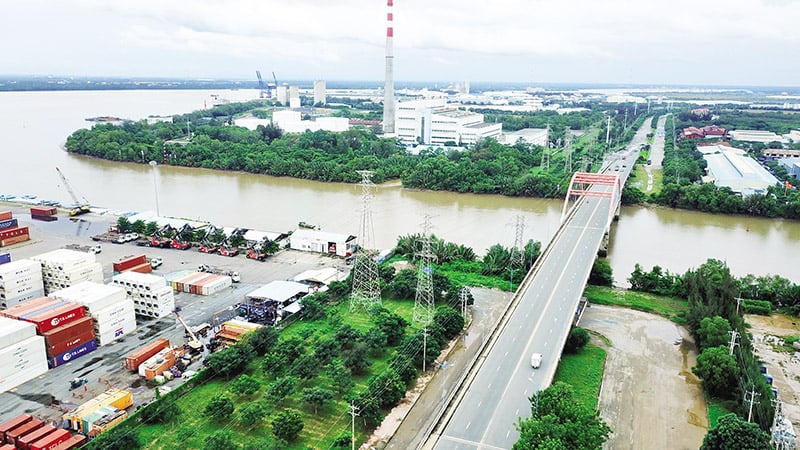 |
| If the land lease fees at Hiep Phuoc Industrial Park can be resolved soon, Ho Chi Minh City will have more land available to attract investors. |
Foreign direct investment (FDI) into Ho Chi Minh City in the first four months of 2024 was mainly in the form of share purchases.
According to the latest statistics from the Ho Chi Minh City Department of Planning and Investment, in the first four months of the year, total foreign investment in the city reached US$915 million, a decrease of 6.5% compared to the same period last year. Notably, the majority of foreign investment attracted was through equity contributions and share purchases, totaling US$713 million. Meanwhile, 357 new FDI projects were approved (a 16.3% increase compared to the same period in 2023), but the total investment capital only reached US$129 million (a 24.3% decrease compared to the same period).
According to a research report published in 2023 by the Ho Chi Minh City University of Banking, in recent years, the proportion of FDI capital from Ho Chi Minh City in the total FDI capital of the whole country has decreased from 22% in 2019 to 11% in 2023. Not only has the ability to attract FDI declined, but Ho Chi Minh City has also failed to attract large-scale projects.
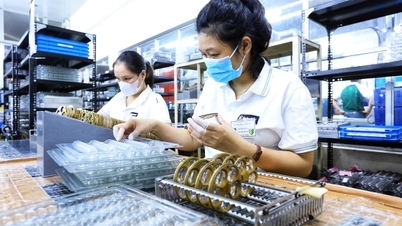
The decline in FDI flows into Ho Chi Minh City is not difficult to explain, as the city's industrial land is increasingly depleted. Currently, in the Ho Chi Minh City High-Tech Park, the land available to attract projects in the electronics, microchip, and semiconductor sectors is only about 0.5 - 3 hectares per project. Meanwhile, in 2023, industrial parks throughout the city only had a total of 46 hectares of "clean" land available for investment, scattered across many districts.
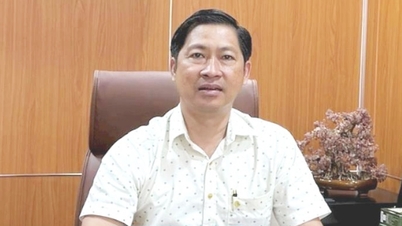
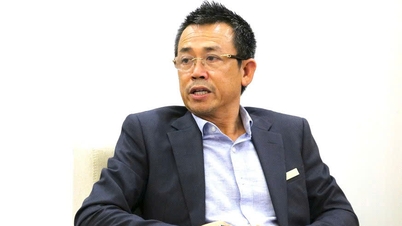
Mr. Dao Xuan Duc, Chairman of the Ho Chi Minh City Industrial Park Business Association, believes that the biggest "bottleneck" in attracting investment in Ho Chi Minh City is the lack of land. Mr. Duc cited that while some industrial parks have "clean" land plots, they are scattered rather than concentrated. Furthermore, Ho Chi Minh City still has land in industrial parks that has not yet been cleared of obstacles, such as the Hiep Phuoc Industrial Park with 320 hectares remaining and the Tay Bac Cu Chi Industrial Park with over 100 hectares.
According to Mr. Duc, the wave of investment shifting from other countries to Vietnam is still ongoing. He likened these investors to "eagles," but Ho Chi Minh City currently only has the nest of "sparrows," lacking the capacity to attract and retain "eagles." Therefore, the city cannot attract large investors. "If we cannot address the bottleneck regarding land, it will be difficult to develop industry; without land, we cannot attract investment," Mr. Duc emphasized.
Besides the shortage of land, the investment and business environment, especially administrative procedures, still have many obstacles, which are causing investors to turn away from the city. According to the Provincial Competitiveness Index (PCI) ranking for 2023, which was announced on May 9th, Ho Chi Minh City ranked 27th, indicating that the investment and business environment has not really improved. Furthermore, many projects by foreign investors in Ho Chi Minh City are facing obstacles that are slow to be resolved, discouraging investors.
Waiting for new industrial zones
According to data from the Ho Chi Minh City Export Processing Zones and Industrial Parks Management Board (Hepza), the city has planned nearly 6,000 hectares of industrial land, but as many as 1,500 hectares are facing legal or land clearance issues.
Statistics from the Ho Chi Minh City Department of Planning and Investment show that, during the period 2017-2022, Ho Chi Minh City only attracted 3 projects with a scale of 300-841 million USD. Meanwhile, neighboring localities such as Binh Duong and Long An both attracted projects with a total registered capital of 1-3 billion USD.
Mr. Hua Quoc Hung, Head of the Hepza Board, acknowledged that Ho Chi Minh City lacks large land reserves to serve investors who need to build large factories. While existing industrial parks are gradually filling up, or have not yet signed land lease contracts with the State for areas where compensation and clearance have been completed and areas currently under compensation, the remaining land remains unused.
Hepza is accelerating the investment preparation procedures for Pham Van Hai Industrial Park I (379 ha) and Pham Van Hai Industrial Park II (289 ha) in Binh Chanh district to secure land for attracting large projects. Additionally, if the land lease price issue at Hiep Phuoc Industrial Park can be resolved soon, Ho Chi Minh City will have more land available to attract investors.
Recently, a domestic enterprise, commissioned by US investors, proposed to the Ho Chi Minh City People's Committee the establishment of an innovation and technology park covering 350-400 hectares, specializing in chip manufacturing and testing. However, with the current limited land availability, the city has yet to find an industrial park with sufficient area to meet the investor's needs.
Due to the shortage of land to attract investors, on May 7th, the Management Board of Ho Chi Minh City High-Tech Park sent a document to the City People's Committee requesting permission to continue constructing multi-story smart factories in the High-Tech Park to optimize the efficient exploitation and use of land in the context of limited land availability.
The Ho Chi Minh City High-Tech Park Management Board believes that investing in the construction of multi-story factory buildings plays a crucial role in attracting small and medium-sized technology investors, because when businesses come to invest, they have factory space immediately to implement their projects.
Source: https://baodautu.vn/thieu-quy-dat---diem-nghen-can-tro-thu-hut-fdi-vao-tphcm-d214933.html


![[Photo] Prime Minister Pham Minh Chinh presides over a meeting on private sector economic development.](/_next/image?url=https%3A%2F%2Fvphoto.vietnam.vn%2Fthumb%2F1200x675%2Fvietnam%2Fresource%2FIMAGE%2F2025%2F12%2F20%2F1766237501876_thiet-ke-chua-co-ten-40-png.webp&w=3840&q=75)






























































Comment (0)