

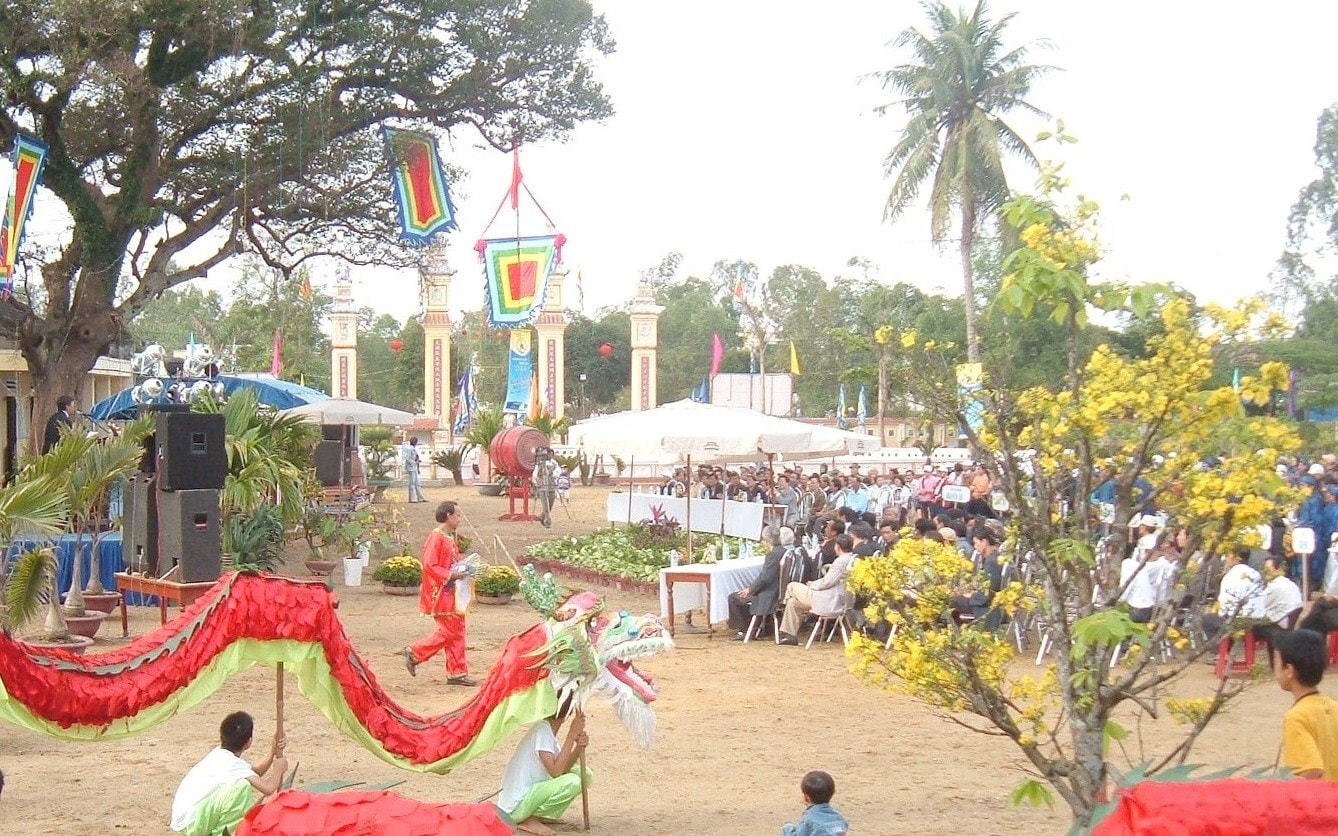
A meeting place at the beginning of spring.
In the evenings, the sound of the drums of Da Son can be heard.
Listen to the bells of Tra Kieu, listen to the music of Mieu Bong.
The folk song that is still passed down today in Da Nang mentions the "Da Son drum," referring to the village festival held in late spring in the ancient village of Da Son, the oldest village in the former city of Da Nang.
The 10th day of the third lunar month is the day of worshiping the local tutelary deity, praying for national peace and prosperity. However, one day before that, there is a procession carrying the royal decree from the keeper's house to the village temple of the 12 clans in Hoa Khanh Nam, Lien Chieu (now Hoa Khanh ward, new Da Nang city).
The folk games organized in the village square are an opportunity for people from neighboring villages such as Phuoc Ly, Trung Nghia, Van Duong, Huong Phuoc, Truong Dinh, Phong Le, etc., to gather and enjoy themselves.
With such a lively atmosphere, the sound of the drums from Da Son village resonates far and wide over time. In their research on Da Son village temple in the book "Da Nang Village Temples," authors Ho Tan Tuan, Le Xuan Thong, and Dinh Thi Toan affirm that the ceremony honoring the local tutelary deity is "lively throughout the region," and that the Da Son village temple is increasingly intertwined with the spiritual and historical life of the villagers to the point of being "inseparable from community life." Around the end of the third lunar month, the Da Son village temple also holds a ceremony to worship the spirits of the deceased.
Also in the book "Da Nang Village Temples," the authors meticulously researched An Hai Temple, a familiar place where the renowned figure Thoai Ngoc Hau contributed his efforts and money to its restoration, and who was later honored by the people as a virtuous figure of the village.
“In the past and up to the present day, the people of An Hai have annually organized festivals at the village communal house, which include many folk games and performances with local characteristics” (Da Nang Village Communal House, Da Nang Publishing House - 2012, page 45). The authors are likely referring to the spring festivals held in this space, which is recognized as a national historical site, such as the spring prayer ceremony for peace held at the communal house and the shrines in the 11 hamlets of the village.
When the village communal house is "reborn"
Seven years ago, also around the end of March, when the Hai Chau village temple festival was first revived, many people interested in the temple, which is closely associated with the history and development of Da Nang, used a rather unusual term: rebirth.
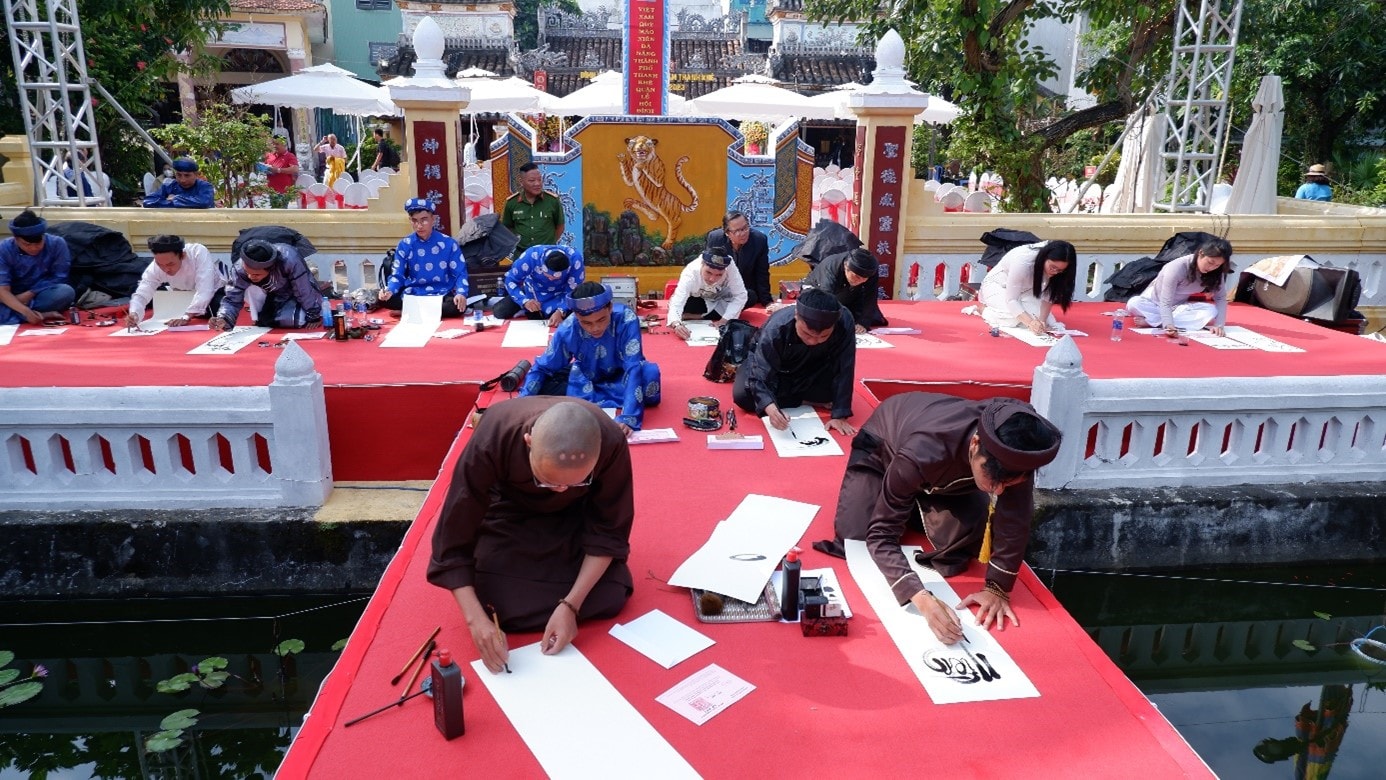
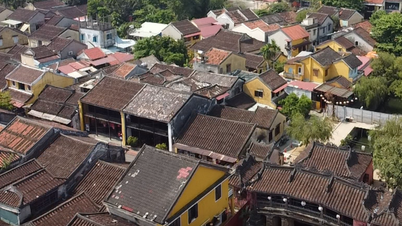
At the place of worship for the 43 original clans in Hai Chau village (currently only 42 remain as the Nguyen Van clan has separated), when the ancestors came to reclaim the land from the late 15th century, the village communal house had to be moved many times to many different locations.
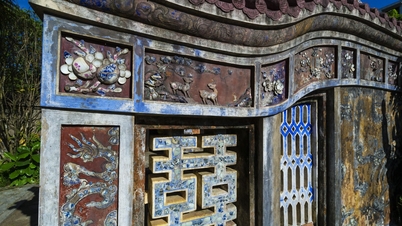
The existing communal house, recognized as a national historical and architectural monument in 2001, was originally built in 1904, and only underwent large-scale restoration exactly a century later (2004). However, it took another three years, until 2007, for the project to restore the Hai Chau village communal house festival to begin, and two years later, conditions were met to officially revive the festival in the front hall of the Trung Vuong Theater and the village communal house courtyard...
Since then, the ceremonial part has been streamlined, reducing outdated customs and cumbersome details, focusing more on the festive part to ensure both spiritual rituals and entertainment needs as a traditional tourism product in the former Hai Chau district (now Hai Chau ward). So much dedication and effort has been poured into this; how can we not use the word "rebirth"?
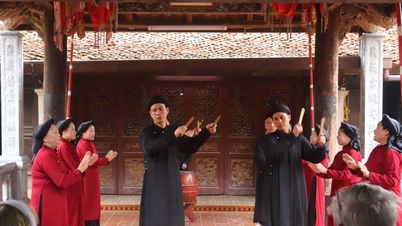
Village communal houses in Quang Nam province have become meeting points and venues for annual festivals, especially in early spring. In spring, there's the Chien Dan communal house festival on the 15th day of the first lunar month, the Long Xuyen communal house's spring peace ceremony, and the ancestral worship ceremony at the Thai Dong communal house... Many researchers note that every spring, the communal house courtyard transforms into a stage for traditional Vietnamese opera (cheo), folk singing (ba trao), and call-and-response folk singing (ho khoan). It can also be the venue for chess matches and cockfighting; young men and women can meet, dance, and sing to express their affection.
As children, we eagerly awaited the arrival of the theater troupe, setting up the stage, fencing off the area, and selling and checking tickets right in front of the Vân Tây village communal house in the eastern part of Thăng Bình, in the old Quảng Nam province. Inside the communal house grounds, ancient, massive Barringtonia trees, so large that several people would be needed to encircle them, provided shade. The area was usually quiet year-round, but in the spring, or whenever a theater troupe came to perform, it would become bustling with sounds and brightly lit with electric lights. The troupe would travel by boat along the Trường Giang River, stopping at the dock to unload their equipment and props, which would then be gathered in the courtyard of the communal house.
Time has gradually diminished the children's excitement and obscured many of the "exhausted" gatherings at the village communal house. In his research, author Vo Van Hoe mentions the communal house as a place for performing traditional opera, one of the forms of entertainment at the beginning of spring. The sound of the drums on the first day of spring seems to urge and incite. "Sometimes the drums sound like endless joyful cheers, sometimes profound with many contemplative thoughts, sometimes rapid and cheerful, sometimes angry, sometimes gentle and relaxed, expressing contentment and comfort," Vo Van Hoe wrote in "Tet in Quang Nam" (Da Nang Publishing House - 2005, page 141).
More village communal houses in Quang Nam province will be "reborn," so that their presence will always be felt in the cultural life of the villages. A charming feature that is both elegant and familiar, rustic and simple.
Source: https://baodanang.vn/thoang-bong-dinh-o-lang-3330908.html
![[Photo] General Secretary and President To Lam presides over a working session with the Central Policy and Strategy Committee on the development of the materials industry.](https://vphoto.vietnam.vn/thumb/1200x675/vietnam/resource/IMAGE/2026/05/21/1779359935432_a3-bnd-3129-1412-jpg.webp)
![[Photo] National Assembly Chairman Tran Thanh Man working with the Standing Committee of the Law and Justice Committee](https://vphoto.vietnam.vn/thumb/1200x675/vietnam/resource/IMAGE/2026/05/21/1779378929214_ndo_br_1-4610-jpg.webp)



























































Comment (0)