

In the US , people should avoid drinking orange juice before meals, especially breakfast, according to experts from Princeton University.
A study published in the journal Cell Metabolism shows that orange juice contains high levels of fructose, a type of fruit sugar, which can be harmful to the liver and intestines if consumed on an empty stomach.
According to experts, the medical community previously believed that all ingested sugar, including fructose, was processed in the liver. However, new research shows that 90% of fructose is processed in the small intestine. Excess sugar can travel to the large intestine and colon, harming these organs as well as the gut microbiome. Conversely, when the stomach is full, the small intestine processes fructose more efficiently.
Therefore, experts believe that drinking fruit juice on an empty stomach, especially in the morning after a night without eating, can negatively impact health.
"The gut microbiome can't recognize sugar. The moment you drink soda or juice, the microbiome senses an extremely potent nutrient. Any fructose that gets into the large intestine triggers health problems," explains Professor Joshua D. Rabinowitz of the Lewis-Sigler Institute for Integrated Genomics at Princeton University.
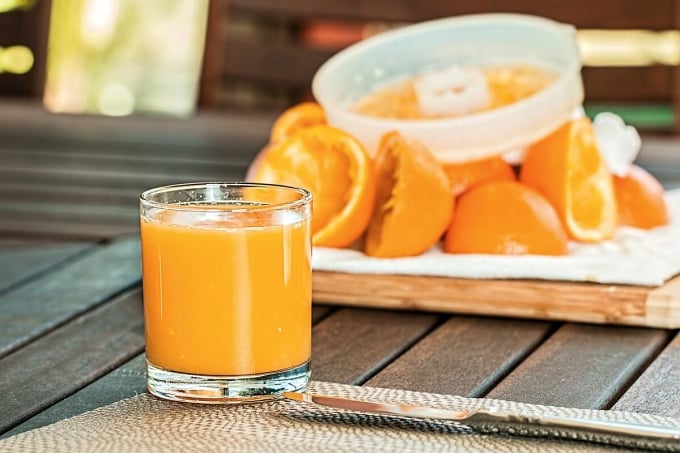
Experts say drinking orange juice before meals can be harmful to health. Photo: Pexel
In fact, previous studies have also shown that orange juice is not as healthy as people mistakenly believe. It contains nutrients such as carotenoids, flavonoids, and vitamin C, which help fight oxidation, boost the immune system, and combat free radicals.
However, this drink can raise blood sugar levels, potentially leading to diabetes. According to Professor Scott Kahan, director of the National Center for Weight and Health, orange juice contains as much sugar and calories as other soft drinks.
"People with diabetes should avoid drinking too much orange juice. Over time, the spikes in blood sugar can lead to dangerous conditions like cardiovascular and kidney disease, even for those who don't have diabetes," Kahan said.
Orange juice can also contribute to weight gain. Some experts recommend that adults and children eat oranges instead of drinking orange juice. This is because the fruit contains fiber, which slows down digestion, making people feel full for longer.
Previous studies have shown that drinking fruit juice, instead of eating the fruit directly, can cause obesity and liver damage. This is because when drinking juice, the body quickly consumes it without feeling full, leading to a large intake of sugar.
Some experts suggest drinking orange juice, as well as other fruit juices, in the mid-morning, after a full meal. However, it should be consumed about 45 minutes to an hour before or after a meal.
Thuc Linh (According to Express, Insider )
Source link


![[Image] Nearly 125,000 Hanoi students completed the Literature exam for the 10th grade entrance exam.](https://vphoto.vietnam.vn/thumb/1200x675/vietnam/resource/IMAGE/2026/05/30/1780117233041_ndo_br_thiet-ke-chua-co-ten-2-png.webp)









































































































Comment (0)