

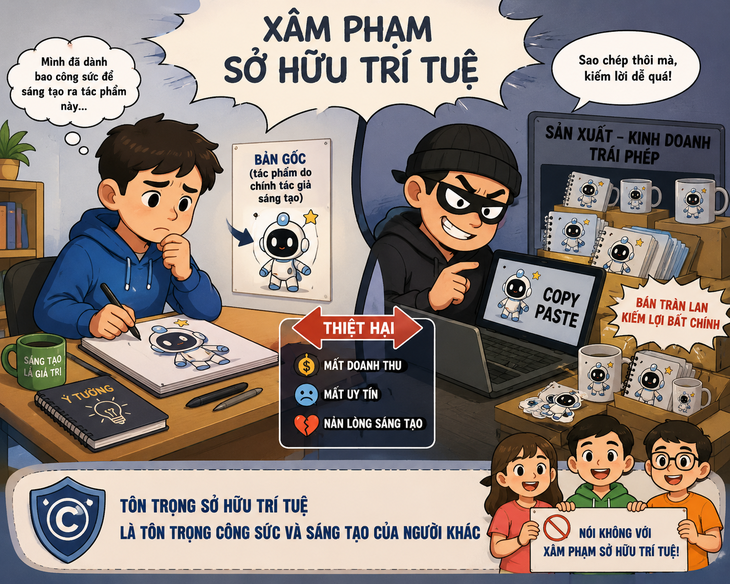
Illustration: Created by AI
Recently, Facebook has been constantly warning me about videos I posted years ago. I used CapCut software to create the videos and used music already available on the app. Now Facebook is scanning and demanding that I change the music because it violates copyright.
Around the same time, I received an email from Adobe License Advisory Southeast Asia requesting that my company provide a summary of the entire Adobe software deployment currently in use within the organization, in order to assess our level of license compliance. This was not a friendly invitation to collaborate, but a clear warning signal.
Two events happening almost simultaneously made me realize: copyright issues are no longer just about music .
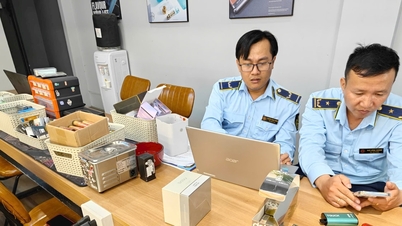
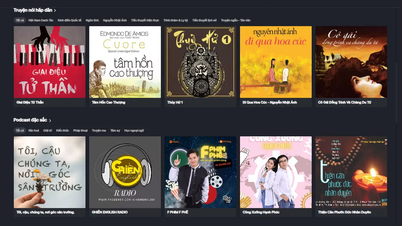
It is spreading across all intellectual property in the digital environment, from a melody in a TikTok clip to design software on an office computer. In recent days, the Ministry of Public Security has prosecuted many cases of music copyright infringement.
Notably, large-scale exploitation units must be held accountable, including high-ranking officials in the industry with expertise in the law, such as the leader of the Vietnam Creative and Copyright Association.
The issue of combating copyright infringement is showing signs of a complete transformation. The artificial intelligence systems of TikTok, YouTube, Facebook, etc., are now capable of identifying melodies, recordings, and even remixes after just a few seconds of audio.
This is coupled with the government's international commitments and the massive influx of money from the digital environment. Previously, we could get through because the door didn't have a lock. Now, locks have been installed, cameras have been fitted, and the system is running backward to review everything.
Currently, there are three groups facing significant risks that they sometimes don't even realize they're at risk of. First are digital content creators – from freelance content creators to online sellers.
The second group consists of business spaces with a musical element, such as acoustic cafes, tea rooms, or music nights combined with entertainment. The final group comprises media outlets and advertising companies.
The habit of "taking whatever is convenient and quick" has long been a common practice, occurring as if it were the most natural thing in the world.
The "freeloading" mentality has become a deeply ingrained habit in the operations of not only individuals but also many small and medium-sized enterprises, and even some large organizations.
That mindset has persisted for too long and is now paying the price. The legal risks from software piracy are significant.
According to current regulations and international conventions that Vietnam has signed, businesses may face administrative penalties, civil lawsuits for damages, or even criminal prosecution in cases of large-scale, organized violations.
From a macro perspective, regulatory bodies and copyright holders also need to find appropriate solutions.
Instead of simply imposing sanctions or penalties, the creative industries—from music, film, journalism, television, games to software—need intermediary platforms that allow users to easily check who holds what rights and how to pay fees quickly and transparently.
Ease of access and legal payment will automatically curb the habit of piracy. When the rules of the game change, our mindset must change accordingly.
There are three things every individual and business needs to remember: "being on the Internet" doesn't mean "being allowed to use," not being detected doesn't mean it's not a violation, and if you want to create value from someone else's product, you must first respect their value.
The era of simply "taking whatever you can"—whether it's a melody or a software program—must truly end in order to protect intellectual property and restore legal order in the digital environment.
Source: https://tuoitre.vn/thoi-lay-dai-phai-qua-20260520092652945.htm



























































































Comment (0)