

Attending the seminar were Minister of Foreign Affairs Bui Thanh Son, Minister of Foreign Affairs of Brunei; Minister of Industry and Trade of Laos; ASEAN Secretary-General Kao Kim Hourn; representatives of associations, businesses, investors from ASEAN and partners.

A roundtable discussion with ASEAN businesses and partners on the theme "ASEAN Business Community: Cohesive, Resilient, and Sustainable: Seizing Opportunities in the Digital Age." Photo: Duong Giang/VNA.
ASEAN is not outside the global trend.
Opening the discussion, Lao Prime Minister Sonexay Siphandone stated that digital transformation is taking place vigorously not only in the region but also worldwide, affecting all aspects of social life. Therefore, closer cooperation is needed among stakeholders, including coordination between businesses, the private sector, and governments, as well as between countries themselves. This will maximize the benefits while minimizing and overcoming the challenges posed by digital technology .
Prime Minister Sonexay Siphandone stated that, as the ASEAN Chair in 2024, Laos is promoting the development of e-government, digital economy , and digital society. Laos is also developing policy frameworks to promote digital transformation within ASEAN, thereby fostering cooperation, maximizing the benefits of digital technology, and transforming ASEAN into a highly competitive entity capable of effectively responding to challenges.

Prime Minister Pham Minh Chinh and Lao Prime Minister Sonexay Siphandone attend a roundtable discussion with ASEAN businesses and partners. Photo: Duong Giang/VNA.
At the seminar, ASEAN business leaders, ASEAN leaders, and leaders from partner countries engaged in lively discussions on opportunities and challenges in ASEAN's digital economic cooperation; solutions to promote cooperation between ASEAN and partners in digital economic development; recommendations for forming an ASEAN digital economic ecosystem; requirements for e-commerce development in ASEAN today; and promoting the development of semiconductor supply chains in the ASEAN region.
In addition, delegates also discussed the application of artificial intelligence (AI) in business management and proposed cooperation with ASEAN countries; digital transformation in the information sector; cooperation in building a high-quality digital workforce; improving the investment environment to attract high-tech investment, etc.
Google's Asia Pacific President, Scott Beaumont, stated that ASEAN is a vibrant example of integration and connectivity. Google is honored to contribute to the digital transformation process and bridge the digital divide in ASEAN. Along with developing platforms and applications in the digital environment, Google is collaborating in Vietnam to train technology human resources, especially in the field of AI, providing resources, and building big data sources…
Given that ASEAN's digital economy potential could double, it needs to invest in infrastructure, human resource training, research and development, and the construction of data centers, especially national data centers. Along with this, ASEAN countries need to ensure a sufficiently strong legal environment to guarantee that investors can achieve their objectives…

ASEAN business leaders and partners attend the seminar. Photo: Duong Giang/VNA.
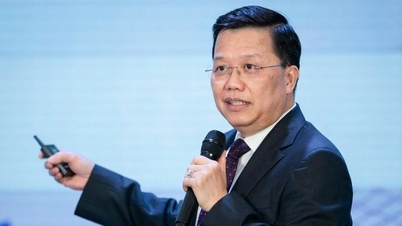
According to Vietjet Air CEO Dinh Viet Phuong, with the strong development trend of AI application, the airline has implemented many AI-based solutions to transform the operations of the aviation industry. Vietjet has invested in research and development of new technology projects, building the Galaxy Innovation Hub, which is attracting many leading global businesses and corporations.

Mr. Dinh Viet Phuong, CEO of Vietjet Air, presented on the application of artificial intelligence in business management and proposed cooperation with ASEAN countries. Photo: Duong Giang/TTXVN
Mr. Dinh Viet Phuong proposed strengthening multilateral cooperation and creating an environment for sharing resources and technologies between governments and businesses; developing technology incubators and research and development centers, especially in AI; implementing solutions to ensure cybersecurity and data protection within the ASEAN business community; and expressing his hope that governments would expand opportunities for businesses to invest in production and business within the open and sustainable ASEAN common market.
Mr. Takeo Nakajima, Chief Representative of the Japan Trade and Investment Promotion Organization in Hanoi, reviewed the cooperation and investment process in Vietnam and ASEAN. He suggested that, to attract investment in high-tech fields, countries need to continue improving their policy frameworks; build and perfect synchronized infrastructure, especially high-quality digital infrastructure that can withstand natural disasters and has high data transmission speeds; build laboratories, testing areas, and information centers; have policies to support the purchase of high-tech machinery; need cooperation between academia and research with businesses; protect product copyrights; and invest in developing businesses large enough to receive large-scale investment projects from abroad…
Making ASEAN a model for digital transformation globally.

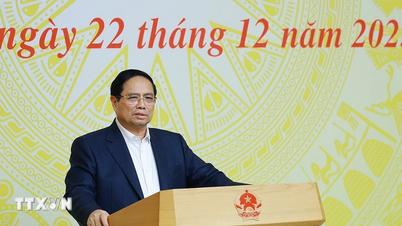
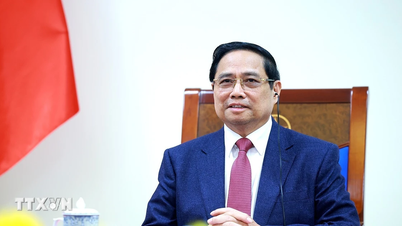
Prime Minister Pham Minh Chinh speaks at the Roundtable with ASEAN businesses and partners. Photo: Duong Giang/VNA.
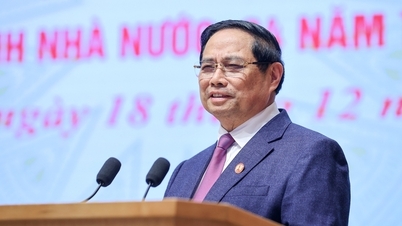
Speaking at the seminar, Prime Minister Pham Minh Chinh highly appreciated the many insightful, heartfelt, constructive, and practical opinions expressed, clearly demonstrating the delegates' concern and desire to promote the future of ASEAN's digital economy.
Recognizing that, in today's world, alongside green transformation, digital transformation has become an inevitable trend, a new growth engine for rapid and sustainable development, for the prosperous future of ASEAN, the region and the world, with the ASEAN Digital Master Plan 2025, ASEAN has agreed on a comprehensive, strategic approach to promote comprehensive digital transformation - considering it a key driver for inclusive and sustainable economic development.
According to the Prime Minister, ASEAN's digital economic development is driven by favorable factors: its important geostrategic and geoeconomic location; a large consumer market, a young population structure, and a growing middle class; rapid economic recovery; extensive economic linkages and cooperation networks; and a rapidly developing ASEAN digital economic ecosystem.
The Prime Minister stated that Vietnam has identified national digital transformation and the development of a digital economy based on science, technology, and innovation as a strategic development direction until 2030; with a consistent viewpoint throughout the National Strategy for the Development of the Digital Economy and Digital Society being to place people and businesses at the center, as subjects, goals, driving forces, and important resources of digital transformation.
Through this, Vietnam has achieved many important accomplishments in digital transformation, such as: an average annual growth rate of 20% in the digital economy; completion of the national population database; and over 80% of the population using internet services...

Prime Minister Pham Minh Chinh speaks at the Roundtable with ASEAN businesses and partners. Photo: Duong Giang/VNA.
Vietnam hopes that the ASEAN business community, investors, and partners will strengthen cooperation, collaborate, and support the promotion of priority areas in digital economic development, including: developing the information and communication technology (ICT) sector; promoting the digitalization of industries and sectors associated with the application of science and technology and innovation; enhancing digital governance capacity and developing digital data; and providing Vietnam with financial support, institutional improvement, human resource training, technology transfer, and infrastructure development.
Expressing confidence in ASEAN's potential and strengths; the determination and unity of the Government, business community, and people; and the close cooperation and linkages of regional and international partners towards a digitized ASEAN Community in the not-too-distant future, the Prime Minister proposed three breakthrough directions to make ASEAN a model in digital transformation globally.
This includes promoting equal access to digital transformation and the digital economy based on the principle of "harmonious benefits and shared risks," ensuring transparency, security, inclusiveness, and sustainability so that all citizens, businesses, and communities can participate and benefit from the results; strongly promoting ASEAN's self-reliance, self-strength, and autonomy in digital transformation, based on the specific factors, potential, and advantages of each country; and urgently completing the ASEAN Framework Agreement on the Digital Economy, ensuring it is focused, targeted, substantive, and effective.
Furthermore, it is essential to promote a global, inclusive, and comprehensive approach to ASEAN's digital economic development; to implement it according to a roadmap and with synchronized steps, consistent with the capabilities of each country; and to focus on addressing common, global issues affecting all citizens, such as the pressure of labor structural shifts, cybersecurity, cybercrime, and the negative aspects of artificial intelligence; ensuring that no one is left behind in the digitalization process.
Prime Minister Pham Minh Chinh also urged ASEAN countries, partners, and business communities to strengthen cooperation on digital transformation to contribute to renewing traditional growth drivers; and to strongly promote digitalization associated with the application of science and technology in various sectors to create new growth drivers.

Representatives from various ministries and agencies attended the seminar. Photo: Duong Giang/TTXVN.
The parties will promote cooperation and support in terms of financial resources, knowledge, technology transfer, and digital human resource training to enable ASEAN and Vietnam to participate more deeply in frameworks, mechanisms, and supply chains for digital transformation in the region and globally; focus on building common standards, criteria, and regulations on digital transformation on a global scale; and strengthen cooperation to improve digital governance capacity, protect consumers, ensure information security, cybersecurity, and data security.
Considering that digital transformation is not just about technology but also a profound, global, and comprehensive change affecting all people, the Prime Minister expressed confidence that the business community of ASEAN and partner countries will seize opportunities, overcome challenges, strive for cohesion, self-reliance, self-strength, and self-reliance, continuing to affirm their pioneering role in digital transformation and making important contributions to the rapid, sustainable, and inclusive development of each ASEAN member state, the region, and the world.
Source















































































Comment (0)