

With the theme "Investing in animal health to secure a future for all," the 93rd General Assembly of the World Organisation for Animal Health (WOAH), recently held in Paris, France, attracted technical experts, veterinary agencies, scientists , and representatives from the livestock industry from 182 countries. The aim was to exchange and agree on international guidelines and standards related to animal health and welfare.

ICFAW actively participated in the events at the 93rd General Assembly of the WOAH Global Congress, which took place in France last May. Photo: Le Hang.
At the plenary session, member states discussed and adopted several amendments to the WOAH Terrestrial Animal Health Standards, including provisions relating to measures and procedures applicable to the export, transit, and import of animals, as well as animal welfare requirements during slaughter.
These initiatives are expected to further support countries in improving their veterinary management systems, promoting the trade of safe animals and livestock products, and meeting the growing expectations of the market and consumers for responsible livestock practices.
Attending this session is the International Coalition for Animal Welfare (ICFAW) with a delegation of 31 members from various international and regional organizations.
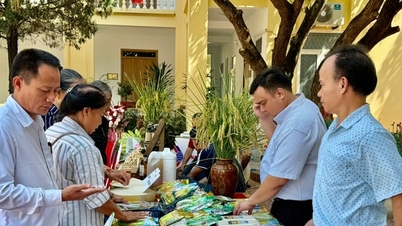
Throughout the meeting, ICFAW maintained a thematic information area to share technical documents, facilitate dialogue, and enhance engagement with stakeholders on best practices in animal welfare.
Within the framework of the session, there were also thematic events such as "Investing in Animal Welfare: From Standards to Implementation" and "Improving Animal Welfare in Transport: Practical Solutions and Multi-Stakeholder Dialogue".
At the thematic event "Investing in Animal Welfare: From Standards to Implementation," speakers from the IFC, EU, Brazil, the International Meat Association, and Humane World for Animals all emphasized that investing in animal welfare is not just a technical requirement or operating cost, but a strategic factor contributing to improved production efficiency, reduced disease risks, enhanced sustainability, and increased market access.
Dr. Sara Shields, Director of Animal Welfare Science at Humane World for Animals and a founding member of ICFAW, stated that investing in improved animal welfare systems, such as group sow rearing models during early pregnancy, demonstrates that animal welfare and productivity are not opposing goals. These models can simultaneously improve animal welfare, operational efficiency, and long-term market responsiveness.
The thematic event, "Improving Animal Welfare in Transport: Practical Solutions and Multi-Stakeholder Dialogue," brought together experts from various fields and regions around the world to share experiences, technical solutions, and practical lessons in improving conditions for transporting livestock.
The discussions emphasized the role of coordination among government agencies, the livestock industry, academia, and social organizations in promoting feasible solutions tailored to national conditions, while ensuring a balance between production efficiency, trade, and animal welfare.
Active participation in the 93rd WOAH General Assembly further affirms ICFAW's role in promoting international cooperation, policy dialogue, and supporting the implementation of practical solutions to improve animal health and welfare. These are increasingly important factors for the sustainable development of the global and regional livestock industry.
ICFAW is an international alliance of leading organizations in the field of animal welfare, with a network operating in over 150 countries and a team of thousands of experts, scientists, and veterinarians. Through collaboration with WOAH, ICFAW supports the development and implementation of international standards on animal health and welfare and shares practical solutions with member countries.
Source: https://nongnghiepmoitruong.vn/thuc-day-dau-tu-vao-phuc-loi-dong-vat-toan-cau-d814634.html
![[Photo] First session of the 14th Congress of the Vietnam Trade Union](https://vphoto.vietnam.vn/thumb/1200x675/vietnam/resource/IMAGE/2026/06/03/1780465947883_ndo_br_img-3852-jpg.webp)
![[Photo] General Secretary and President To Lam presides over a meeting with the Central Organizing Committee.](https://vphoto.vietnam.vn/thumb/1200x675/vietnam/resource/IMAGE/2026/06/03/1780482764658_a1-bnd-4741-3342-jpg.webp)
![[Photo] Secretary of the National Assembly Party Committee, Chairman of the National Assembly presides over the meeting of the Standing Committee and Executive Committee of the National Assembly Party Committee.](https://vphoto.vietnam.vn/thumb/1200x675/vietnam/resource/IMAGE/2026/06/03/1780480353201_ndo_br_bnd-2585-jpg.webp)








![Transforming from Resolution 57: [Part 3] High-tech agricultural center](https://vphoto.vietnam.vn/thumb/402x226/vietnam/resource/IMAGE/2026/06/03/1780491765550_2928-4922-img_7193-010813_454-010814.jpeg)


















![[Video] Sunset at Lap An Lagoon – Where the sun sets over the fishing nets](https://vphoto.vietnam.vn/thumb/1200x675/vietnam/resource/IMAGE/2026/05/31/1780192137701_beach-landscape-sea-water-nature-grass-745871-pxhere-com.jpeg)





















Comment (0)