

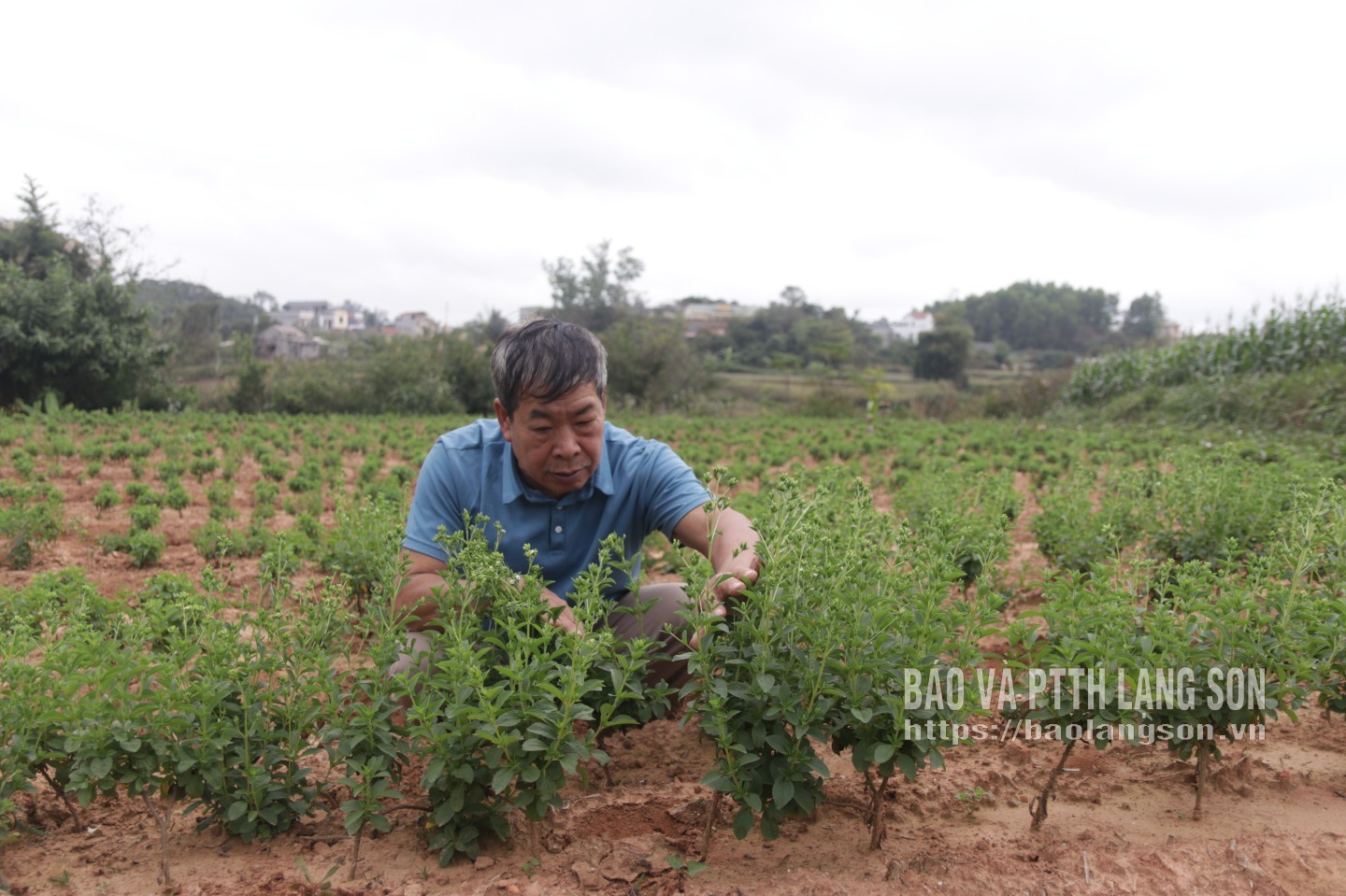
The Loc Binh Clean Agriculture Cooperative was established in September 2025, with its main activities being the cultivation of potatoes, Sophora japonica flowers, stevia, and the raising of chickens and ducks. Among these, the stevia cultivation model, although newly implemented, has initially proven effective and opens up strong development prospects for the future.
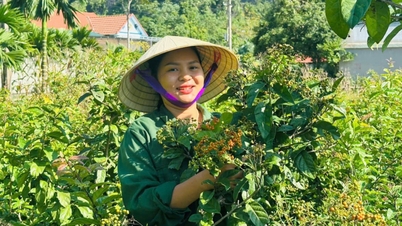
Recognizing the potential of stevia, after a period of research and learning in Hai Phong city and Cao Bang province, in September 2025, Mr. Lo Tien Nong, Director of Loc Binh Clean Agriculture Cooperative, brought stevia to Loc Binh commune for cultivation.
Mr. Nong said: Because this is a new crop, the cooperative initially chose to plant about 3 acres of stevia. By December 2025, the cooperative began harvesting the first batch of stevia by pruning the branches while keeping the roots intact so the plants could continue to grow and develop. The first harvest was used for both selling and propagation. After processing, the cooperative obtained 15 kg of dried stevia. The cooperative sells all the harvested stevia as soon as it's harvested.
Stevia, belonging to the daisy family, is a green herbaceous plant, 50-80 cm tall, with a stem covered in fine hairs. Its leaves have a very strong, sweet taste. Stevia is often combined with other herbs and cooling leaves to make teas and medicinal preparations. Stevia is easy to grow, harvest, process, and use, making it suitable for people of all ages. |
According to Mr. Nong, after the first harvest, the stevia plants will yield another harvest just 1.5-2 months later, and this continuous harvesting continues for about 2 years before needing to be replaced with a new crop. For comparison, stevia cultivation provides approximately five times the income of growing corn on the same area of land.
Stevia is easy to grow and care for, and harvesting and processing are not too complicated. The product sells out as soon as it's produced, with customers mainly being people around Loc Binh commune. Currently, the cooperative has leased an additional 1 hectare of land and plans to expand the area for growing stevia in 2026.
To achieve sustainable development, in addition to gradually expanding the cultivated area and applying science and technology to production, the cooperative continues to explore and collaborate with other entities in the product distribution process. Currently, the cooperative has established product distribution links with businesses and cooperatives both within and outside the province.
Ms. Vi Thi Lua, Director of the Lua Vy Agricultural Products Processing Cooperative in Quan Son commune, one of the largest tea-producing cooperatives in the province, said: "To produce various types of tea, the cooperative needs a source of stevia. Previously, the cooperative had to import this raw material from several other provinces and cities. In December 2025, after learning about the stevia product of Loc Binh Clean Agriculture Cooperative, the two sides explored and collaborated in production and consumption. It is expected that the cooperative can consume about 1 ton of dried stevia annually. Therefore, Loc Binh Clean Agriculture Cooperative can be confident in its investment and focus on production to ensure the yield and quality of stevia."
With initial successful production results and proactive product distribution linkages, the stevia cultivation model of Loc Binh Clean Agriculture Cooperative has significant potential for development. This opens up opportunities for the cooperative to achieve new advancements in production and business. Furthermore, it opens up new avenues for economic development for cooperative members and households involved in stevia production, thereby contributing to increased income for people in the area.
Source: https://baolangson.vn/tiem-nang-tu-co-ngot-5069823.html


































































Comment (0)