

The Vietnamese language is not only a means of communication, but also a symbol of Vietnamese culture, history, and national identity.
With its unique tones and structure, the Vietnamese language reflects the intellect, emotions, and traditions of the nation through each word.
Throughout thousands of years of history, the Vietnamese language has become a unifying thread for communities, a bridge between generations, and plays a crucial role in preserving and promoting Vietnamese identity in the context of international integration.
Vietnamese - a unique and nuanced language.
Vietnamese is a unique and sophisticated language, not only rich in vocabulary but also clearly demonstrating diversity and depth in its sounds and tones.
According to Professor Nguyen Van Khang, tones are a distinctive feature of the Vietnamese language, like musical notes in a piece of music, creating a very unique identity. This is also an element that not all languages possess.
According to Associate Professor, Dr. Pham Van Tinh, the richness of the Vietnamese language lies in its diversity and numerous values. Vietnamese currently has approximately 17,000 syllables, meaning 17,000 constituent elements that can form words. From these 17,000 elements, people mix and combine them to create new words, and it can be said that there are millions of combinations. The number of Vietnamese terms in all specialized fields alone currently stands at hundreds of thousands.
This shows that Vietnamese is a very diverse and multifaceted language system, and the words themselves have semantic content with different nuances.
The beauty of the Vietnamese language lies in its unique and distinctive character, reflecting folk wisdom and having been tested over thousands of years of Vietnamese people communicating through language. The Vietnamese language expresses every nuance of thought and emotion of the Vietnamese people.
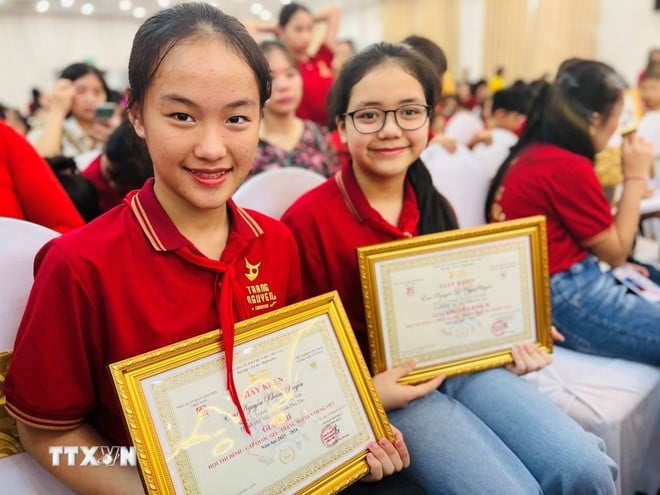 |
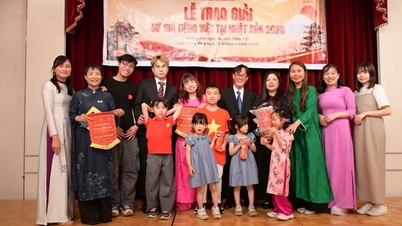
| Students are honored at the 9th Vietnamese Language Champion Award Ceremony. (Photo: Ngoc Bich/VNA) |
Associate Professor, Dr. Pham Van Tinh explained: "The Vietnamese language is a monosyllabic language, and therefore it has its own unique expressions. Vietnamese has six tones, making it one of the languages with the most tones in the world . People say that Vietnamese rises and falls like singing and can express every nuance of emotion."
With its wonderful combination of tones and rich diversity in word structure, the Vietnamese language is not only a means of communication but also an invaluable cultural heritage, reflecting the intellect, emotions, and national identity through every sound and every word.
A symbol of culture, history, and national identity.
Vietnamese is not only the everyday language of communication for Vietnamese people, but it also carries profound cultural, historical, and national identity values.
In daily life, the Vietnamese language is a communication tool that connects people and communities across the country; creating bonds and mutual understanding between generations and regions, from cities to rural areas, from lowlands to highlands.
Vietnamese is also the primary language in the national education system, from primary school to university. The Quốc ngữ (Vietnamese alphabet) system facilitates learning, contributes to raising the intellectual level of the population, training talent, and promoting socio -economic development.
For the Vietnamese diaspora, the Vietnamese language is a connecting thread to their homeland, preserving their cultural identity and family traditions. Vietnamese language classes for the younger generation within the Vietnamese diaspora have contributed to maintaining emotional and cultural ties across borders.
Historically, the Vietnamese language has marked every stage of the nation's history, from the period of Chinese domination, the struggle for independence and national unification, to the period of reform and development.
Historical documents written in Nôm script, Han script, and Quốc ngữ (Vietnamese alphabet) are invaluable treasures that help future generations better understand the heroic traditions and indomitable spirit of their ancestors.
Particularly during wars of resistance against foreign invaders, the Vietnamese language served as an effective means of propaganda, arousing patriotism and the indomitable spirit of the nation. Proclamations, poems, and songs such as the poem "Nam Quoc Son Ha," President Ho Chi Minh 's Declaration of Independence, and Van Cao's "Tien Quan Ca" (Marching Song) became guiding lights for the spirit of the national liberation struggle.
Vietnamese is also the language of the Constitution, decrees, and important political documents of the country. This reflects the spirit of self-reliance and independence of the nation, while affirming the sustainable development of the country on the international stage.
In Vietnamese culture, the Vietnamese language is the soul of literature and art. It is the primary creative tool in literature, music, theater, and film. Through famous works such as *The Tale of Kieu*, *The Lament of the Warrior's Wife*, and the poetry and writings of Xuan Dieu, Han Mac Tu, and Nguyen Binh, the Vietnamese language has demonstrated its power to express rich emotions and its depth of thought.
In Vietnamese folklore, language is the repository of traditional cultural values, encompassing the folk songs, proverbs, and idioms of the Vietnamese people. Sayings like "Even torn paper must retain its edges," "Good deeds are rewarded," "Remember the source of your blessings," "What you live in a round container becomes round, what you live in a long container becomes long," "A healthy leaf protects a torn leaf"... are not only moral lessons but also reflect the nation's philosophy of life.
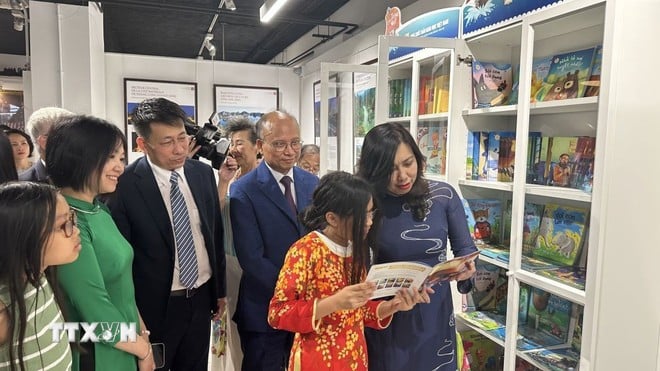 |
| Deputy Minister of Foreign Affairs Le Thi Thu Hang attends the opening ceremony of the Vietnamese Language Book Collection at the Vietnamese Cultural Center in Paris. (Photo: Ngoc Hiep/VNA) |
In the context of international integration, the Vietnamese language continues to play a role as a symbol of Vietnamese identity. Despite receiving influences from other languages, Vietnamese has not been assimilated; on the contrary, it has developed even more strongly, affirming its position in global cultural exchange.
Thus, the Vietnamese language is not only a means of communication but also a symbol of culture, history, and national identity. Throughout time, the Vietnamese language has demonstrated remarkable adaptability and development, becoming a bridge between generations, regions, and the Vietnamese community worldwide. With its profound humanistic values, the Vietnamese language remains a precious asset, contributing to shaping and preserving national identity in today's globalized context.
Preserving and promoting the purity of the Vietnamese language.
In the context of current globalization and international integration, the Vietnamese language is not only a means of communication for Vietnamese people but also plays a crucial role in preserving and promoting national cultural identity.
However, preserving the purity and identity of the Vietnamese language during its interaction with other languages is a major challenge, especially when the national culture and language face the strong influence of English and other international languages. Furthermore, the rapid development of social media and online platforms also creates a favorable environment for the spread of non-standard language usage.
Phenomena such as incorrect grammar, word shortening, or the overuse of foreign words can negatively impact the preservation and promotion of the purity of the Vietnamese language.
Nevertheless, during the process of integration, the Vietnamese language also has the opportunity to develop and adapt. The development of new vocabulary, combined with creativity in linguistics, can help Vietnamese become richer and more relevant to the demands of the times. This requires the proactive approach and sense of responsibility of the community in maintaining and protecting the value of the Vietnamese language, while also exploiting positive elements from other cultures.
Preserving and promoting the purity of the Vietnamese language is not only the responsibility of the authorities but also the duty of every individual in the community.
The government and cultural organizations have been implementing various measures to protect and develop the Vietnamese language, including establishing regulations on language standards in official documents, education, and the media.
Schools and educational institutions need to continue raising awareness among students about the value of the Vietnamese language, encouraging the use of standard and nuanced Vietnamese in daily communication. Within each family, maintaining and promoting the Vietnamese language is a crucial factor in helping future generations connect with the traditions and cultural roots of the nation.
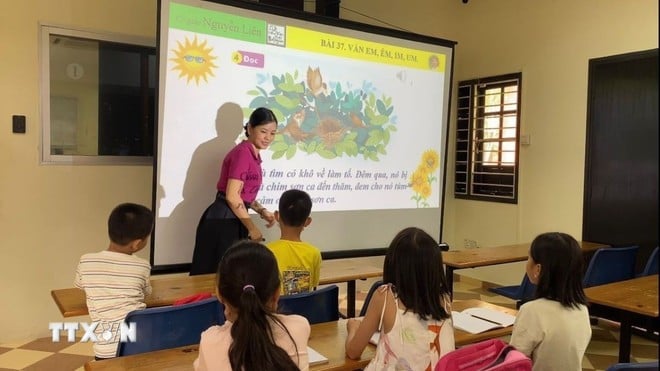 |
| Teacher Nguyen Thi Lien in a Vietnamese language class at the Vietnamese Embassy in Malaysia. (Photo: Hang Linh/VNA) |
Teaching Vietnamese to the younger generation, especially in Vietnamese communities abroad, will help them preserve their national identity, maintain ties with their homeland, and build a dynamic, creative generation that is always proud of its language and culture.
With increasing integration into the international community, the development of the Vietnamese language should not only focus on preserving its purity but also on creativity and innovation. Artists, writers, poets, and language researchers can play a crucial role in developing Vietnamese into a diverse, rich language that aligns with new trends while retaining its core values.
More than ever, the Vietnamese language needs to be promoted as a precious heritage, an indispensable part of building and protecting Vietnamese cultural identity in the new era of the nation.
(According to VNA/Vietnam+)
https://www.vietnamplus.vn/tieng-viet-bieu-tuong-cua-van-hoa-lich-su-va-ban-sac-dan-toc-post1012875.vnp


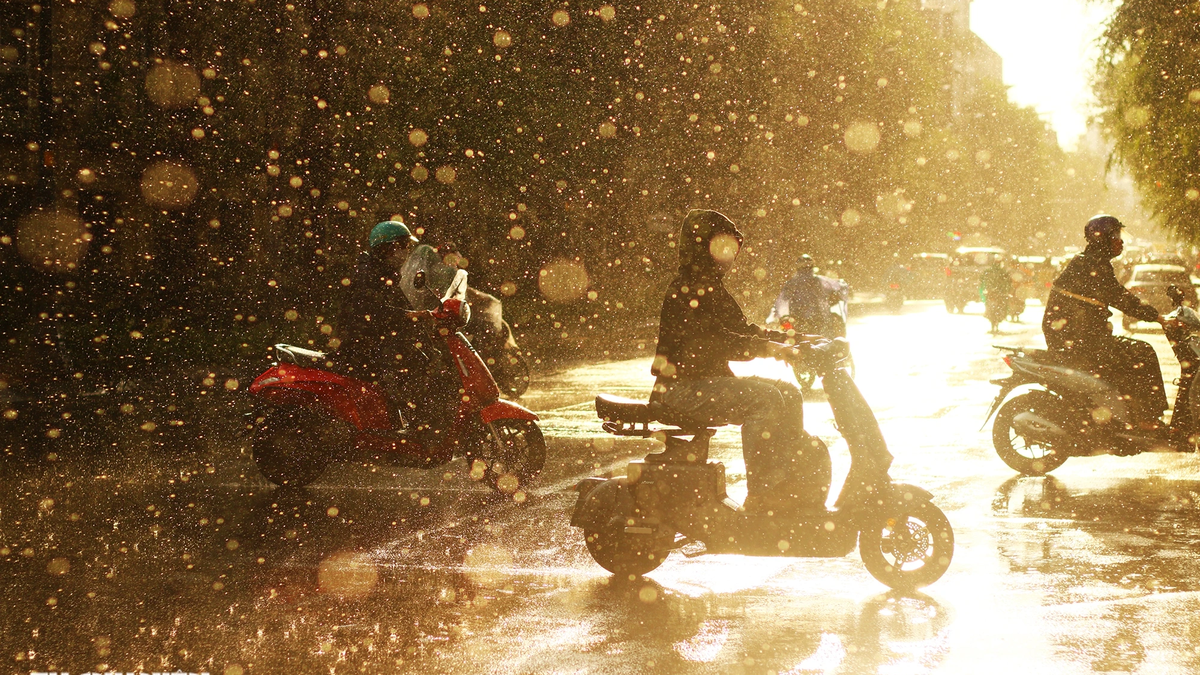
![[Image] Hanoi's urban life under the challenge of a "scorching hot" environment](https://vphoto.vietnam.vn/thumb/1200x675/vietnam/resource/IMAGE/2026/05/25/1779706979265_nang-nong-t5-2026-minh-duy-7-4636-jpg.webp)


![[Image] Close-up view of the interchange connecting the two expressways and Long Thanh Airport.](https://vphoto.vietnam.vn/thumb/1200x675/vietnam/resource/IMAGE/2026/05/25/1779703378210_ndo_br_z7863716673926-224453a31600126cce10622af6290afd-4549-jpg.webp)











































































Comment (0)