

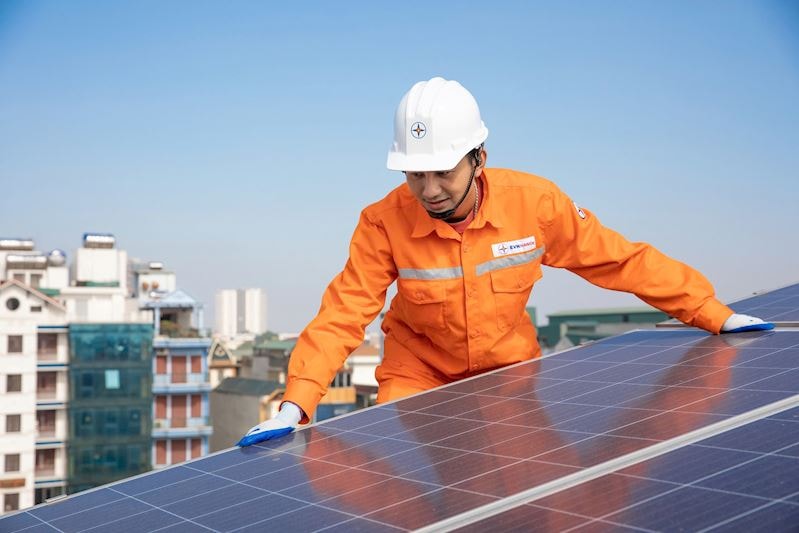
From temporary solutions to survival requirements.
This summer, electricity demand continues to surge due to prolonged heatwaves. Successive peak load periods indicate a shrinking operational capacity for the system, particularly in large cities and concentrated industrial zones.
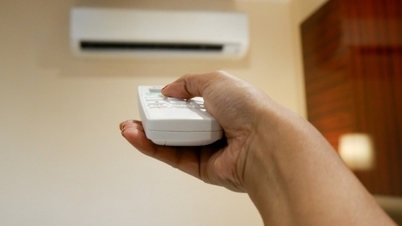
Calls to "turn off unnecessary appliances" and "set air conditioners to 26 degrees Celsius or higher" were once seen as temporary solutions to alleviate pressure on the power industry during the peak of the dry season. However, in the context of rapidly increasing electricity demand, a strong energy transition, and increasingly stringent global green standards, saving electricity is no longer simply a movement, but has become a mandatory requirement for businesses, agencies, households, and the entire economy .
According to the National Program on Energy Saving and Efficiency for the period 2019-2030 (VNEEP3), Vietnam aims to save 5-7% of total national energy consumption by 2025 and 8-10% by 2030. This is not only about reducing energy costs, but also directly linked to the goal of green growth and the commitment to net zero emissions by 2050.
In this context, electricity conservation has become the fastest and least expensive "on-site power source" to reduce pressure on the system. Not only steel, cement, and textile businesses, but also many businesses in the plastics and food industries are strongly shifting towards energy management models according to international standards. A prime example is Vietnam Packaging Production Application Investment Company Limited (VIPACO), which has implemented an ISO 50001 energy management system to control electricity consumption at each stage of production.
According to energy experts, this model helps businesses reduce energy losses, optimize equipment operation, and gain an advantage when participating in the global green supply chain.
From the perspective of consumers, the pressure of rising household electricity costs due to the tiered pricing system is also causing significant changes in consumption behavior. According to current regulations, household electricity prices are divided into five tiers, with higher consumption levels paying higher prices to encourage efficient and economical use.
Ms. Nguyen Thu Ha, a resident of Hoang Mai ward ( Hanoi ), said that her family has replaced all their lighting fixtures with LEDs, set the air conditioner to 27 degrees Celsius combined with a fan, and limited the use of high-power appliances during peak hours. “Saving several hundred thousand dong on electricity bills each month is very noticeable. But more importantly, we are aware that saving electricity also contributes to reducing the strain on the system,” Ms. Ha shared.
According to Associate Professor Tran Dinh Thien, former Director of the Vietnam Institute of Economics, in the context of global green transformation, energy is no longer simply an input cost but has become a decisive factor in the competitiveness of businesses and the economy. Businesses that consume large amounts of energy will find it increasingly difficult to participate in international supply chains if they do not improve their energy efficiency.
The "new power source" of the green economy.
From a long-term perspective, energy conservation is being seen as a form of "new power source" because the investment cost is much lower than building new power plants or transmission systems.
According to experts, every kWh of electricity saved means reduced pressure on power generation investment, reduced consumption of fossil fuels, and reduced carbon emissions. This is a particularly important benefit in the context of Vietnam promoting energy transition and fulfilling its commitment to net-zero emissions by 2050.
Many export businesses now consider energy saving a mandatory condition for retaining orders. Markets such as the EU and the US are increasingly tightening emission standards and carbon footprint for imported goods. This forces businesses to demonstrate energy-efficient, low-emission production processes that meet international green standards.
Many businesses have invested in automation lines, replaced low-efficiency equipment, implemented energy management systems according to ISO 50001 standards, and installed rooftop solar power to reduce their dependence on the grid.
The Ministry of Industry and Trade is also promoting a roadmap to phase out low-energy-efficiency appliances in order to raise energy consumption standards throughout society. The energy labeling program is considered one of the important tools to shift the market towards more energy-efficient products.
In particular, the demand response (DR) mechanism is being expanded and improved in a more market-oriented direction. Circular 07/2025/TT-BCT stipulates electricity load adjustment and load shifting programs, encouraging industrial and commercial customers to proactively reduce or shift their electricity demand during periods of system stress.
According to energy experts, this is an inevitable trend for modern power systems, as consumers are not only electricity users but also participate in regulating the system through changes in consumption behavior.
In the context of continuously increasing electricity demand, limited room for developing new power sources, and a growing need to green the economy, electricity conservation is no longer just a short-term solution. It is becoming a mandatory requirement for sustainable development, and a measure of the competitiveness of businesses and the economy as a whole.
Source: https://hanoimoi.vn/tiet-kiem-dien-tu-phong-trao-den-bat-buoc-975893.html
![[Image] Checking the security conditions at the exam site, ready for the 10th grade exam.](https://vphoto.vietnam.vn/thumb/1200x675/vietnam/resource/IMAGE/2026/05/28/1779943458889_z7872507660648-d764421a26e8cd7b61d70d142a48a685-jpg.webp)


![[Photo] Opening Ceremony of the National People's Council Conference on the Implementation of Directions and Tasks for the 2026-2031 Term](https://vphoto.vietnam.vn/thumb/1200x675/vietnam/resource/IMAGE/2026/05/28/1779939257690_ndo_br_bnd-1991-jpg.webp)



























































































Comment (0)