

Danish Prime Minister Mette Frederiksen recently revealed that part of her speech to parliament was written by the artificial intelligence tool ChatGPT. Frederiksen's shocking revelation highlights the progress of technology but also expresses concern about the "risk of extinction" posed by artificial intelligence (AI).
When ChatGPT replaces the speechwriter
On May 31st, Prime Minister Mette Frederiksen shocked Danish MPs when she revealed that she had used the ChatGPT tool to write parts of her speech to parliament. "What I read in parliament was not mine or anyone else's," Frederiksen said.
According to Le Point, a portion of Prime Minister Mette Frederiksen's Danish-language speech, compiled by ChatGPT, included the following sentences: “It has been both an honor and a challenge to lead an expanded government over the past five years of parliament”; “We have strived for inter-party cooperation and secured a strong and sustainable future for Denmark.” ChatGPT also wrote: “We have implemented measures to combat climate change and ensured a more equitable and inclusive society – where all citizens have equal opportunities.”
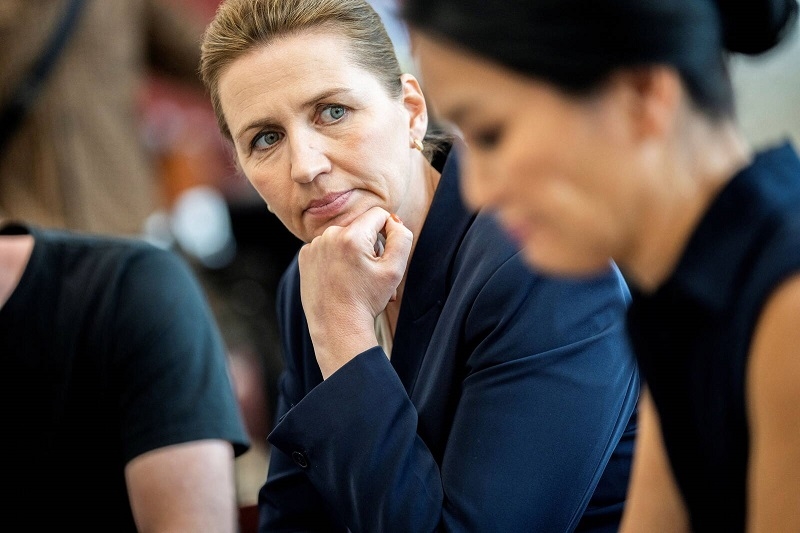 |
| Danish Prime Minister Mette Frederiksen believes ChatGPT is both fascinating and frightening. Photo: Reuters |
And once again, ChatGPT emphasized: “We have also worked to strengthen our health and social systems, so that all citizens can receive the help they need”; or “Although we have faced challenges and opposition along the way, I am proud of what we have accomplished together during the past parliamentary term.”
For the leader of Denmark's Social Democratic Party, who delivered a political commentary speech at the end of the recent parliamentary session, the conversational robot developed by OpenAI has the potential to deceive listeners and could also be a source of concern. “While not entirely accurate, ChatGPT knows the details of the government’s agenda… What ChatGPT can do is both fascinating and frightening,” Frederiksen concluded.
Threat of extinction
ChatGPT is one of the latest examples of the impressive capabilities of AI. However, this has also raised some concerns about the misuse of this technology, particularly the spread of misinformation or the risk of mass employee replacements. Speaking at the 15th Congress of the European Union of Trade Unions at the end of May, European Commission President Ursula Von der Leyen said that 25% of European companies are planning to use AI tools in human resource management, and some of these tools could be used for automated employee dismissals. She stated: “Every algorithm is created by a programmer, and that programmer has a knowledge base and biases. Therefore, no algorithm is without flaws.” The EC President emphasized that, for this reason, it is necessary to be clear and no one should be dismissed based on an algorithm; rules are needed.
The threat of extinction posed by AI was also a topic on the agenda of the high-level trade meeting between the US and the European Union (EU) held in Luleå, Sweden on May 31st. Prior to this meeting, a group of business leaders and technology experts, including Sam Altman—the creator of ChatGPT—warned about the threat of extinction to humanity due to the rise of AI. Geoffrey Hinton, considered one of the fathers of AI, shared with the press that he feared the consequences of his own creation. Technology experts argued that addressing the risks associated with AI must be a “global priority alongside other societal risks, such as pandemics and nuclear war.”
According to Yoshua Bengio, a researcher dubbed Canada's "AI godfather," some AI technologies are approaching human-level intelligence. Recognizing that the day AI becomes a real threat to humanity may come much sooner than any prediction, Bengio urges AI scientists to collaborate with experts from other fields, as well as relevant governments, to conduct a more comprehensive and in-depth assessment of worst-case scenarios and find ways to mitigate them.
PHUONG VU
Source
![[Photo] Prime Minister Pham Minh Chinh presides over a meeting on private sector economic development.](/_next/image?url=https%3A%2F%2Fvphoto.vietnam.vn%2Fthumb%2F1200x675%2Fvietnam%2Fresource%2FIMAGE%2F2025%2F12%2F20%2F1766237501876_thiet-ke-chua-co-ten-40-png.webp&w=3840&q=75)

















































































Comment (0)