


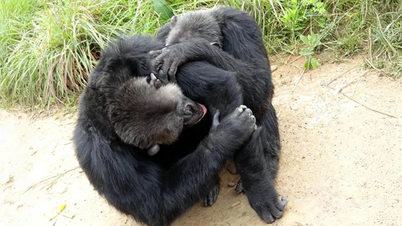
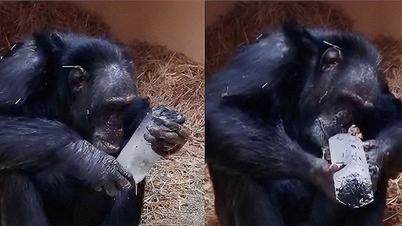
Not only humans, but chimpanzees also have their own 'circles of friendship' - Photo: EARTH
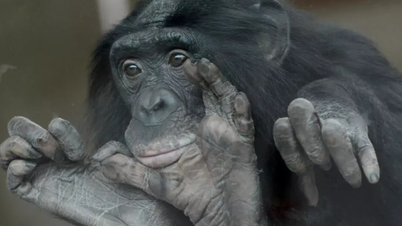
Humans typically maintain a small group of close friends and family, while also keeping in touch to varying degrees with numerous acquaintances. A new international study suggests that this way of organizing social relationships is not unique to humans.
Scientists from Utrecht University (Netherlands) and Carlos III University of Madrid (Spain) have discovered that chimpanzees and bonobos also build social networks following a pattern similar to humans' "circles of friendship."
The research team analyzed grooming behavior—an activity that helps strengthen social relationships—in 24 chimpanzee and bonobo populations. The results showed that most individuals spent more time with a few preferred partners, while maintaining looser relationships with many other members of the troop.
Researchers found that larger herds tend to make individuals more selective in allocating their time and attention, similar to how humans prioritize important relationships as social networks expand.
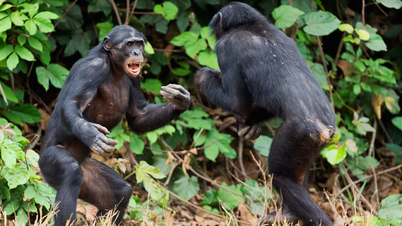
Although both species possess a stratified social structure similar to humans, the two species employ different strategies for maintaining relationships. Bonobos allocate their time relatively evenly among members, creating a broader, more cohesive network. Chimpanzees, on the other hand, focus on a small number of close companions.
This difference becomes more apparent as individuals age. Similar to humans, chimpanzees tend to narrow their social circles and invest more in close relationships. In contrast, bonobos maintain a broad and flexible network of relationships over time.
According to lead author Edwin van Leeuwen, these findings suggest that the fundamental principles governing how social effort is allocated may be shared across species. The study also suggests that there are many different evolutionary strategies for building and maintaining social connections, thereby helping scientists better understand cooperation, social learning, and emotional health in both humans and animals.
Source: https://tuoitre.vn/tinh-tinh-cung-co-hoi-ban-than-nhu-nguoi-20260601092926366.htm






















![[Photo] Reception to welcome General Secretary and President To Lam and his wife on their State visit to the Philippines](https://vphoto.vietnam.vn/thumb/1200x675/vietnam/resource/IMAGE/2026/06/01/1780295488620_vna-potal-chieu-dai-chao-mung-tong-bi-thu-chu-tich-nuoc-to-lam-va-phu-nhan-tham-cap-nha-nuoc-toi-philippines-8798060-7855-jpg.webp)































































Comment (0)