


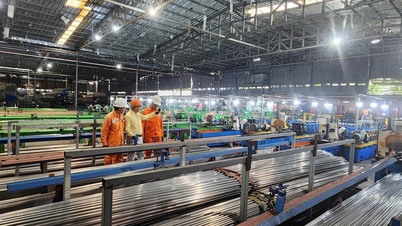
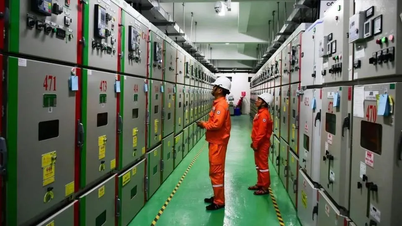
Workers at Dien Quang High-Tech Co., Ltd. in the high-tech zone, Ho Chi Minh City - Photo: QUANG DINH
But in a rapidly changing world , the crucial question is no longer just how hard we work, but whether the country's operating model is capable of enabling social resources to be unlocked and utilized effectively.
That is also the story of institutions.
When discussing institutions, many people immediately think of debates about political models or ideologies. However, from the perspective of national development, institutions should first be understood in a more practical way: they are the way a society organizes power, laws, and operating mechanisms to serve development.
In that sense, the core of an institution lies not in its name, but in its capacity to organize society and its ability to allocate resources effectively for the nation.
If we liken the economy to a large field, then institutions are like the irrigation system. There may be plenty of water, but if the canals are clogged, diverted in the wrong direction, or lost along the way, the field will still suffer from drought.
The same applies to national resources. A country may have a lot of potential, capital, and talent, but if the system is not functioning properly, those resources will not flow to where they create the highest value.
Ultimately, the development history of many nations is the history of their ability to channel social resources.
Resources here are not just capital or natural resources, but also intelligence, talent, time, social trust, investment opportunities, and human creative energy.
A nation may have intelligent, hardworking, and ambitious people. But if talented individuals lack opportunities to thrive, businesses struggle to access resources, innovation is discouraged, or capital doesn't flow to areas that generate the highest value, then society's development momentum will be stifled.
Conversely, when the system operates efficiently and builds trust, society will naturally mobilize vast resources. People will naturally bring their abilities, capital, creativity, and aspirations to where the highest value is created.
In this process, the private sector plays a particularly important role because it is often the most flexible, most sensitive to market signals, and capable of adjusting resources most quickly to actual needs.
This dynamism helps the economy adapt better to changes in technology, markets, and social needs.
Therefore, an effective institution is not one that seeks to replace the market, but rather one that creates conditions for the private sector, innovation, and healthy competition to become vital drivers of growth and innovation.
In other words, a constructive government is not a machine that replaces the market, but rather a system capable of designing reasonable "rules of the game" so that resources can be moved efficiently within society.
The state plays a crucial role in ensuring stability, social justice, security, the rule of law, and fostering confidence in the functioning of the system.
If an institution is designed effectively, the system itself becomes a very powerful driver of rapid and sustainable growth. This is also the foundation that has helped many East Asian countries maintain double-digit growth rates for extended periods.
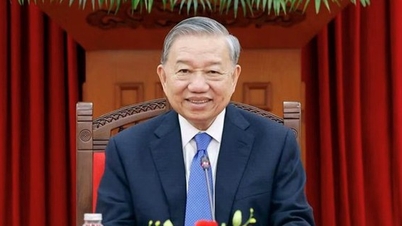
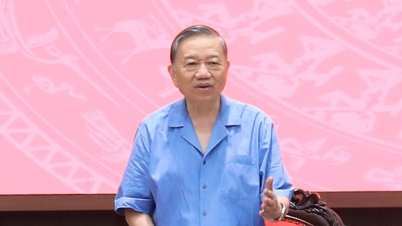
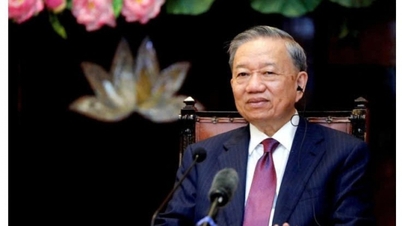
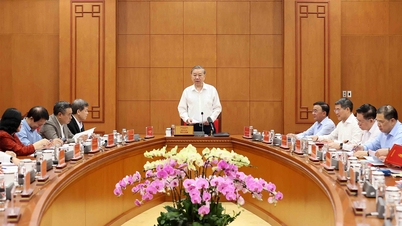
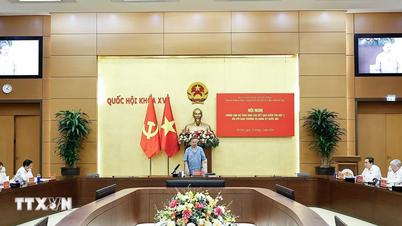
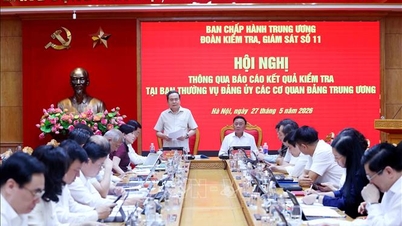
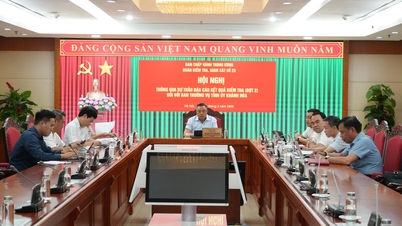
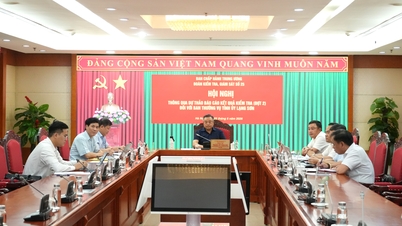
During a recent working session with the Central Committee's Policy and Strategy Board and related agencies to assess the country's development resources, General Secretary and President To Lam demonstrated a clear determination to seek and establish a new growth model to achieve double-digit economic growth in the coming period.
This is not just about increasing GDP, but essentially about reorganizing national resources so that the country can enter a new phase of development with higher productivity, greater efficiency, and greater sustainability.
With such strong political determination demonstrated by the leadership, the most important thing will be to find ways to utilize and allocate resources rationally for development, in accordance with Vietnam's actual conditions and global trends.
Knowing what is right to do is not difficult. Whether or not one has the determination to do what needs to be done is what truly differentiates nations in terms of their standing.
And the window of opportunity won't stay open waiting for us forever.
Source: https://tuoitre.vn/to-chuc-nguon-luc-cho-phat-trien-20260527082408549.htm


![[Photo] General Secretary and President To Lam presides over the meeting to approve the draft report on the results of the second inspection by the Politburo of the Standing Committee of the Hanoi City Party Committee.](https://vphoto.vietnam.vn/thumb/1200x675/vietnam/resource/IMAGE/2026/05/26/1779789811432_a2-bnd-4430-9620-jpg.webp)













































































Comment (0)