

In addition to the four criteria mentioned above, there are four more specific behavioral criteria for each relationship within the family. These are: fidelity and affection in marital relations; exemplary behavior and love for parents towards children and grandparents towards grandchildren; filial piety and respect for children and grandchildren towards parents and grandparents; and harmony and sharing among siblings. Depending on each criterion, the "Code of Conduct in the Family" also includes very detailed "bullet points" outlining actions and behaviors that each party should perform for each other in daily life.
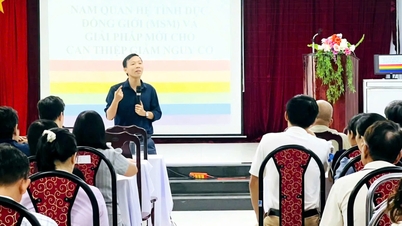
Many attendees at the launch event for the registration program in An Cuu ward in early June expressed support for the specific criteria outlined, tailored to individual family relationships. Holding a brochure outlining the criteria, Ms. Nguyen Dung (Hue City) stated that it was not only concise and clear but also easy to understand. Beyond the general criteria, the specific guidelines focus on concrete ways of behaving. These criteria not only form the foundation of each family but also serve as an environment for character development within a microcosm of society. This, in turn, fosters love and harmony in the wider community.
According to Mr. Nguyen Phu ( Hue City), this set of criteria is not only clear but also very fair. It clearly outlines the responsibilities of adults, such as grandparents and parents, towards their children and grandchildren. Besides setting a good example, showing care and nurturing, adults need to pass on traditional values and life experiences to their children and grandchildren, and encourage them to adopt a cultured lifestyle, develop civic awareness, and preserve family traditions. “To ensure that children and grandchildren fulfill these criteria well, I believe that adults must first set a good example. Only then will this set of criteria, when applied to life, be meaningful and promote the traditional values of Vietnamese families in general, and Hue families in particular,” Mr. Phu said.
Mr. Phan Thanh Hai, Director of the Department of Culture and Sports, stated that the family is a special institution in society. Therefore, over the years, the Party and the State have issued many policies and guidelines aimed at building prosperous, equal, progressive, and happy Vietnamese families. Notably, the 13th Party Congress document affirmed: "Building prosperous, progressive, happy, and civilized Vietnamese families; building national values, cultural values, and human standards associated with preserving and developing Vietnamese family values in the new era." According to Mr. Hai, this viewpoint affirms the necessity of caring for, strengthening, and developing the family in the era of reform and international integration.
The Thua Thien Hue Provincial Party Committee has issued Directive No. 18-CT/TU on strengthening the Party's leadership over family building in the new situation. "Therefore, implementing the Code of Conduct in the Family is one of the important tasks, aiming to honor the profound humanistic values of Vietnamese families, mobilizing all strata of people to practice a civilized lifestyle, build cultured families, and inherit and promote the good traditions of the family," Mr. Hai affirmed.
Meanwhile, according to Mr. Nguyen Viet Bang, Vice Chairman of the People's Committee of Hue City, building, preserving, and promoting Hue's cultural values and family culture is of paramount importance, making a practical contribution to the process of promoting the beautiful traditional values that bear the identity of Hue. "As both the cell of society and the nucleus forming Hue's cultural values, the family is a favorable environment for disseminating the Party's guidelines and policies, the State's laws, and educating on appropriate behavior, noble values, and exemplary family models," Mr. Bang said. Therefore, Mr. Bang believes that effectively implementing the Code of Conduct within the family not only honors the core values of the Vietnamese family – the Hue family – but its implementation and promotion to the entire population will create a positive ripple effect in society.
Source
![[Image] Nearly 125,000 Hanoi students completed the Literature exam for the 10th grade entrance exam.](https://vphoto.vietnam.vn/thumb/1200x675/vietnam/resource/IMAGE/2026/05/30/1780117233041_ndo_br_thiet-ke-chua-co-ten-2-png.webp)


































































Comment (0)