

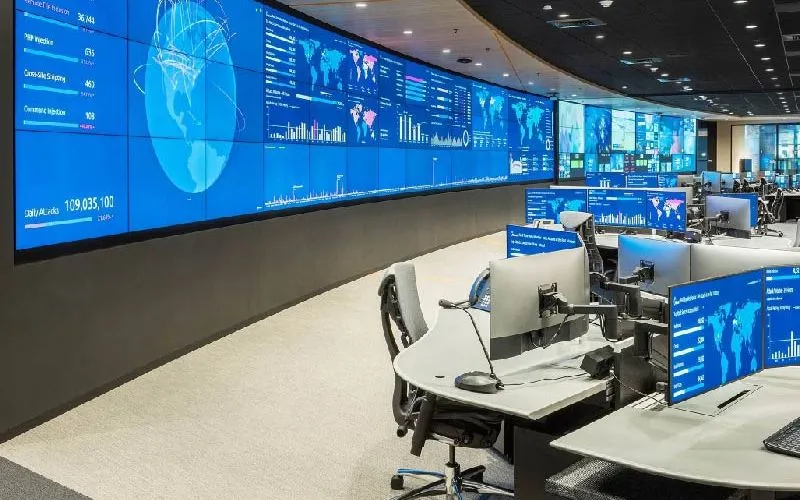
Ho Chi Minh City is accelerating the application of AI and Digital Twins to build a "digital brain" for its megacity of 14 million people and to coordinate urban activities in real time.
Urban management in the data age.
Ho Chi Minh City is at a turning point in urban governance. While in previous years, the development challenge mainly revolved around building roads, bridges, and expanding physical infrastructure, the city is now shifting to a different race: building a "digital brain" for the megacity.
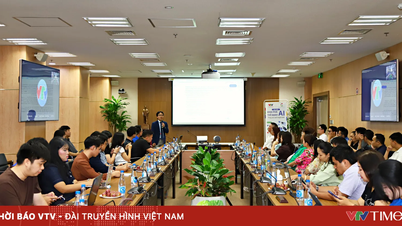
This message was clearly demonstrated at the international workshop "Smart Cities, Where Data and Governance Intersect," jointly organized by the University of Economics Ho Chi Minh City (UEH), the Institute for Smart Cities and Management (ISCM), and the Centre for Urban Science and Progress (CUSP) of New York University (NYU), with the participation of UNESCO.
Mr. Nguyen Ky, Deputy Director of the Ho Chi Minh City Department of Science and Technology, stated that after the merger of the former Ho Chi Minh City, Binh Duong, and Ba Ria - Vung Tau, the city now has a population of approximately 14 million people across an area of 6,772 km². Consequently, the pressure on governance has shifted to a completely different level.
According to Mr. Nguyen Ky, Ho Chi Minh City is facing three major challenges: transforming its governance model based on digital data and technology; applying AI to address bottlenecks in traffic, environment, healthcare, and education; and developing high-quality human resources to serve the operation of the megacity.

While previously smart cities primarily focused on digitizing administrative procedures or installing surveillance cameras, Ho Chi Minh City is now moving towards a real-time management model.
Notably, for the first time, Digital Twins (Digital urban replicas) are placed at the center of Ho Chi Minh City's urban management strategy. The city has identified the implementation of an "AI First" strategy, combining the Digital Twin model to simulate and coordinate solutions to problems such as traffic congestion, urban flooding, and solid waste management.
While previously smart cities primarily focused on digitizing administrative procedures or installing surveillance cameras, Ho Chi Minh City is now moving towards a real-time management model. In this model, all data on traffic, lighting, drainage, environment, and public transport are continuously synchronized and analyzed on a digital platform.
According to Dr. Nguyen Minh Hong, former Deputy Minister of Information and Communications and President of the Vietnam Digital Communications Association, digital mirroring technology is no longer an experimental trend but is becoming a core platform to enhance the operational capacity of data-driven digital governments.
From a traffic management perspective, this is a huge change. Instead of dealing with congestion after an incident occurs, the Digital Twins system can help authorities simulate traffic scenarios beforehand and develop traffic control plans from the outset.
According to the Ho Chi Minh City Department of Construction, the Urban Traffic Management and Operation Center currently manages over 1,300 cameras and sensors, including traffic cameras, AI-powered violation detection cameras, and IoT sensor systems. All data is sent to the centralized Data Lake data center where deep learning AI analyzes traffic flow, predicts congestion risks, and proposes real-time traffic regulation solutions.
The system is currently deployed on major traffic arteries such as Mai Chi Tho, Vo Van Kiet, and Pham Van Dong. AI can optimize traffic light cycles based on actual traffic density and suggest traffic management scenarios when congestion occurs.
In its traffic congestion reduction strategy for the period 2026-2030, Ho Chi Minh City aims to reduce traffic congestion by 5-10%. The city will complete 39 out of 45 transitional transportation projects from 2021-2025 and commence an additional 53 projects in 2026-2027, including 7 urgent steel overpasses expected to be implemented in 2026.
However, what is more noteworthy is not the number of projects but the change in the way they are operated. The city is gradually shifting from a model of "expanding infrastructure to address pressure" to "optimizing infrastructure with data."
Ambition comes with pressure.
Digital Twins opens up tremendous opportunities for Ho Chi Minh City, especially as the city is entering a period of infrastructure overload. This technology allows for the simulation of all city functions in a digital space, from traffic and drainage to urban lighting.
According to a representative from Huawei Vietnam, the "AI City" trend is becoming a new development model for many major cities around the world. In this model, AI acts as a "digital brain" supporting urban management based on real-time data instead of relying on manual processes.
Huawei says its AI system can automatically detect abnormal situations such as traffic congestion, flooding, illegal parking, or construction safety risks. Several models in China have shown that AI significantly shortens incident response times and improves predictive capabilities.

Ho Chi Minh City is currently expanding the application of Digital Twins to drainage, urban lighting, and construction order management.
Ho Chi Minh City is also expanding the application of Digital Twins to drainage, urban lighting, and construction order management. In the lighting sector, all data from control cabinets, lamp posts, and equipment has been digitized according to GPS standards. The system can automatically adjust lighting intensity according to weather conditions and monitor incidents in real time.
Simultaneously, the city is accelerating the digitalization of urban space management. After more than three months of implementing Plan 53/KH-UBND on strengthening public order and urban order management, functional forces have conducted over 24,700 patrols, handled over 33,000 violations with a total fine of nearly 29 billion VND. More than 2,200 signs and awnings encroaching on sidewalks have been dismantled.
The digital model for licensing the use of roads and sidewalks in An Dong ward also demonstrates the city's new approach. Shortly after implementation, the locality recorded 58 applications with a total fee collection of over 911 million VND.
However, behind the ambition to build a "digital brain" lie enormous challenges. Dr. Dinh Cong Khai, Deputy Director of UEH, believes that the value of data lies not only in its scale but also in its ability to be managed, shared, and used responsibly.
This is also the biggest bottleneck currently. Ho Chi Minh City can invest in technology, but if data remains fragmented among departments, Digital Twins will struggle to be fully effective.
According to the Ho Chi Minh City Department of Construction, the city is simultaneously deploying multiple specialized databases with the goal of completing all 19 mandatory databases for connection and sharing by the third quarter of 2026. By the first and second quarters of 2026, many systems will be operating stably according to the criteria of "accurate, complete, clean, and active." This is an important foundation for Ho Chi Minh City to move towards a forecasting governance model, replacing the previous passive management approach.
In the competition among future megacities, advantage will not lie solely in the number of skyscrapers or GDP size. The deciding factors will be data processing capabilities, real-time operational capacity, and intelligent urban management. If done correctly, Digital Twins could become the "digital brain" that helps Ho Chi Minh City optimize infrastructure, reduce social costs associated with traffic congestion, and improve the quality of life for its residents.
Source: https://vtv.vn/tp-ho-chi-minh-tang-toc-quan-tri-do-thi-bang-bo-nao-so-100260528171844966.htm


![[Image] Pleasant weather helps students enter the 10th grade entrance exam with confidence.](https://vphoto.vietnam.vn/thumb/1200x675/vietnam/resource/IMAGE/2026/05/29/1780034401612_ngay-1-thi-lop-10-minh-duy-8-5009-jpg.webp)
![[Photo] Ba Lang An Lighthouse - the "eye of the sea" amidst the "rock museum" of Quang Ngai province.](https://vphoto.vietnam.vn/thumb/1200x675/vietnam/resource/IMAGE/2026/05/29/1780038698840_anh-man-hinh-2026-05-29-luc-14-10-42.png)













































































Comment (0)