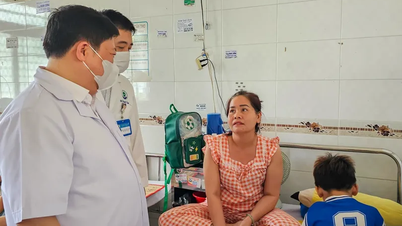
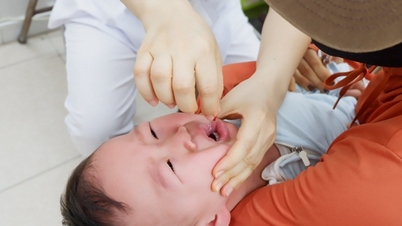
Given the complex developments of the hand, foot, and mouth disease outbreak in Ho Chi Minh City and the southern provinces, on the morning of March 29th, a delegation from the Ministry of Health , led by Associate Professor Dr. Nguyen Thi Lien Huong - Deputy Minister of Health, visited Children's Hospital 2 to supervise the admission and treatment of hand, foot, and mouth disease patients. The purpose was to assess the situation and propose effective disease control measures.
Hand, foot, and mouth disease cases increased by 240%.
According to the Deputy Minister of Health , the Department of Disease Prevention has recently issued numerous directives to localities to implement disease control measures. In Ho Chi Minh City, the health sector has proactively coordinated with hospitals to strengthen various activities to prevent and control hand, foot, and mouth disease.
However, recently, the mortality rate from hand, foot, and mouth disease has tended to increase compared to the same period last year. Notably, there are still many cases that go undetected and undiagnosed early, leading to delays in referral to higher-level facilities, increasing the risk of severe complications and death.
According to Dr. Dang Xuan Vinh, Head of the General Planning Department at Children's Hospital 2, the number of hand, foot, and mouth disease cases from the beginning of 2026 to the present has shown an increasing trend compared to the same period in 2025, recorded in both outpatient and inpatient groups.

Associate Professor Dr. Nguyen Thi Lien Huong - Deputy Minister of Health, delivered a speech at the working session.
In the first three months of the year, the hospital admitted 330 inpatients, with approximately 97% of cases involving preschool-aged children, particularly those under 2 years old.
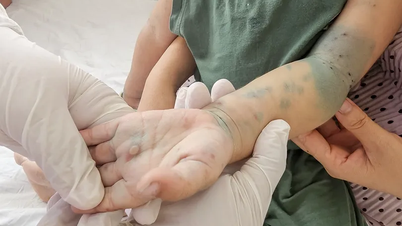
Since the beginning of the year, the hospital has recorded 52 severe cases (grade 2B and above). Notably, test results have shown the circulation of Enterovirus 71 (EV71) – a pathogen with a high risk of causing neurological complications and rapid progression, increasing concern in the community.
It is predicted that the peak of the epidemic may occur in May-June, followed by another peak from September to the end of the year.
Faced with increasing patient demand, the hospital has proactively prepared sufficient medications, supplies, and admission plans. In the event of a severe outbreak, the unit can repurpose some departments to focus on treating hand, foot, and mouth disease, while also relocating less contagious infectious diseases to other areas. Furthermore, the hospital is strengthening professional training for lower-level facilities and maintaining 24/7 remote support.
According to Mr. Nguyen Van Vinh Chau, Deputy Director of the Ho Chi Minh City Department of Health, in the first 11 weeks of 2026, the city recorded more than 7,000 cases of hand, foot, and mouth disease, an increase of approximately 240% compared to the same period last year. The proportion of severe cases (grade 2B and above) accounted for about 1.3%.
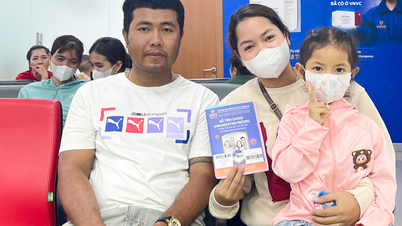
The city's health sector has issued directives and strengthened community surveillance, especially in preschools and kindergartens – places where high-risk children are concentrated. At the same time, it has instructed tertiary hospitals such as Children's Hospital 1, Children's Hospital 2, Ho Chi Minh City Children's Hospital, and Ho Chi Minh City Hospital for Tropical Diseases to be ready to receive and treat severe cases.
"One of the reasons leading to severe cases is the late detection or missed signs of worsening conditions at the grassroots level. Therefore, Ho Chi Minh City has identified two key solutions: strengthening training for grassroots healthcare workers and promoting communication to help parents recognize early signs of danger and bring their children to medical facilities in a timely manner," said the Deputy Director of the Ho Chi Minh City Department of Health.
Early control of hand, foot, and mouth disease can reduce mortality.
According to Dr. Hoang Duc Minh, Director of the Department of Disease Prevention, hand, foot, and mouth disease is an endemic disease that occurs annually, similar to dengue fever. To reduce mortality rates and control community spread, the Ho Chi Minh City health sector needs to strengthen coordination between the CDC and hospitals to promptly and comprehensively gather information on cases, down to the local level and schools. Upon recording a case, especially in young children (primarily under 5 years old), it is crucial to quickly identify the place of residence and school to immediately implement measures to control the outbreak.
Local CDCs need to proactively coordinate with educational institutions, directly visiting preschools and kindergartens to supervise and guide classroom disinfection and hygiene practices, and to educate parents. Simultaneously, they need to update data promptly and comprehensively on the infectious disease reporting system to improve contact tracing and disease prevention efforts.

Associate Professor Dr. Nguyen Thi Lien Huong - Deputy Minister of Health, visits patients with hand, foot, and mouth disease receiving treatment at Children's Hospital 2.
According to Dr. Nguyen Trong Khoa, Deputy Director of the Department of Medical Examination and Treatment Management, the Ministry of Health has issued a nationwide directive on strengthening early detection, monitoring, and treatment of hand, foot, and mouth disease. The increasing number of cases will lead to a higher risk of severe cases, especially with the circulation of the EV71 strain. Therefore, closely monitoring the disease progression and early detection of signs of worsening conditions is crucial to reducing mortality. In reality, many deaths are related to late hospitalization, missing the "golden window" for treatment.
"The Ministry of Health will continue to organize online training courses to strengthen the capacity of grassroots-level facilities, while maintaining a system of remote consultations and professional support between tertiary and local hospitals," said the Deputy Director of the Department of Medical Examination and Treatment Management.
Strengthen communication and enhance treatment.
Deputy Minister Nguyen Thi Lien Huong noted that the southern region is entering the peak season for many infectious diseases, especially dengue fever and hand, foot, and mouth disease. Therefore, the Ho Chi Minh City health sector needs to strengthen coordination. Through the school health staff system and by leveraging platforms like Zalo and Facebook, information is disseminated to parents about disease prevention, symptom recognition, and healthcare locations.
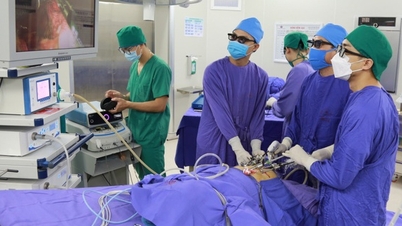
Regarding treatment, the Deputy Minister suggested that medical facilities should continue to improve the capacity of their medical staff to meet the requirements for admission, treatment, and especially resuscitation for severe cases with complications.
In addition, infection control measures in hospitals need to be tightened. Hand, foot, and mouth disease is a contagious disease, and the EV71 strain is highly contagious and can easily cause severe complications; therefore, infection prevention and control procedures need to be reviewed and strictly implemented.
According to the Deputy Minister, hand, foot, and mouth disease cases are often first detected at treatment facilities, therefore the role of hospitals in providing epidemiological information is extremely important. Timely reporting helps the health sector effectively implement contact tracing, surveillance, and disease control in the community and in schools.
Furthermore, hospitals need to ensure adequate resources in terms of personnel, medicines, supplies, and disinfectants, while also developing contingency plans to be ready to respond when the number of cases increases. Simultaneously, they can strengthen professional coordination with the Pasteur Institute of Ho Chi Minh City in the implementation of epidemic control measures.
Source: https://suckhoedoisong.vn/tphcm-day-manh-kiem-soat-va-dieu-tri-benh-tay-chan-mieng-169260329114408344.htm































![[Photo] Reception to welcome General Secretary and President To Lam and his wife on their State visit to the Philippines](https://vphoto.vietnam.vn/thumb/1200x675/vietnam/resource/IMAGE/2026/06/01/1780295488620_vna-potal-chieu-dai-chao-mung-tong-bi-thu-chu-tich-nuoc-to-lam-va-phu-nhan-tham-cap-nha-nuoc-toi-philippines-8798060-7855-jpg.webp)










































































Comment (0)