

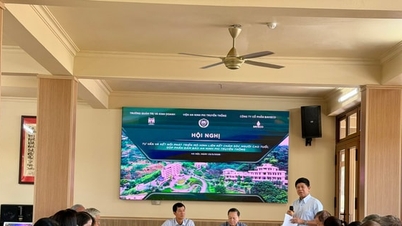
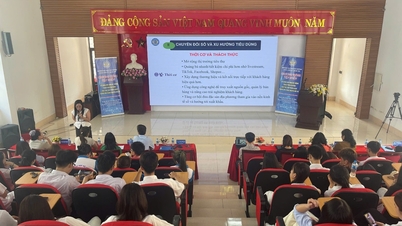
On May 21st, the Vietnam International Finance Centre in Ho Chi Minh City (VIFC-HCMC), in collaboration with Gemadept Group and the Ho Chi Minh City Institute for Development Studies, organized a forum titled "Developing the Maritime Finance Ecosystem in the Vietnam International Finance Centre in Ho Chi Minh City".
Pillars of global trade
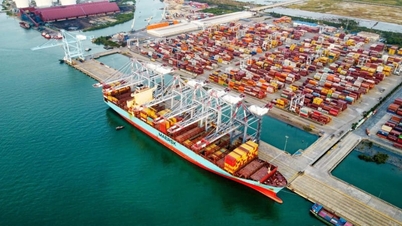
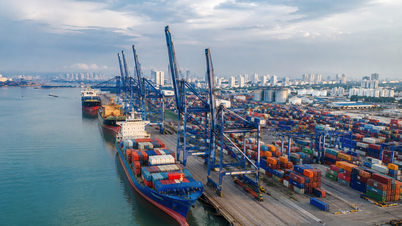
According to the strategic consulting firm Roland Berger, maritime transport is currently a pillar of global trade, transporting 12.6 billion tons of goods by 2025, accounting for 90% of international volume, with Asia holding two-thirds of container traffic.
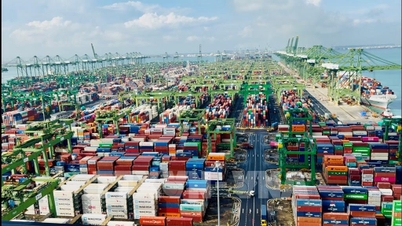
Between 2010 and 2025, container throughput in Vietnam is projected to increase fivefold, reaching 34 million TEU by 2025 with a compound annual growth rate (CAGR) of 11.2%, leading Asia.

Announcing the maritime financial ecosystem.
However, Vietnam's maritime industry is revealing significant gaps. The country currently contributes only 1% to GDP, and its gross domestic product (GVA) per capita is only $23,000, far below Singapore's $224,000.
Vietnam is also experiencing a "logistics import surplus," with logistics costs accounting for 16%–18% of GDP (compared to only 8%–10% in Singapore). Due to primarily exporting FOB (Free On Board), Vietnam only retains 4%–5% of the value of maritime trade; most high value-added services such as finance, insurance, and legal services are provided by foreign companies.
In light of this reality, IMFC was established as one of the four strategic pillars of VIFC-HCMC, playing a leading role in the process of shifting the economic structure from low-value to high-value-added sectors.
According to Roland Berger's May 2026 strategic report titled "Opportunities for Vietnam's Maritime Industry to Soar," this model aims to increase the proportion of value retained domestically to 15% by 2035.
According to Roland Berger, the project could help Vietnam attract an additional $10-15 billion in capital and goods, increase TEU/year by 18 million TEU, create a cumulative GVA of $50 billion, and generate 6,500-11,000 new jobs during the 2025-2035 period.
To realize this, Vietnam needs to learn from the models of Singapore and the UAE to build a national-specific mechanism based on five core elements: flexible products, state-shared risks, a comprehensive ecosystem, easily accessible capital flows, and an internationally standardized legal framework.

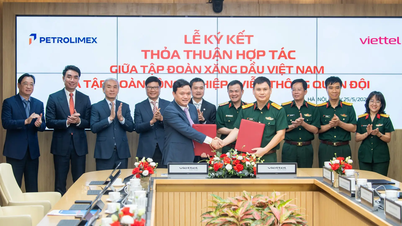
Signing ceremony of the memorandum of understanding on cooperation in developing the maritime financial ecosystem.
Create mechanisms to attract capital flows.
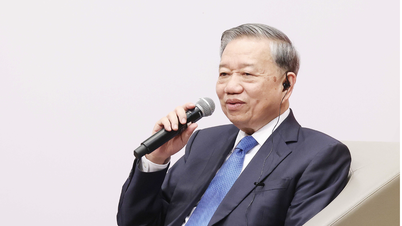
At the forum, Associate Professor Dr. Nguyen Huu Huan, Vice Chairman of the VIFC-HCMC Executive Agency, stated that Vietnam possesses a trade flow exceeding 1 trillion USD annually, but the financial flow remains neglected.
If the ports of Can Gio and Cai Mep - Thi Vai are cargo transshipment ports, then VIFC-HCMC must become a capital transshipment port for the maritime economy. Applying a policy testing mechanism (sandbox) for new financial and maritime services is key to attracting global capital flows.
Mr. Pham Quoc Long, Deputy General Director of Gemadept Group, said that Vietnam is aiming for a GDP of 780-800 billion USD by 2030, with Ho Chi Minh City accounting for 70% of the country's container output, but is facing major bottlenecks in infrastructure, specialized services, mechanisms, and human resources.
Positioning IMFC as a bridge between international finance and the maritime economy, Mr. Long proposed a three-stage roadmap (each stage lasting 1-3 years) starting from building the foundation (sandbox, one-stop shop, blockchain), expanding the ecosystem (public-private investment funds, incubators) to raising its international profile (maritime arbitration, derivatives exchange).
In particular, he emphasized two foundational technologies: the Common Data System (MCS) for risk assessment and trade finance, and the maritime exchange platform (Blockchain) for digitizing documents and reducing fraud. When operating effectively, IMFC expects to attract an additional $10-15 billion in capital flows annually and serve over 25 million TEU in the future.
Speaking at the forum, Mr. Nguyen Cong Vinh, Vice Chairman of the Ho Chi Minh City People's Committee, affirmed that although the Cat Lai port system and the Can Gio International Port mega-project have brought Vietnam deeper into the international trade supply chain, in reality, we have only participated in the "flow of goods" part.
High-value services such as trade finance, marine insurance, and international payments are still primarily conducted overseas. Therefore, Ho Chi Minh City is orienting its development towards a model that directly connects port and logistics infrastructure with the international financial ecosystem.
The city expects VIFC-HCMC not only to attract international capital but also to become a core capital transit hub for Vietnam's maritime economy, helping Vietnamese businesses access modern financial services right at home.
Source: https://nld.com.vn/tphcm-tim-co-che-thu-hut-dong-von-cho-kinh-te-hang-hai-196260521162108586.htm


![[Image] Hanoi's urban life under the challenge of a "scorching hot" environment](https://vphoto.vietnam.vn/thumb/1200x675/vietnam/resource/IMAGE/2026/05/25/1779706979265_nang-nong-t5-2026-minh-duy-7-4636-jpg.webp)





















































Comment (0)