

In Vietnamese culture, screens (or partitions) are very important elements in architectural structures. They are seen as barriers against harmful winds or evil spirits, and as objects that bring good fortune to the owner. Screens are also considered decorative items, serving as artistic focal points for interior and exterior spaces. In some cases, screens are even used to symbolize blessings and praise for the owner's status.
In Hue's cultural life, decorative elements are widely used, especially in palace and religious architecture, both to enhance the beauty of the building's appearance and to serve a feng shui purpose. These elements can be walls, rock gardens, or utilize natural features such as mounds and hills. In smaller spaces like living rooms, decorative elements can be made of stone, wood, or metal.
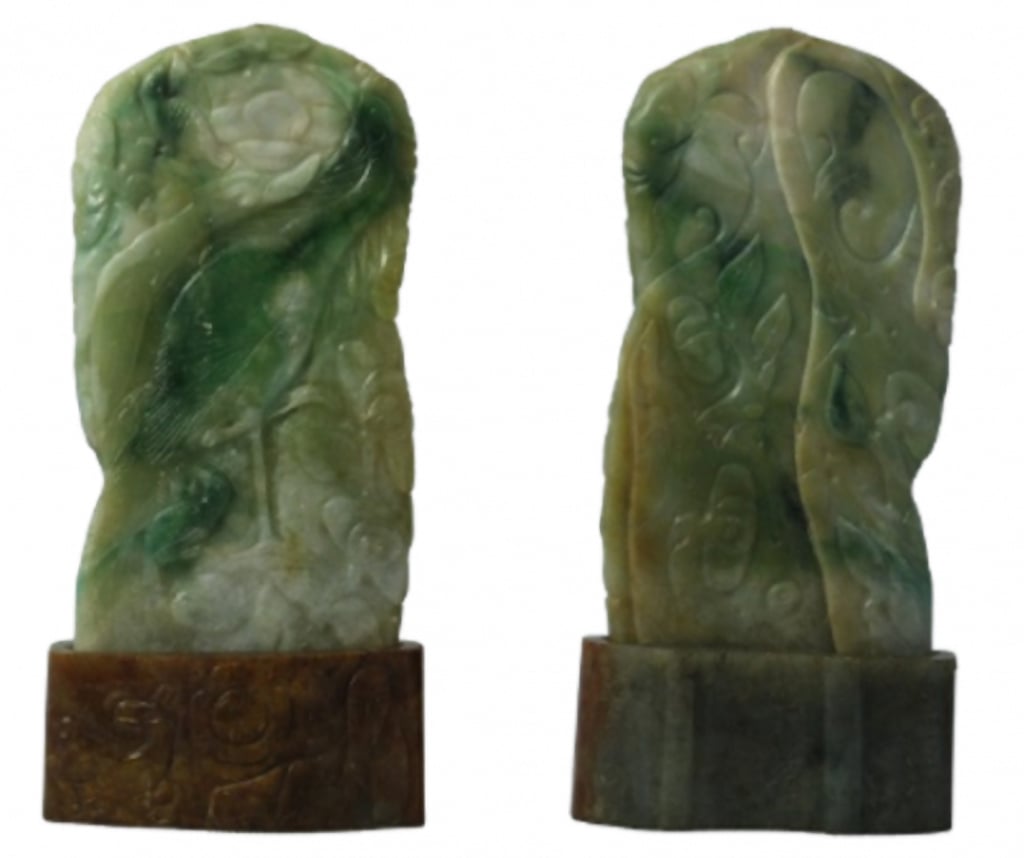
The front and back of the screen wall are crafted from jade stone.
PHOTO: LAM DONG MUSEUM
The decorative artifacts in the collection of Nguyen Dynasty court relics at the Lam Dong Museum are decorative items used in the emperor's study and as celebratory gifts on important occasions. They are small decorative panels, crafted from jade, wood (with a combination of jade), and silver. Among them is a jade panel with inconsistent colors. The main color is off-white, with jade-green and yellowish-brown veins, consisting of two separate parts: the body and the base. The body is a thin rectangular slab, meticulously carved on both sides. One side depicts a large standing peacock, with two smaller birds above and below, interspersed with stylized flowers and leaves. The other side features raised carvings of stylized flowers and leaves. The oval base is crafted from the same jade material as the body. The front depicts a deer, an old man, and a circular longevity symbol. The back is inscribed with the phrase "Ngộ sào sơn nhược ngự thái hiền" (meaning "Enjoying the nest in the mountain, like the wise ruler"). The body and base are joined by a narrow groove carved into the base, forming a unified structure.
There is a decorative screen made of wood combined with jade, placed on a four-legged wooden stand. The screen has a square surface, carved with vine patterns. In the center is a rectangular, corner-cut, opaque white jade plate, carved with decorative motifs of four bats, a jade chime, a jade vase, two moon characters interspersed between the character for longevity, and a scroll pattern. This is one of the decorative screens used to wish longevity to the emperor or members of the royal family on important occasions.
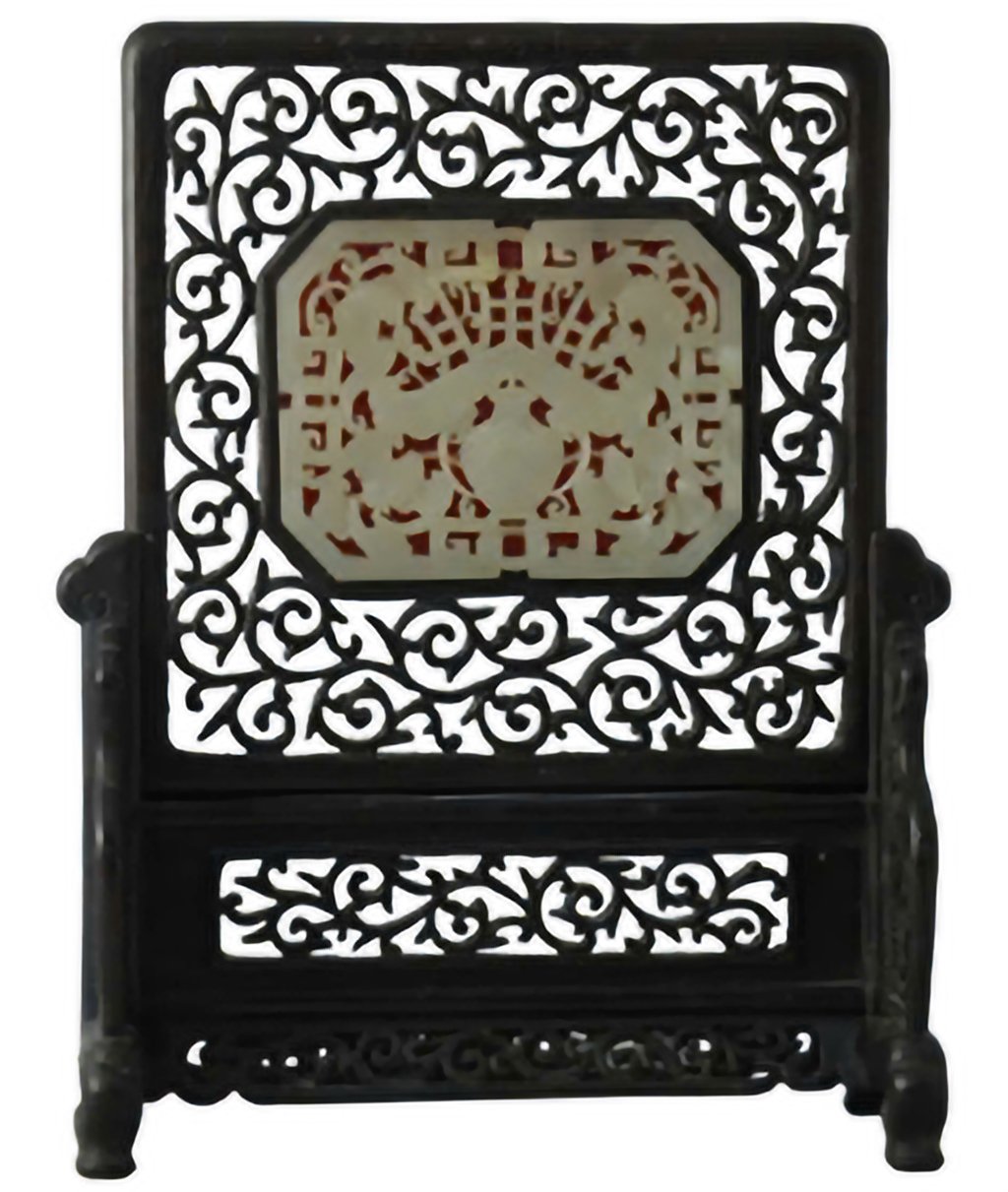
The wind- trấn phong (a type of protective amulet) is crafted from wood combined with jade, and is meticulously and exquisitely carved.
PHOTO: LAM DONG MUSEUM
TRAN PHONG WISHES KING BAO DAI A LONG LIFE
Particularly noteworthy is the decorative screen, crafted from thin sheets of silver, shaped like a stele. Two raised pillars on either side are carved with dragon and cloud motifs. The right pillar is shaped like a sword hilt (symbolizing strength), while the left pillar depicts a pen (symbolizing wisdom). At the top of the screen is an embossed arch depicting two dragons flanking the sun (two symmetrical dragons). The sun symbol is circular and red. The front of the screen is a vertical rectangle with a brocade background featuring the character "wan" (萬), bordered by a T-shaped motif. Five lines of raised Chinese characters are inscribed on the screen, with a large silver-plated gold inscription in the center reading "Wan Shou Si Xun Da Qing" (Great Celebration of the Fortieth Birthday). Below the screen is a ceremonial plaque with an embossed dragon head facing forward, and a rectangular base with three tiers.
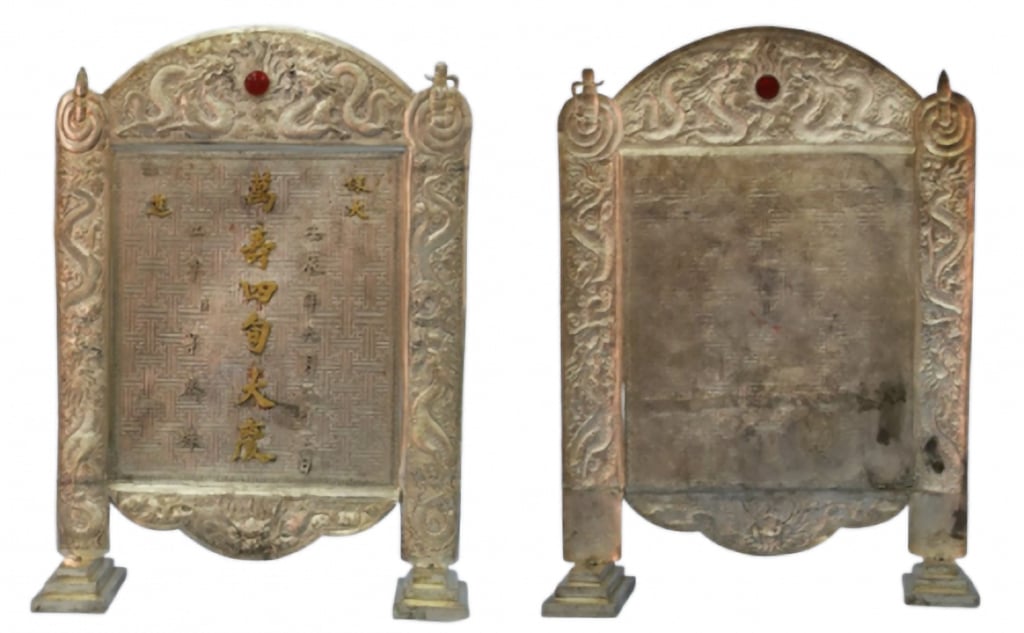
Silver ornament for the "Fortieth Birthday Celebration"
PHOTO: LAM DONG MUSEUM
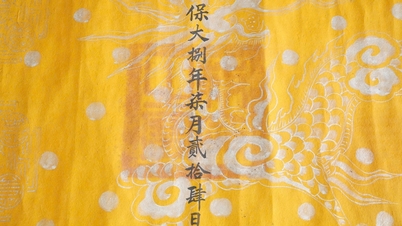
This decorative plaque was given by the Ministry of Public Works to Emperor Bảo Đại on his 40th birthday. It is one of the few artifacts whose exact age can be determined through the inscription on its surface (September 23rd, 1952, or November 10th, 1952). It is also one of the relatively late artifacts, its creation coinciding with the time Emperor Bảo Đại resided in Da Lat under the "Imperial Territory" regime. This plaque is not part of the group of artifacts previously brought from Hue to Da Lat and was displayed in a large room in Palace III - Da Lat from 1950 to 1955.
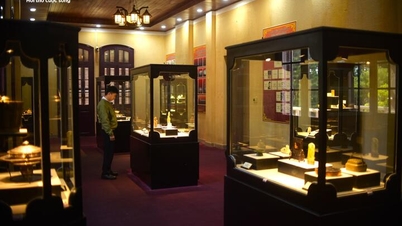
The decorative panels at the Lam Dong Museum are precious artifacts, not only reflecting a part of the material and spiritual life of the Nguyen dynasty's imperial court but also showcasing the concepts and philosophies of ancient Vietnamese people. At the same time, they demonstrate the peak level of aesthetic and technical skill achieved by craftsmen in the Nguyen dynasty's "Imperial Workshops."
Source: https://thanhnien.vn/co-vat-trieu-nguyen-o-xu-suong-mu-tran-phong-ngan-ta-khi-18525012221315906.htm
















![[Photo] Reception to welcome General Secretary and President To Lam and his wife on their State visit to the Philippines](https://vphoto.vietnam.vn/thumb/1200x675/vietnam/resource/IMAGE/2026/06/01/1780295488620_vna-potal-chieu-dai-chao-mung-tong-bi-thu-chu-tich-nuoc-to-lam-va-phu-nhan-tham-cap-nha-nuoc-toi-philippines-8798060-7855-jpg.webp)














































Comment (0)