

Lessons from the failure of the passion fruit plant.
Tri Le commune, Que Phong district, has long been known as a land with potential for agricultural development. Previously, passion fruit was the main crop providing income for local people. However, due to the high technical requirements for cultivation and pest and disease problems, the passion fruit farming model only lasted for a short period from 2013 to 2019.
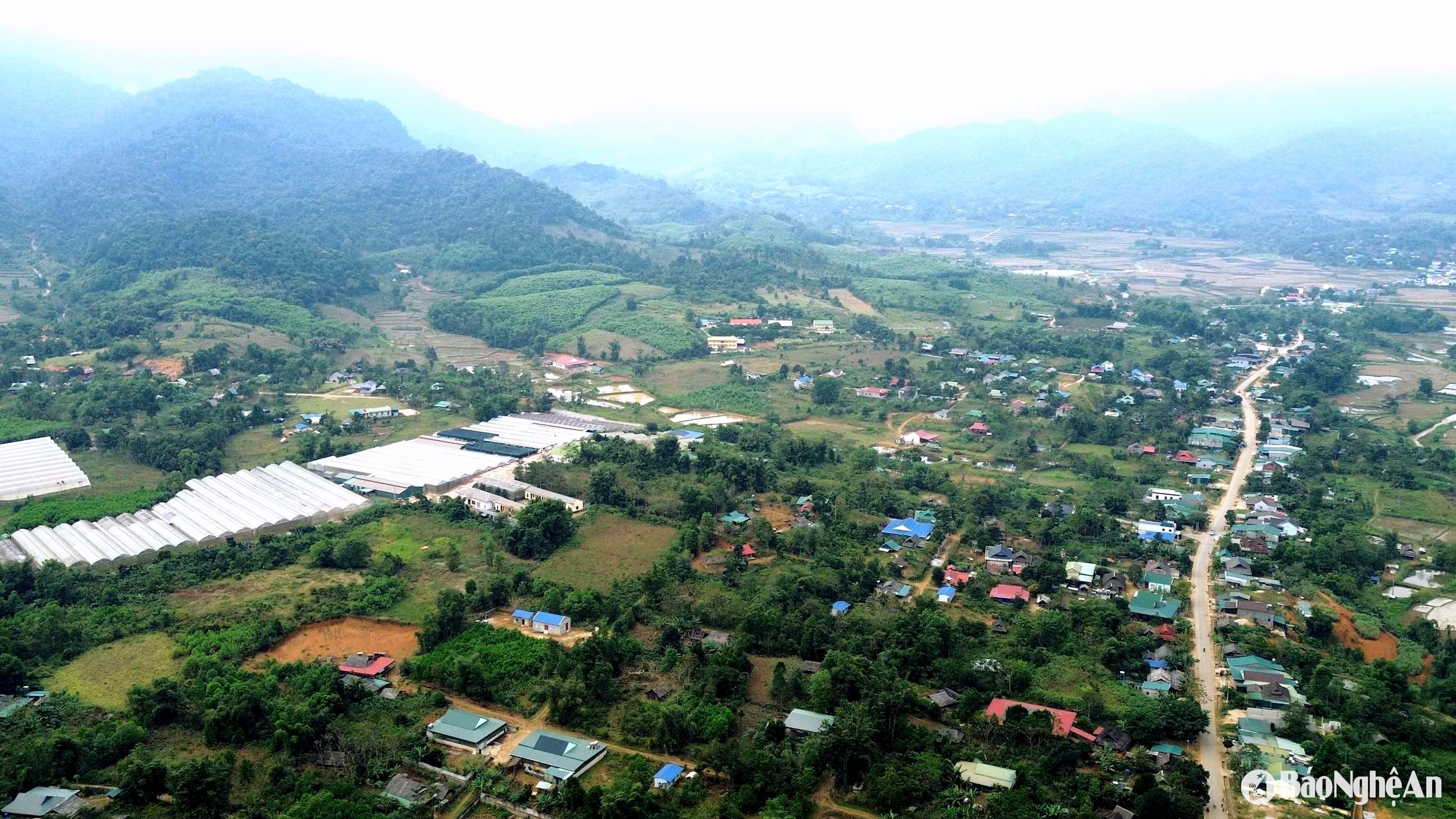
Tri Le Commune, Que Phong District. Photo: Xuan Hoang
About six years ago, the family of Mr. Vi Van Son in Yen Son village had over 4 hectares of passion fruit and earned a good income from this model. However, after a while, the passion fruit plants were severely damaged by pests and diseases, coupled with harsh climatic conditions and inadequate farming techniques, leading to the rapid decline of the model.
It's not just Mr. Son's family; hundreds of households in Tri Le commune are facing a similar situation. After the passion fruit crop disappeared, the villagers sought new avenues, but crops like fruit trees, Japonica rice, or bitter bamboo shoots haven't yielded high returns. Furthermore, livestock diseases, especially African swine fever, have severely reduced income from animal husbandry. In addition, inadequate transportation infrastructure remains a major obstacle.
Mr. Lu Van Cuong, Chairman of the Tri Le Commune People's Committee, acknowledged that passion fruit plants have been unable to survive in Tri Le for the past six years. The reason is that this crop is "fussy," while the local people have limited knowledge of cultivation. Since the passion fruit plants died prematurely, many areas of land have been left fallow and wasted, while the lives of the people remain difficult and they have not yet found a new direction.
A new direction is opening up for the people of Tri Le commune with the introduction of pineapple as a raw material. Nafoods Passion Fruit Joint Stock Company has conducted trials of a pineapple cultivation model in the area and has initially shown positive results. Given this optimistic sign, the local government and people are hoping for support from relevant agencies to develop pineapple into a key crop, helping people to have a more stable source of income.
Pineapple cultivation - an opportunity to escape poverty for Tri Le commune.
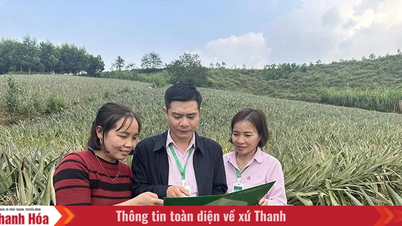
Faced with the difficulties of the local people, Nafoods Company stepped in and conducted trials of pineapple cultivation on some areas in Tri Le commune. Initial results showed that the pineapple plants grew well, were less susceptible to pests and diseases, and were suitable for the local soil and climate. Compared to passion fruit, pineapple does not require highly advanced cultivation techniques, has lower investment costs, and the market demand is relatively stable.
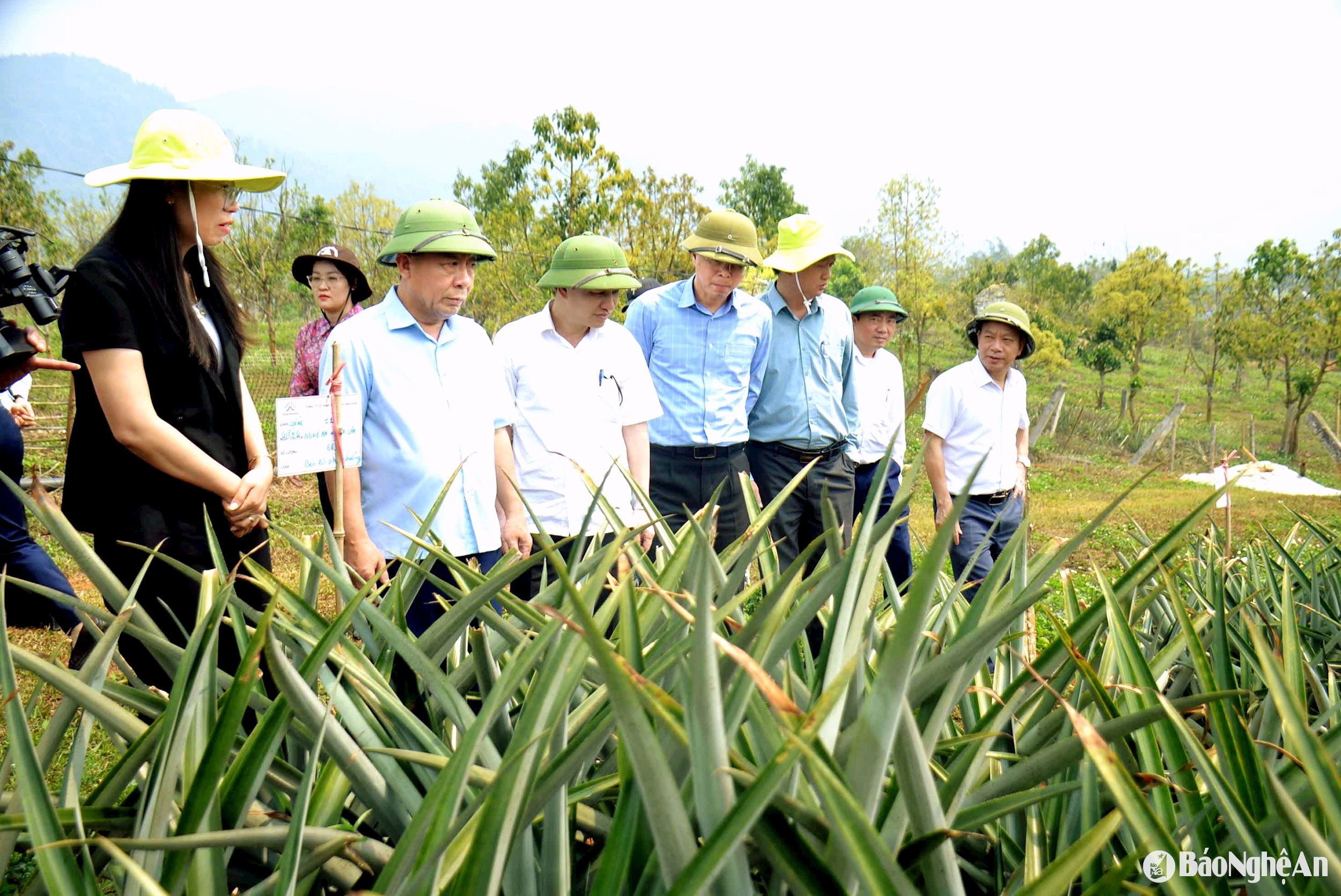
Vice Chairman of the Provincial People's Committee Nguyen Van De visits a pineapple cultivation model in Tri Le commune (Que Phong district). Photo: Xuan Hoang.
Mr. Lu Van Cuong, Vice Chairman of the Tri Le Commune People's Committee, said: "After surveying, we found that pineapple cultivation is a suitable choice for local conditions. There is still a considerable amount of land available for pineapple cultivation, and farmers can utilize fertile land along the hillsides and even in low-lying areas. Moreover, businesses are willing to purchase the product, helping farmers feel secure in their cultivation."
According to Mr. Cuong, although pineapple cultivation offers many promising prospects, expanding the model and ensuring long-term success still requires support from all levels of government as well as close cooperation between businesses and farmers. One of the crucial issues is initial investment capital for farmers. Currently, the local poverty rate is 55%, and besides utilizing farmers' land, investing in seeds, fertilizers, and initial production costs presents many difficulties.
"
For this model to succeed, appropriate support mechanisms and policies are needed, especially for poor households. The government can provide support to farmers in terms of seedlings and fertilizers, while businesses can enhance training in cultivation techniques. When farmers have the resources for initial investment, pineapple cultivation will be more successful.
Mr. Lu Van Cuong - Chairman of the People's Committee of Tri Le Commune
According to the plan, in the initial phase, Tri Le commune will focus on developing approximately 500 hectares of pineapple plantations in suitable areas. If this model proves highly effective, the area will be further expanded to 1,000 hectares in the following years. This is a promising figure, helping Tri Le commune become an important pineapple growing area in Nghe An province.
Local people are also eagerly awaiting the support of businesses in providing technical assistance and guaranteeing product sales. With close cooperation among the three parties: government, businesses, and people, the pineapple farming model in Tri Le commune will have the opportunity for sustainable development, helping to reduce the poverty rate (currently at 55%) and improve the economic lives of local residents.
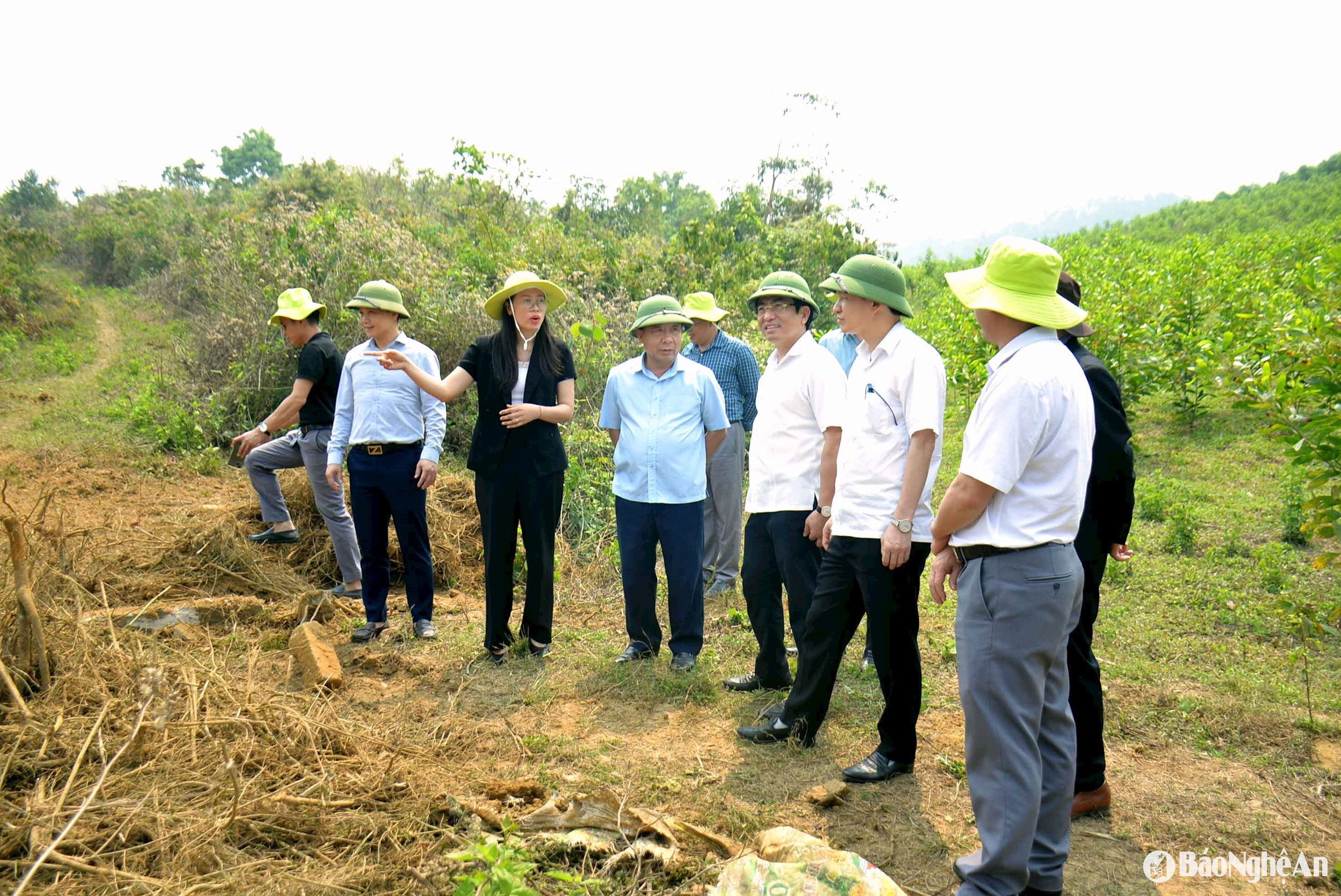
Vice Chairman of the Provincial People's Committee Nguyen Van De assessed the situation regarding the expansion of pineapple cultivation area by a business in Tri Le commune at the end of March. Photo: Xuan Hoang
Recently, Vice Chairman of the Provincial People's Committee Nguyen Van De personally inspected and surveyed the pineapple cultivation model in Tri Le commune. Recognizing the potential of pineapple cultivation, the Vice Chairman suggested that the local government could apply support policies under the Provincial People's Council Resolution or national target programs to help farmers invest. In addition, businesses need to consider the market for pineapples, preventing a situation where the product cannot be sold. This is a positive sign, opening up opportunities for sustainable agricultural development in the Tri Le area.
Introducing pineapple cultivation to Tri Le commune is not only an experimental approach but also a great opportunity for the people in the highlands to rise out of poverty. With favorable natural conditions, the involvement of businesses, and supportive policies from the State, Tri Le commune has the potential to become a key pineapple growing area of Nghe An province in the future. To achieve this, concerted efforts from many sides are needed, giving the people confidence and motivation to develop their economy on their own land.
AD Advertising
Source: https://baonghean.vn/tri-le-que-phong-se-trong-500ha-dua-nguyen-lieu-10294571.html
![[Photo] Prime Minister Pham Minh Chinh attends the Conference on the Implementation of Tasks for 2026 of the Industry and Trade Sector](/_next/image?url=https%3A%2F%2Fvphoto.vietnam.vn%2Fthumb%2F1200x675%2Fvietnam%2Fresource%2FIMAGE%2F2025%2F12%2F19%2F1766159500458_ndo_br_shared31-jpg.webp&w=3840&q=75)






































































Comment (0)