


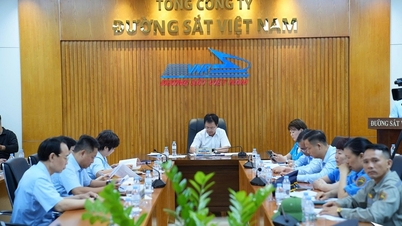
Illustrative image.
The Law on E-commerce will take effect on July 1, 2026. Comprising 7 chapters and 41 articles, the law comprehensively regulates policies for e-commerce development; e-commerce platforms and the responsibilities of organizations and individuals participating in e-commerce activities; e-commerce with foreign elements; the responsibilities of organizations providing e-commerce support services; and the application of technology in management and handling violations. The law applies to domestic and foreign organizations and individuals participating in e-commerce activities in Vietnam.
Principles in e-commerce: Organizations and individuals participating in e-commerce activities have the right to freely agree on fundamental principles of commerce, provided they do not violate legal prohibitions or social ethics, in order to establish, implement, and terminate the rights and obligations of each party in the activity.
Entities participating in e-commerce activities must comply with the provisions of this Law, the provisions of the law on services, product and goods quality, standards, technical regulations, data, cybersecurity, advertising, taxation, consumer protection, competition, and other relevant legal provisions.
E-commerce activities are not geographically limited, except in cases where organizations or individuals voluntarily restrict the geographical scope or where the law stipulates otherwise.
In cases where the owner of an intermediary e-commerce platform or social network engaged in e-commerce provides information about the goods and services of sellers to consumers on the platform, that owner is considered a third party in providing information according to the law on consumer protection.
Businesses trading in goods and services listed in the Conditional Investment and Business Sector Catalogue on e-commerce platforms must comply with the provisions of this Law and the laws of the relevant sectors and fields that regulate conditional investment and business sectors.
Dispute resolution in e-commerce is achieved through negotiation, mediation, commercial arbitration, court proceedings, or other dispute resolution methods.
This includes prohibited behaviors in e-commerce activities. This includes engaging in fraudulent or deceptive practices on e-commerce platforms. It also includes conducting business or facilitating the business of others on e-commerce platforms involving illegal services, counterfeit goods, goods infringing intellectual property rights, smuggled goods, goods of unknown origin, expired goods, goods violating regulations on product quality, and other relevant laws.
According to the implementation plan, the Ministry of Industry and Trade will preside over and coordinate with the Central Council for the Dissemination and Education of Law; ministries, ministerial-level agencies, People's Committees of provinces and cities; press, radio, and television agencies; and other relevant agencies and organizations to disseminate the content of the Law on E-commerce and its detailed regulations and implementing guidelines through methods appropriate to each target group and practical conditions.
Simultaneously, the Ministry of Industry and Trade, in coordination with the Central Council for Legal Dissemination and Education ; ministries, ministerial-level agencies, People's Committees of provinces and cities; and relevant agencies and organizations, will organize conferences, seminars, training courses, and refresher courses for officials, civil servants, employees, businesses, organizations, and individuals involved to update and enhance their legal knowledge and skills in implementing e-commerce laws in person, online, or a combination of both. This will be implemented in 2026 and subsequent years.
The organization shall review relevant legal documents under its assigned state management authority; within its authority, or recommend to competent authorities, timely amendments, supplements, replacements, repeals, or the issuance of new relevant legal documents, ensuring consistency, uniformity, and compliance with the provisions of the Law.
Ministries, ministerial-level agencies, and People's Committees of provinces and cities shall review legal documents within their assigned scope and areas of state management; and either act within their authority or recommend that competent authorities handle the review results in accordance with regulations.
The Ministry of Industry and Trade is responsible for reviewing documents within its scope of state management; it also serves as the central coordinating body for compiling review results and proposals from ministries, sectors, and localities to report to the Prime Minister .
Diep Huong
Source: https://sonla.gov.vn/tin-kinh-te/trien-khai-luat-thuong-mai-dien-tu-1000124



![[Photo] General Secretary and President To Lam presides over the meeting to approve the draft report on the results of the second inspection by the Politburo of the Standing Committee of the Hanoi City Party Committee.](https://vphoto.vietnam.vn/thumb/1200x675/vietnam/resource/IMAGE/2026/05/26/1779789811432_a2-bnd-4430-9620-jpg.webp)
























































































Comment (0)