

Vietnam is known and admired by the world in many ways. But perhaps the first impression of Vietnam comes from its national flag and national anthem.
From the headquarters of the Association of Southeast Asian Nations (ASEAN) to the United Nations headquarters, from countries and territories with diplomatic relations with Vietnam to domestic and international events… the image of the national flag and the majestic melody of the national anthem are always present, a source of enduring pride for every Vietnamese citizen.
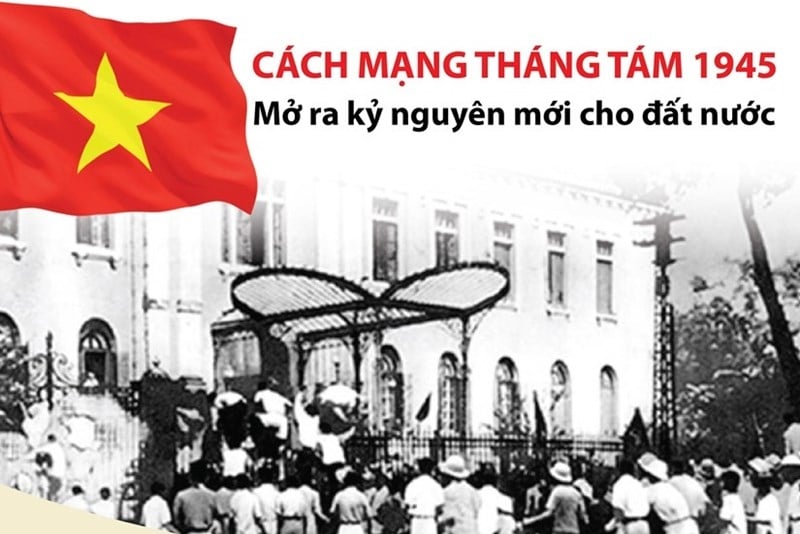
The Vietnamese national flag and anthem were both created in a special historical context. On the eve of the August Revolution of 1945, the five-pointed golden star shone brightly against the backdrop of a rectangular red flag. Under the leadership of the Party, headed by the great President Ho Chi Minh , our people created the historic Nghe Tinh Soviet Uprising, followed by the nationwide anti-colonial and anti-fascist movements against the French. With the motto "Southern Vietnam leads the way," the Southern Regional Party Committee decided to launch an uprising on November 23, 1940. The uprising was guided by the Southern Regional Party Committee, using the red flag with a golden star as its signal, inspiring millions of people to rise up as one, overthrowing the yoke of colonialism, fascism, and feudalism, and resolutely reclaiming independence and freedom for the nation. The teacher and revolutionary fighter Nguyen Huu Tien, the author of the national flag design and the poems imbued with deep love for the country, has been remembered by generations.
O you who have red blood and yellow skin!
Fight under the sacred flag of the Fatherland.
The flag is stained with the blood of those who sacrificed for the country.
The bright yellow star of the race
Stand up quickly! The spirit of the nation is calling us!
O scholars, workers, farmers, merchants, and soldiers!
United like the five-pointed golden star…
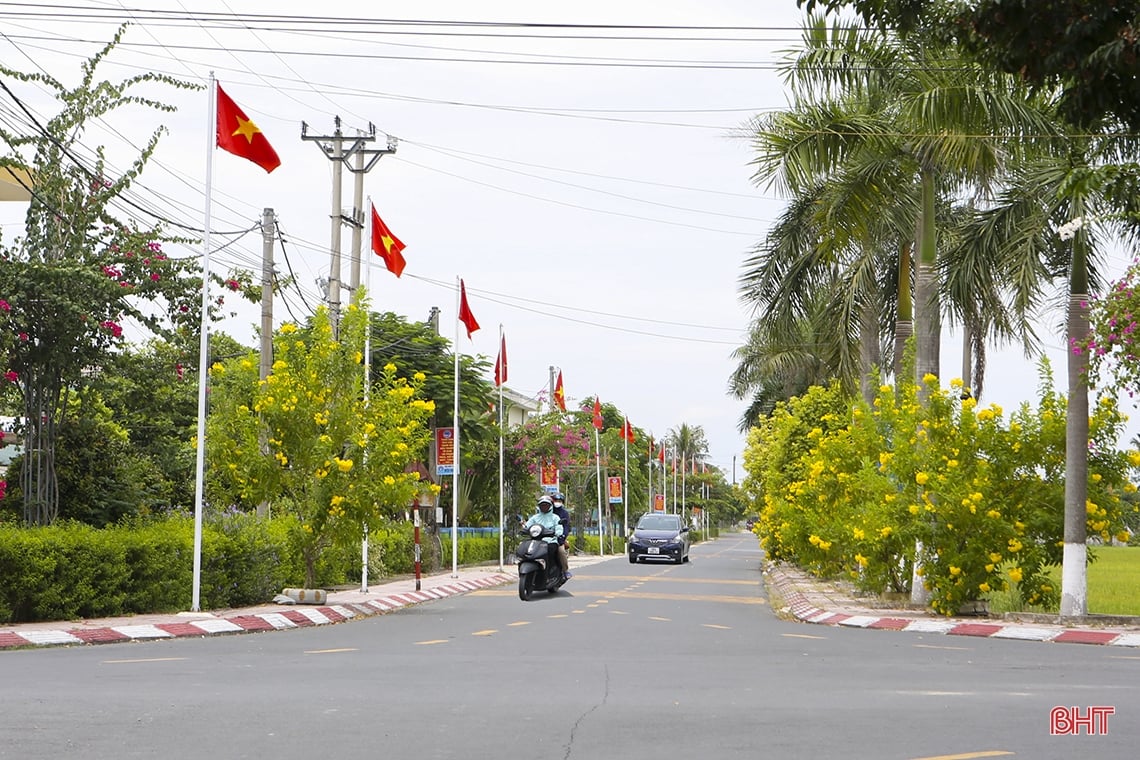
The streets of Ha Tinh are adorned with national flags to celebrate the 78th anniversary of National Day (September 2, 1945 - September 2, 2023). Photo by PV.
The red flag with a yellow star, fluttering during the Southern Uprising, became a shining symbol of Vietnamese spirit, of the aspiration for freedom and independence, signaling the "end" of colonial rule in Vietnam. In the context of a growing revolutionary movement, the Viet Minh Front was established, facing a series of challenges. One of the most urgent and important tasks at that time was: "After driving out the French and Japanese imperialists, we will establish a people's government of the Democratic Republic of Vietnam, with the red flag with a five-pointed yellow star as the national flag…"
The National Congress, meeting in Tan Trao, Tuyen Quang, decided that the Vietnamese national flag would be a red background with a five-pointed yellow star in the center. On September 2, 1945, amidst the autumn sky of Hanoi, adorned with red flags and yellow stars, and with people rejoicing, President Ho Chi Minh solemnly read the Declaration of Independence, giving birth to the Democratic Republic of Vietnam, the first workers' and peasants' state in Southeast Asia (now the Socialist Republic of Vietnam). On September 5, 1945, President Ho Chi Minh, on behalf of the Provisional Government, signed Decree No. 5-SL establishing the Vietnamese national flag as the red flag with a yellow star.
Throughout the two protracted wars of resistance against foreign invaders, in fulfilling noble international obligations, and in the current process of reform, the red flag with a yellow star has become sacred, a source of pride and honor for every Vietnamese citizen. The red flag with a yellow star has also inspired countless songs and musical works that have endured through the years…
We are as proud of our national flag as we are of our national anthem. Composer Văn Cao, one of the "giants" of modern Vietnamese music, left behind many famous songs that left a lasting impression, such as: "Marching Towards Hanoi," "Epic of the Lô River," "The First Spring," etc. But the pinnacle of this talented and passionate composer's career can be said to be "Marching Song." This immortal song was composed by Văn Cao at the end of 1944, before the August Revolution broke out. "Marching Song" became the official song of the Viet Minh Front. Because it embodied all the necessary elements, especially expressing the spirit, will, and aspirations for independence and freedom of the nation, "Marching Song" was chosen as the national anthem by the National Congress held in Tân Trào, Tuyên Quang.
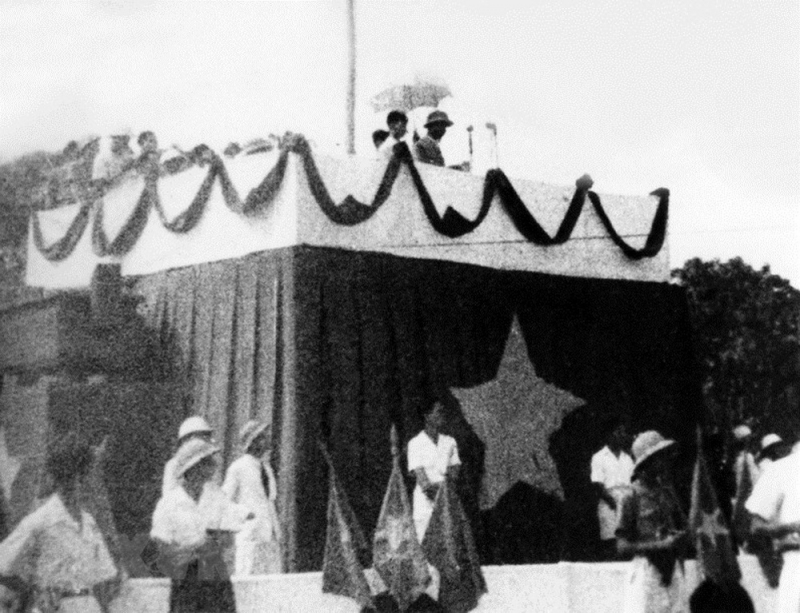
President Ho Chi Minh reading the Declaration of Independence at Ba Dinh Square on September 2, 1945. (Archival photo)
During the tumultuous days of the August Revolution of 1945, the stirring melody of the "Marching Song" resounded throughout the villages and cities of all three regions of Vietnam: North, Central, and South. Particularly, at the historic moment when President Ho Chi Minh read the Declaration of Independence on September 2, 1945, the national anthem was solemnly played, deeply moving the hearts of the people. Large numbers of people from all walks of life joined in singing, "The Vietnamese army marches on…" shattering the chains of slavery and the humiliation of losing their country, proudly stepping into a new chapter of history. Following the success of the August Revolution, the First National Assembly approved the "Marching Song" as the national anthem of Vietnam. The 1946 Constitution also clearly stated: "The national anthem is the 'Marching Song'."
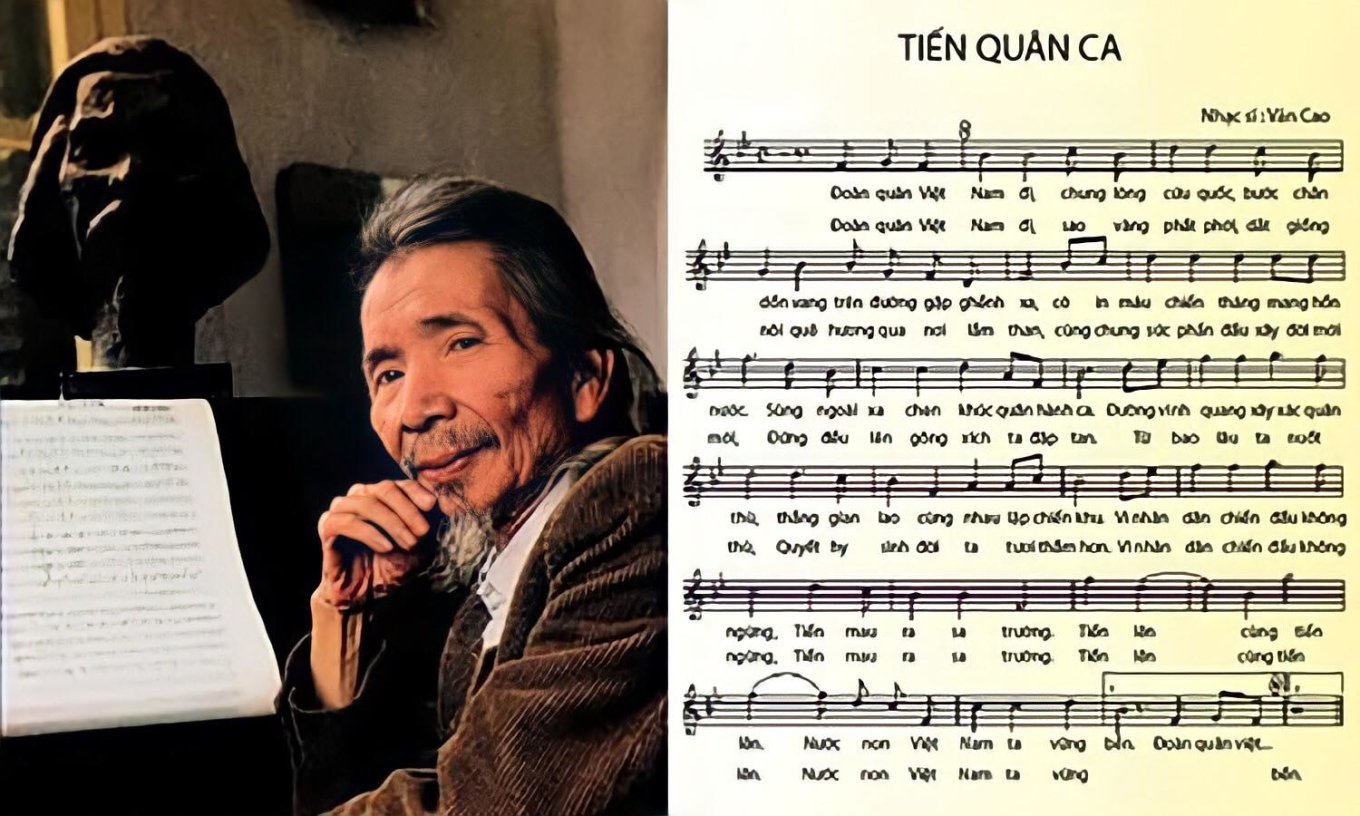
Composer Văn Cao is the author of "Tiến quân ca" (Marching Song). (Image from the internet)
After the country achieved peace and reunification, a competition to compose a new national anthem was held from April 1981 to June 1983, attracting the attention of all segments of the population, especially musicians. Inspired by this, a series of musical works were created, showcasing the enthusiasm and creativity of the composers in expressing their love for the country and praising the homeland. However, none of these songs surpassed or lived up to the standards of the "Marching Song."
Nearly eight decades have passed, but the vibrant spirit of the Vietnamese national anthem remains intact, enduring alongside the nation. It's no coincidence that the Vietnamese national anthem has become a fascinating subject, especially for music researchers both domestically and internationally. More than 13 years ago, a reader survey by the reputable American website Cracked.com ranked the Vietnamese national anthem as the most heroic national anthem in the world. How proud we are!
Xuan Bau
Source

















![[Photo] Reception to welcome General Secretary and President To Lam and his wife on their State visit to the Philippines](https://vphoto.vietnam.vn/thumb/1200x675/vietnam/resource/IMAGE/2026/06/01/1780295488620_vna-potal-chieu-dai-chao-mung-tong-bi-thu-chu-tich-nuoc-to-lam-va-phu-nhan-tham-cap-nha-nuoc-toi-philippines-8798060-7855-jpg.webp)




























































Comment (0)