

1. The Gazetteer of Le Thuy District (Culture-Information Publishing House, August 2010) records that the Sen Canal (Lien Cang), according to Duong Van An in O Chau Can Luc, is also known as Lan Port and Rao Sen, two different names referring to a small branch of the river about 28km long connecting the Kien Giang River through the Quy Hau stream with the Rao Sen canal to connect with the Minh Luong River in Quang Tri province.
According to Ngo Sy Lien's writings in Dai Viet Su Ky Toan Thu, in order to facilitate the transportation of soldiers, food supplies, or to bring people from the North to cultivate the land when the Ho Dynasty had just conquered the land of Champa, in the year Giap Tuat (1404), Ho Han Thuong ordered the digging of the Sen Canal (also called Lien Cang Canal).
According to the remaining traces, Lien Cang originated from Loc Binh, flowed around the main road, entered Quan Cat, connected to Bau Sen, flowed through Quan But, and at Ha Co, the river flowed east and then circled around the main road to the west. There was a point on this canal at Quan Cut where, due to mud and sand overflowing, digging was impossible and had to be abandoned. During the Le Dynasty, when attacking Champa, King Le Thanh Tong ordered local officials and laborers to re-dig the canal to facilitate the transportation of soldiers and supplies, but this also failed.
The Nguyen lords and early kings of the Nguyen dynasty also tried to dredge this canal to expand trade, but all failed. As a result, the Sen Canal gradually dried up. With over 400 years of Vietnamese footprints associated with the Sen Canal and Bau Sen in the Tan Binh and Thuan Hoa areas, many legends have been passed down through generations, making this land even more mysterious and poetic.
 |
| A view of Bau Sen lake along the North-South highway - Photo: Nguyen Hai |
2. In the final days of the year, as the shimmering sunlight illuminated the red-roofed houses, signaling the approaching new year, we visited Mr. Tran Van Duong, former Chairman of the People's Committee of Sen Thuy commune (old), to hear stories about the will and aspirations of our ancestors in shaping the future by rearranging nature.
Mr. Tran Van Duong recounted that, in the past, Bau Sen was called Nhi Ho, possibly originating from the shape of the lake, which was divided into two halves, like two lakes joined together. One half, further from the main lake, was located to the east of the national highway, bordering the sand dunes, while the other half, a smaller lake, was located to the west, bordering the hilly, gravelly area. It's also possible that the name Nhi Ho referred to both lakes within the sand dune area of Sen Thuy commune: Bau Sen in Thuy Lien Thuong and Bau Dom in Lien Thuy Nam, connected by a small canal.
Many believe that the pond is called Bau Sen (Lotus Pond) because in the past, many lotuses grew there. In the old days, every summer, the lotuses bloomed, filling the entire area with their fragrant scent. Therefore, in Vietnamese script, it's called "sen" (lotus), and in Chinese characters, this area is also called Thuy Lien commune.
Sen Ngu commune possesses diverse potential and advantages, encompassing hilly areas, sandy areas, and coastal regions with a 12.5km long coastline. The area is traversed by National Highway 1, the BOT bypass, and the coastal road. The Bau Sen and coastal areas are being planned to become high-class tourist and commercial zones. Furthermore, the locality has an abundant workforce. Infrastructure is being gradually upgraded. The staff is well-trained, experienced, and has been strengthened from the provincial and district levels following the implementation of the two-tiered local government model…
"With these potentials and advantages, the commune has identified the next phase as a comprehensive transformation, focusing on expanding the coastal economic space and the Bau Sen area, developing services, tourism, and trade, while preserving the unique ecological values of the locality. Priority will be given to investing resources in transportation routes connecting from National Highway 1 to the coastal road, water supply and drainage systems, and environmental treatment. Simultaneously, infrastructure serving the marine economy, fisheries logistics, and community tourism models linked to the identity of coastal villages will be prioritized. The commune is also researching and implementing policies to support production development linked to local strengths, encouraging entrepreneurship, innovation, the development of the digital economy and the marine economy, and hoping that young people and young businesses will see Sen Ngu as a 'fertile ground' for new ideas, new products, and new models," said Dang Dai Bang, Secretary of the Sen Ngu Commune Party Committee.
According to Mr. Duong, with its naturally occurring water source covering an area of approximately 100 hectares and a capacity of 5 million cubic meters , Bau Sen not only has strengths in aquaculture but is also a destination for tourists seeking experiences and exploration. At Bau Sen, visitors can enjoy boating to admire the natural scenery, roll on the fine white sand on the other side of the lake, breathe in the fresh air, and have fun fishing.
The Bàu Sen lake is home to many freshwater aquatic species, but the most abundant are carp and shrimp. The carp from this area is renowned for its delicious flavor and can be prepared in many characteristic dishes with rich tastes, such as steamed with onions, in porridge, sour soup, and braised with spices – a taste you'll never forget after just one bite. Today, Bàu Sen is an ideal destination for tourists from all over.
Besides the local specialties of freshwater fish and shrimp caught in the lagoon, this place also offers culinary delights made from the region's characteristic ingredients, known as "the best in Dong Nai, second best in the two districts," such as chicken rice, fish rice, snakehead fish soup... blended with the spicy, OCOP-certified pepper flavor of the honest farmers, creating an unforgettable experience for visitors.
Because of its unique characteristics, Bau Sen has become a destination included in the Action Program of the Executive Committee of the former Le Thuy District Party Committee on developing tourism into a key economic sector. Accordingly, the district will call for investment in Bau Sen to become an eco-tourism resort area with a system of resorts and hotels of 3 stars and above, combined with community-based tourism accommodation facilities such as homestays and farmstays.
Visitors to Bau Sen will be connected to a tourism chain that includes the Bang hot spring resort and rehabilitation center; cultural and spiritual tourism at Hoang Phuc Pagoda, the General Vo Nguyen Giap Memorial House, and the tomb of Le Thanh Hau Nguyen Huu Canh; experiencing the natural beauty of Chau Cave and Khe Nuoc Trong stream; enjoying the vibrant traditional boat racing festival on Kien Giang River; and immersing themselves in the folk songs of Le Thuy…
According to tourism experts, to effectively develop tourism in Bau Sen, it is necessary to exploit the unique combination of the "bottomless lake" amidst the white sand dunes and the cultural and historical values of the area. Instead of just being a resort destination, Bau Sen needs more in-depth experiential activities, such as: kayaking, stand-up paddleboarding, recreational fishing, and water sports, utilizing the surrounding white sand dunes to organize off-road vehicle (ATV) racing… In addition to closely integrating with the aforementioned tourism chain, the Sen Ngu commune government should create unique highlights and turn "every resident into a tour guide" to provide authentic and attractive experiences for domestic and international tourists.
3. In a conversation with us, the Chairman of the People's Committee of Sen Ngu Commune, Nguyen Van Nghia, said that, implementing the two-tiered local government model, Sen Ngu was established based on the rearrangement of the entire natural land area and population of Hung Thuy, Sen Thuy, and Ngu Thuy communes. Continuing the action program of the former Le Thuy district on tourism development, as well as the four main pillars of Quang Tri province today – energy, logistics, tourism, and green agriculture – as driving forces, the Sen Ngu commune government always encourages its people to utilize the region's strengths to develop trade and services, and diversify business types.
Entering the new year 2026, the commune will continue to "roll out the red carpet" to attract investment in order to effectively exploit the potential and advantages of tourism and service development, especially tourism, resort, and sports projects in the Bau Sen area and beaches in the commune.
Tran Minh Van
Source: https://baoquangtri.vn/kinh-te/202602/tu-lien-cang-den-bau-sen-e784711/
![[Photo] General Secretary and President To Lam presides over a meeting with the Central Organizing Committee.](https://vphoto.vietnam.vn/thumb/1200x675/vietnam/resource/IMAGE/2026/06/03/1780482764658_a1-bnd-4741-3342-jpg.webp)
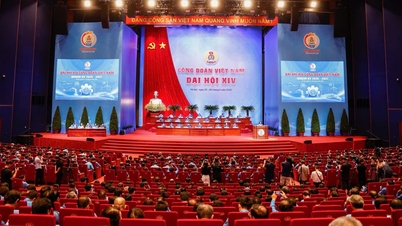
![[Photo] First session of the 14th Congress of the Vietnam Trade Union](https://vphoto.vietnam.vn/thumb/1200x675/vietnam/resource/IMAGE/2026/06/03/1780465947883_ndo_br_img-3852-jpg.webp)
![[Photo] Secretary of the National Assembly Party Committee, Chairman of the National Assembly presides over the meeting of the Standing Committee and Executive Committee of the National Assembly Party Committee.](https://vphoto.vietnam.vn/thumb/1200x675/vietnam/resource/IMAGE/2026/06/03/1780480353201_ndo_br_bnd-2585-jpg.webp)



































![[Video] Sunset at Lap An Lagoon – Where the sun sets over the fishing nets](https://vphoto.vietnam.vn/thumb/1200x675/vietnam/resource/IMAGE/2026/05/31/1780192137701_beach-landscape-sea-water-nature-grass-745871-pxhere-com.jpeg)
























Comment (0)