

The government has just issued Decree 207 regulating childbirth using assisted reproductive technologies and the conditions for surrogacy for humanitarian purposes. The decree takes effect from October 1st.
This Decree regulates the donation, receipt, use, storage, and deposit of sperm, eggs, and embryos; childbirth using assisted reproductive technologies; the conditions, documents, procedures, and authority for allowing medical facilities to perform in-vitro fertilization and surrogacy for humanitarian purposes; and the conditions for surrogacy for humanitarian purposes.
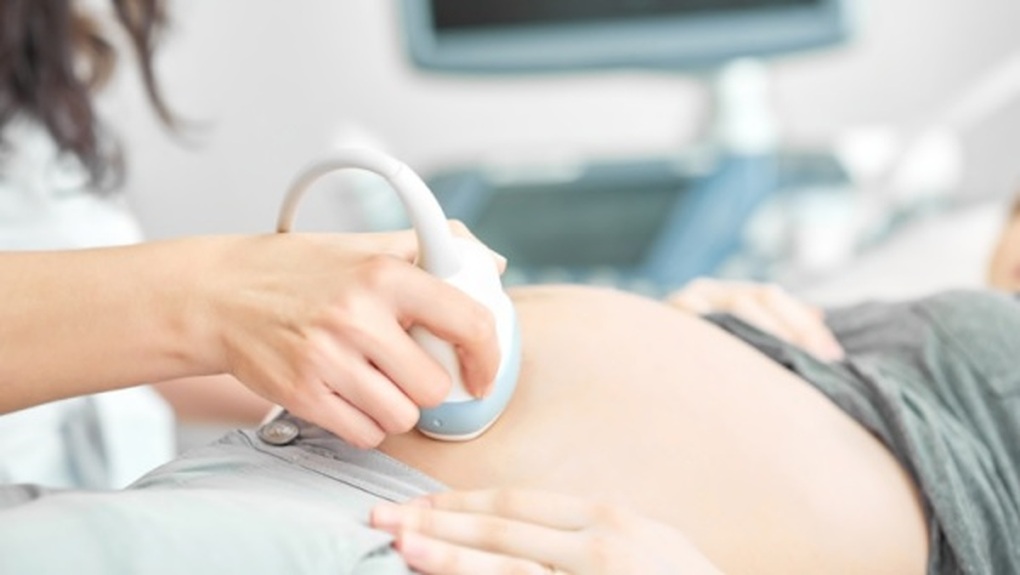
The new decree allows single women to undergo in-vitro fertilization (IVF) to have children if they wish (Illustrative image: Istock).
Specifically, sperm donation, egg donation, and embryo donation in assisted reproductive technology must adhere to the principle that donations can only be made at facilities authorized to store sperm, eggs, and embryos.
Donated sperm, eggs, and embryos can only be used for one woman or one couple to conceive. The donation and reception of sperm and embryos are conducted on the principle of anonymity between the donor and recipient.
Notably, in addition to infertile couples or those with medical indications, assisted reproductive technology is also indicated for single women who wish to use it. After undergoing in-vitro fertilization (IVF), if there are surplus eggs that are not needed, single women can donate these eggs.
Previously, according to Decree 10/2015, single women had the right to have children through in-vitro fertilization (IVF) techniques as prescribed by a specialist doctor.
In addition, the decree also clearly stipulates the conditions for facilities permitted to perform surrogacy for humanitarian purposes.
Specifically, applicants must have at least two years of experience performing in-vitro fertilization (IVF) procedures, with a minimum of 500 IVF cycles performed annually in the two years preceding the application date.
The facility has medical counselors who are obstetricians and gynecologists, psychological counselors with a university degree in psychology or a doctor with a certificate in psychology, and legal counselors with a bachelor's degree in law or higher.
Medical counselors must be staff of the medical facility. Psychological counselors and legal counselors must be staff of the medical facility or cooperating personnel as stipulated by law.
A trend of reluctance to marry, or a reluctance to have children, has emerged in Vietnam, and is particularly alarming in some economically developed urban areas. More and more young people are choosing a single life, without marriage or children.
According to data released by the General Statistics Office, over the past 30 years, marriage trends and birth rates in Vietnam have changed significantly. The age of marriage has increased sharply, while the marriage rate has decreased, causing the birth rate to fall by half in the past 30 years.
Specifically, between 1989 and 2023, the average age of first marriage for men increased from 24.4 to 23.2 in 2023, rising to 29.3 for men and 25.1 for women in 2023. The percentage of single people is also trending upwards rapidly, from 6% in 2004 to 10% in 2019.
Source: https://dantri.com.vn/suc-khoe/tu-ngay-110-phu-nu-doc-than-muon-co-con-duoc-lam-ivf-20250730192730711.htm

![[Photo] Standing Committee member of the Party Central Committee Tran Cam Tu working with the Central Inspection Committee](https://vphoto.vietnam.vn/thumb/1200x675/vietnam/resource/IMAGE/2026/05/28/1779969579668_ndo_br_bnd-2495-jpg.webp)





















































































Comment (0)