

 |
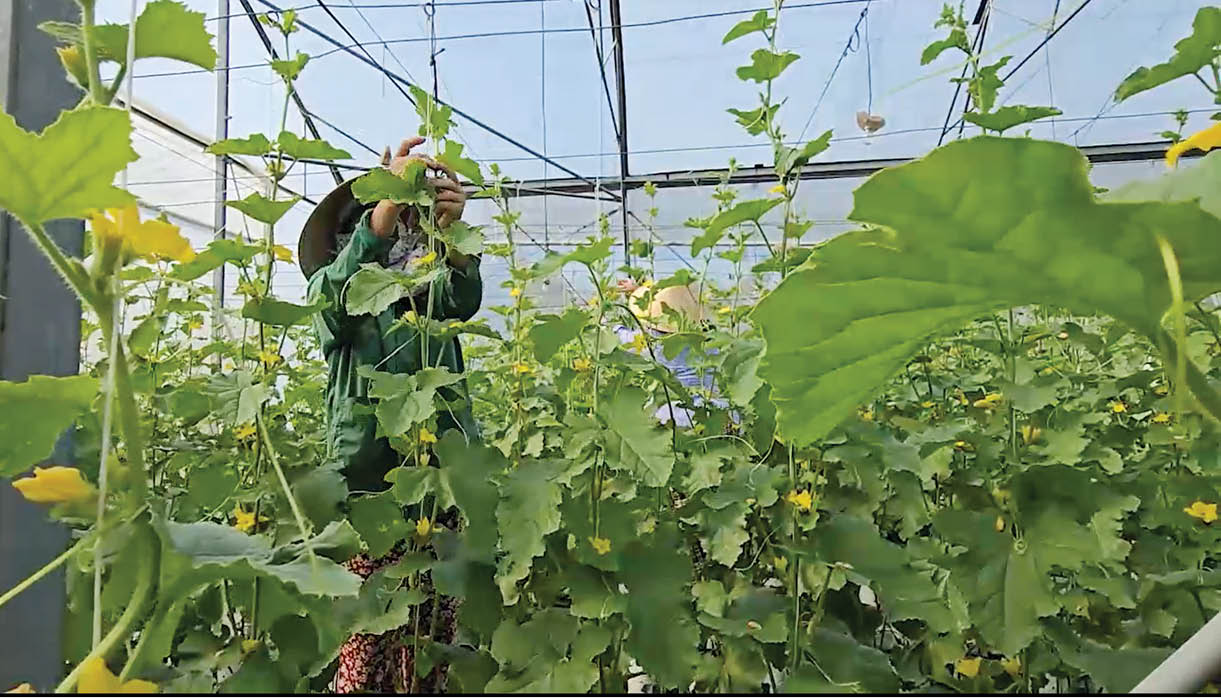
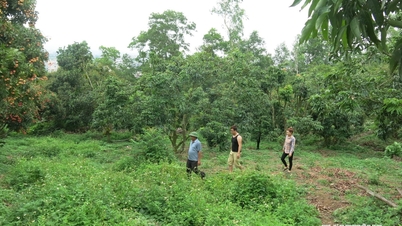
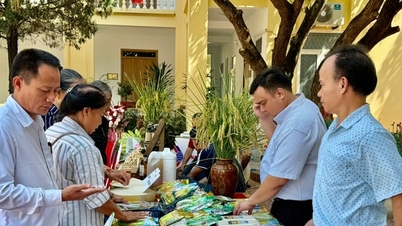
| High-tech agricultural production model of the people in the former Phu Loc district. |
Transformation from the grassroots
In the former Phong Dien town, after 5 years of comprehensively implementing the criteria for building new rural areas, all 15 communes have met the standards, including 2 communes that have achieved advanced standards. According to Mr. Hoang Van Thai, Vice Chairman of the People's Committee of the former Phong Dien town, now the Party Secretary of Phong Dinh ward, the biggest success is the consensus of the people, from donating land, contributing labor, materials, and money with a total value of up to 83 billion VND.
The "Joining Forces to Build New Rural Areas" emulation movement has been implemented simultaneously and extensively down to the village level, creating a strong impetus for promoting local socio -economic development. As a result, it has contributed to the completion of transportation, irrigation, school, and cultural center systems in the communes, creating a foundation for comprehensive rural socio-economic development.
The One Commune One Product (OCOP) program in Hue has also left many positive impressions. By the end of 2024, the entire city had 107 OCOP products, including one national-level 5-star product, "Complete Seasoning for Hue Beef Noodle Soup" by YesHue, a product that embodies the unique identity of the ancient capital and has the potential to reach international standards.
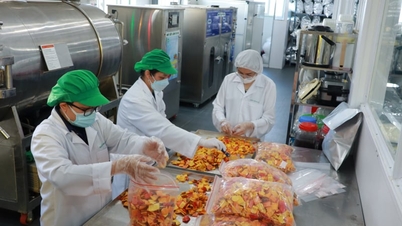
Furthermore, many rural startup models are contributing to the enrichment of Hue's countryside, such as the Hichagol project of Hichagol Production, Trade and Service Co., Ltd. with processed products from red artichoke; Moc An Green Agriculture Development Co., Ltd. with cereal flour products from various grains; Bao La Bamboo and Rattan Weaving Cooperative... These projects and models not only create sustainable livelihoods but also contribute to building distinctive agricultural product brands associated with each region.
As of March 2025, all 78/78 communes in the city have met the standards for New Rural Development, achieving a 100% rate. Of these, 12 communes have achieved advanced standards and 17 villages have achieved model standards, exceeding the set plan. The poverty rate in the city decreased from 4.93% in 2021 to 1.4% in 2024, and is expected to be below 1.2% by the end of 2025, completing the target one year ahead of schedule.
Avoid spreading yourself too thin, focus on form.
For the period 2026-2030, Hue City aims to continue developing rural areas in a modern, green, smart, and sustainable direction. The objectives include: completing infrastructure development, developing high-tech agriculture, building model new rural communes, promoting digital transformation, and creating livable rural areas.
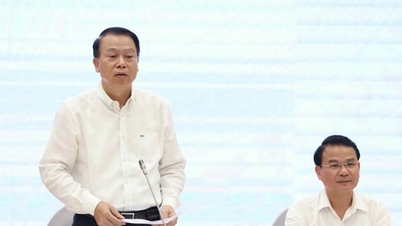
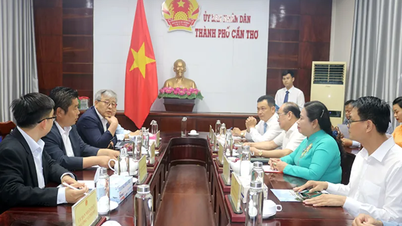
At the recent conference summarizing the three national target programs on building new rural areas, sustainable poverty reduction, and socio-economic development in ethnic minority areas for the period 2021-2025 and proposing the period 2026-2030, organized by the Hue City People's Committee, Standing Committee member of the City Party Committee and Permanent Vice Chairman of the Hue City People's Committee, Nguyen Thanh Binh, affirmed that the new rural area construction program cannot be implemented in a scattered and superficial manner, but must aim for tangible effectiveness, with the people at the center and quality as the benchmark. Implementation needs to focus on key areas and contents; promote the leading role of the community; and ensure synchronized coordination among departments, sectors, and localities to optimize resources.
In the context of the city's transition to a two-tiered administrative model, the Standing Vice Chairman of the Hue City People's Committee, Nguyen Thanh Binh, requested that the leading agencies proactively coordinate with the grassroots level to review and clearly delineate tasks and powers, ensuring uniformity and flexibility in leadership and management.
Mr. Binh also emphasized the importance of innovating the program's implementation methods, which require effectively integrating resources from the central and local governments, credit sources, and social mobilization. Along with this, it is crucial to improve the effectiveness of community monitoring to enhance transparency, accountability, and consensus at the grassroots level.
"Building new rural areas is not only the responsibility of the government at all levels, but also a movement of the entire population and the entire political system. When people are listened to and involved, the changes will be truly sustainable and comprehensive," Mr. Nguyen Thanh Binh affirmed.
Source: https://huengaynay.vn/kinh-te/nong-nghiep-nong-thon/tu-nhung-mo-hinh-hay-den-chuyen-minh-toan-dien-155398.html
![[Photo] First session of the 14th Congress of the Vietnam Trade Union](https://vphoto.vietnam.vn/thumb/1200x675/vietnam/resource/IMAGE/2026/06/03/1780465947883_ndo_br_img-3852-jpg.webp)

![[Photo] General Secretary and President To Lam presides over a meeting with the Central Organizing Committee.](https://vphoto.vietnam.vn/thumb/1200x675/vietnam/resource/IMAGE/2026/06/03/1780482764658_a1-bnd-4741-3342-jpg.webp)
![[Photo] Secretary of the National Assembly Party Committee, Chairman of the National Assembly presides over the meeting of the Standing Committee and Executive Committee of the National Assembly Party Committee.](https://vphoto.vietnam.vn/thumb/1200x675/vietnam/resource/IMAGE/2026/06/03/1780480353201_ndo_br_bnd-2585-jpg.webp)













































![[Video] Sunset at Lap An Lagoon – Where the sun sets over the fishing nets](https://vphoto.vietnam.vn/thumb/1200x675/vietnam/resource/IMAGE/2026/05/31/1780192137701_beach-landscape-sea-water-nature-grass-745871-pxhere-com.jpeg)




























Comment (0)