

.jpg)
Superior model
Dubai Silicon Oasis (also known as DSO) is a specialized free economic zone dedicated to high technology, officially opened in 2004, located in the Nadd Hessa district at the intersection of two major roads. This location might seem like a technical detail, but it actually reflects a philosophy: connectivity. DSO doesn't want to be an isolated oasis, but rather a strategic transportation hub. Connecting infrastructure is the prerequisite for connecting ideas.
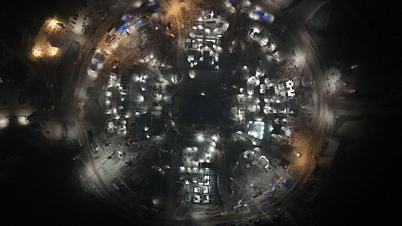
Located in Dubai, United Arab Emirates (UAE), DSO is designed to encompass industrial, office, and residential areas. A unique feature of DSO is its "15-minute city" model – where residents can live, work, study, and enjoy leisure activities all within one space. Currently, DSO has over 100,000 residents, along with 70,000 highly skilled professionals and more than 40,000 operating businesses.
DSO's success stems not only from its infrastructure but also from its innovation ecosystem.
Since 2015, the Dubai Tech Entrepreneurship Centre (DTEC), dubbed the largest startup support center in the Middle East, has been operating within the DSO complex, transforming the entire economic zone into a truly vibrant ecosystem. In 2020, the Dubai Digital Park opened, considered a model smart city with six pillars: living, community, mobility, economy, governance, and environment.
One of DSO's smartest moves was bringing academia to the heart of its ecosystem. In 2008, the Rochester Institute of Technology opened a campus here, creating an international academic foundation. Then, in September 2023, the MIT DesignX Dubai Accelerator was launched, not just a formal collaboration, but a startup acceleration program with a curriculum designed by the Massachusetts Institute of Technology (MIT), mentored by MIT faculty, and with direct participation from MIT interns. The first round had 12 startups; the second round attracted over 400 applications from around the world . The entire MIT DesignX system globally has supported more than 170 startups with a total valuation exceeding $1 billion.
In terms of policy, DSO applies all the incentives of the UAE Free Economic Zone: no personal income tax, 100% foreign ownership, a two-week business registration process, and a corporate tax rate of 9% – lower than most developed countries. For startups in the incubation phase, there is even a separate low-cost licensing package. The government operates not as a licensing authority but as a service provider: the goal is to minimize regulation so that businesses can focus on what they do best.
Lessons for Da Nang
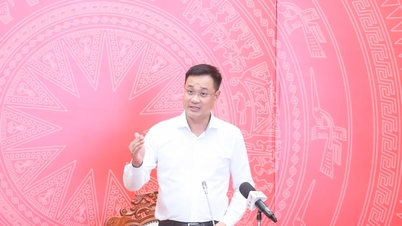
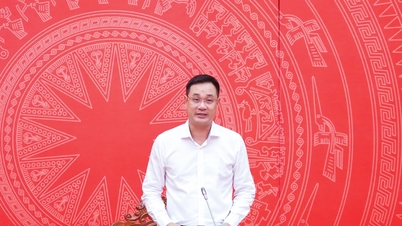
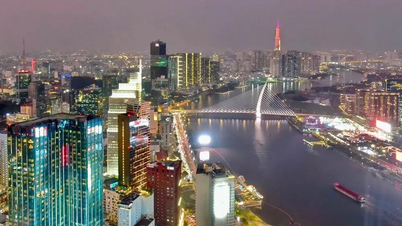
“From a desert region seemingly lacking advantages for technology, DSO has become a symbol of a leading modern innovation ecosystem in the Middle East. This story inspires much reflection for Da Nang – a coastal city nurturing the aspiration to become a regional innovation hub. Amidst differences in conditions and resources, the greatest commonality lies in strategic vision and a strong determination to transform itself in the new era,” Mr. Vo Duc Anh expressed.
Da Nang has long been known as a livable city: a pleasant climate, beautiful scenery, low crime rate, and top-tier urban governance nationwide. For 10 consecutive years, the city has ranked first in the country in the Information Technology Development and Application Readiness Index. This is no coincidence; it reflects a management tradition that prioritizes efficiency, transparency, and innovation.
But Da Nang knows that past achievements are not enough to shape the future.
The city is facing a historic opportunity: Vietnam is becoming an important destination in the global semiconductor supply chain, investment waves from Northeast Asia are shifting strongly towards Southeast Asia, and Resolution No. 136/2024 of the National Assembly grants the city many outstanding special mechanisms.
The goals are clearly set: by 2030, the digital economy will account for 35-40% of GRDP; Da Nang will be among the top 300 global startup ecosystems and top 50 smart cities worldwide. By 2025, Da Nang aims to climb 130 places in the global startup ecosystem ranking. The High-Tech Park has attracted 32 projects with a total investment of US$1.17 billion… These figures demonstrate that Da Nang is not just talking, but is actually doing.
But when compared to DSO, a model that has been developed for over twenty years, there are still many gaps to bridge and lessons to be learned.
The first and most profound lesson from DSO is the integrated mindset: DSO is not an industrial park in the traditional sense, but a complete urban area where technology and life are naturally intertwined.
The second lesson is academic collaboration: MIT DesignX didn't just naturally come to DSO; it was the result of 15 years of persistent academic reputation building, starting with RIT in 2008. Da Nang has taken the right direction by forming an alliance of universities and a three-party model: the state, the university, and the business. But the alliance is only the starting point. What's more essential are substantive applied research programs and student projects that directly connect with business problems. Furthermore, Da Nang needs a strategy of collaborating with leading international academic organizations, not necessarily MIT, but those with the capacity to create a global reputation and network.
The third lesson is policy as a service: Da Nang is being granted special mechanisms under Resolution No. 136 on the organization of urban government and piloting a number of special mechanisms and policies for the development of Da Nang city. This is a rare legal advantage, but it is only valuable when realized into a streamlined and easily accessible administrative process. The sandbox model for new technologies such as AI and blockchain, the testing of unmanned aerial vehicles, the digital city mirror platform... are all moving in the right direction. The challenge is to prevent the traditional administrative apparatus from slowing down these groundbreaking initiatives.
Ultimately, the most profound lesson from DSO is the lesson of unwavering willpower: DSO's success is largely due to consistent political commitment spanning decades, without changing its vision with each new leader. Da Nang needs to build consensus and long-term commitment not just within a single term, but across generations of leadership. Innovation ecosystems cannot be built in a few years; they require a generation of perseverance, and that demands something even more important than strategy: trust.
Source: https://baodanang.vn/tu-oc-dao-dubai-silicon-oasis-nghi-ve-giac-mo-da-nang-3336076.html
![[Image] Close-up view of the interchange connecting the two expressways and Long Thanh Airport.](https://vphoto.vietnam.vn/thumb/1200x675/vietnam/resource/IMAGE/2026/05/25/1779703378210_ndo_br_z7863716673926-224453a31600126cce10622af6290afd-4549-jpg.webp)
![[Image] Hanoi's urban life under the challenge of a "scorching hot" environment](https://vphoto.vietnam.vn/thumb/1200x675/vietnam/resource/IMAGE/2026/05/25/1779706979265_nang-nong-t5-2026-minh-duy-7-4636-jpg.webp)











































































Comment (0)