

Gold collected from the people was used as a "lifeline" to pay off debts and import food.
Analysts view China's tight control over gold trading for 53 years (1949-2002) as a strategy to provide a silent buffer for the economy in the face of difficulties.
According to Mr. Xu La De, former Chairman of the Shanghai Gold Exchange, the ban on people owning gold during the period 1949-1982 was to protect the fledgling yuan and address the "shortage" of foreign currency for importing machinery and equipment.
When China was first established, the yuan faced significant pressure regarding its credibility and international payment capabilities. In the context of the Bretton Woods system, the USD was pegged to gold and played a central role in global trade. Due to limited gold reserves, China implemented a centralized management mechanism for gold and tightly controlled the currency market.
China used the gold it collected from its citizens as a "lifeline" to repay its debts and import food.
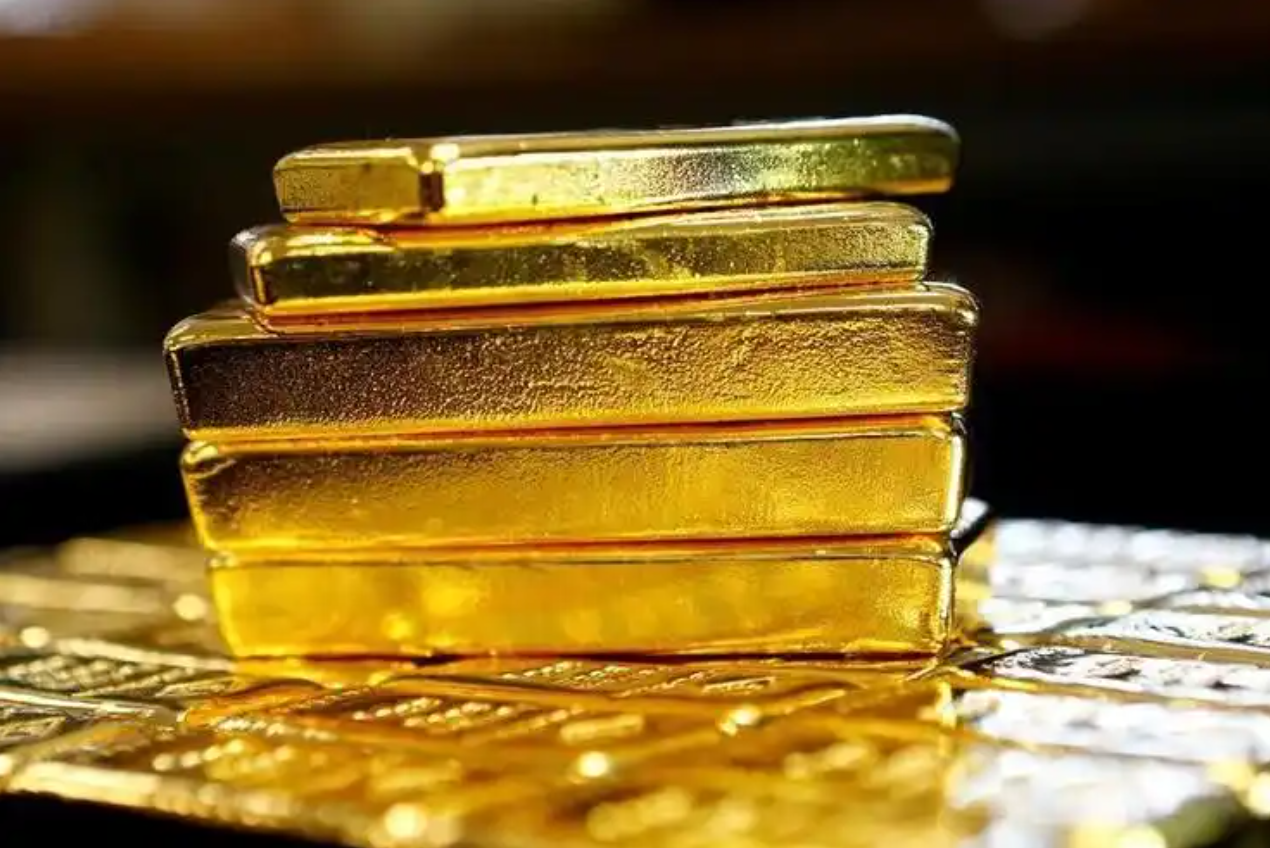
In 1950, the People's Bank of China issued the "Measures for Managing Gold and Silver," freezing all gold and silver transactions among the public. Individuals were prohibited from buying, selling, or storing gold and silver.
Later, the reason for control shifted to another objective: the country was too poor in foreign currency. When it needed to import industrial machinery, China had to use gold to balance its balance of payments, and even exported about 230 tons of gold to obtain foreign currency for national reconstruction, according to some research documents.
By the 1980s, foreign exchange reserves had improved. Strong domestic demand was reflected, and the government allowed the jewelry market to open up.
However, gold remains a limited resource, so the "unified procurement, unified distribution" mechanism continues to be applied. All gold produced must be submitted to the central bank. Production units wishing to use gold must apply for quotas.
For example, a jewelry factory might be allocated 100kg of gold annually to produce products for the market. At the same time, a portion of the gold is held as national foreign exchange reserves.
During this period, the price of gold was not determined by the market but by the central bank. Therefore, it remained a centralized management system, although there were signs of loosening.
It wasn't until 2002 that the Shanghai Gold Exchange opened. From then on, gold was bought and sold through auctions, with supply and demand determined by the market.
It can be said that the mechanism of "collecting and accumulating" gold over half a century laid the first solid foundations for China's industrial base and enormous foreign exchange reserves as they are today.
The Rise of the Shanghai Gold Exchange
More than 20 years after its opening, the Shanghai Gold Exchange has had a spectacular growth journey.
In terms of size, from an initial 108 members, the exchange now has 281 members, including commercial banks, gold production companies, and international financial institutions.
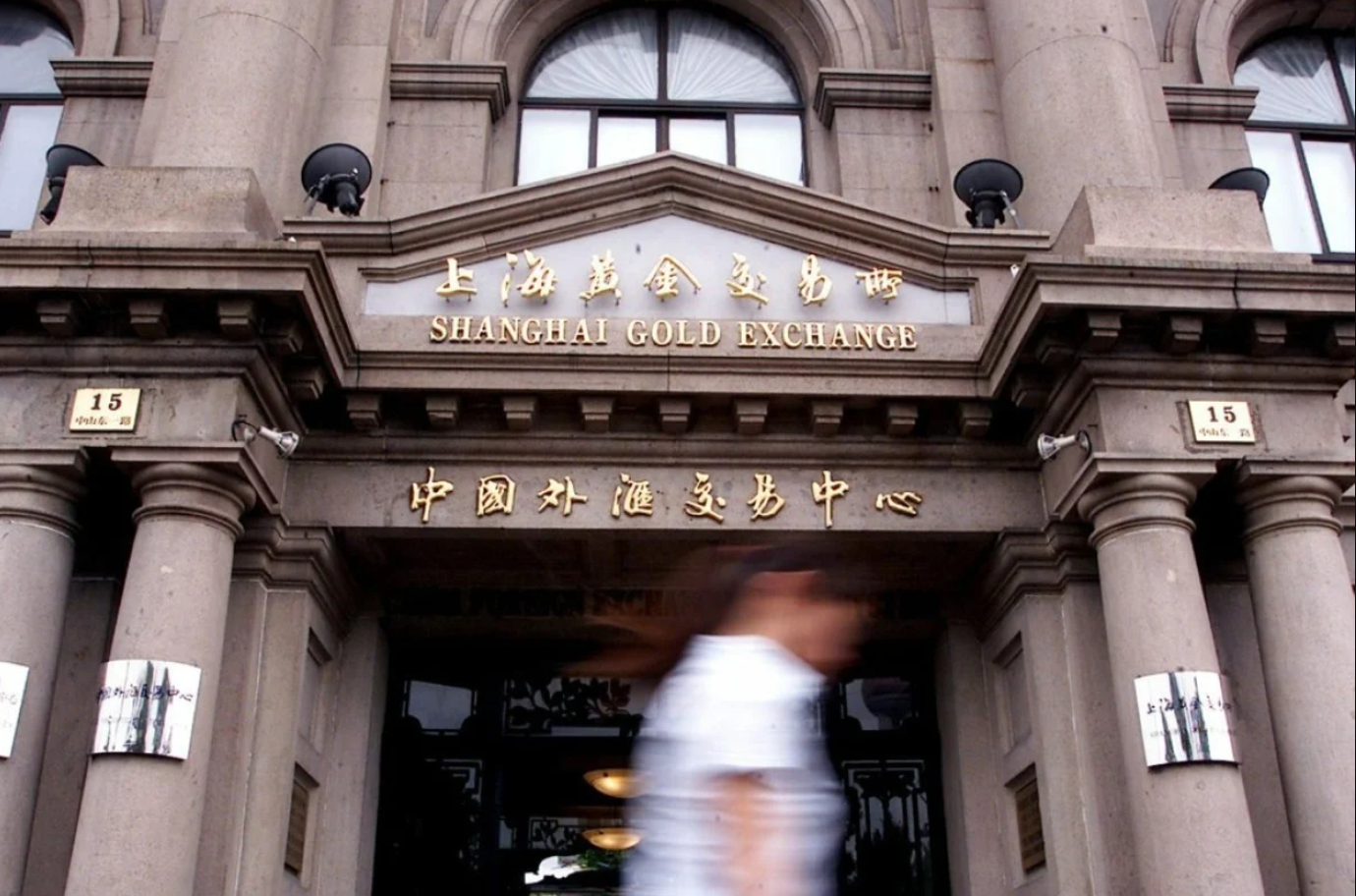
In terms of products, from just two initial spot gold contracts, the exchange has developed dozens of diverse products, including gold futures, fixed-term gold, and derivatives such as options, forward contracts, swaps, and even silver and platinum.
In terms of transaction value, the exchange first surpassed 1 trillion RMB in 2009. By 2020, that figure had reached nearly 37 trillion RMB, representing an almost 40-fold increase in just over a decade.
In 2025, the total value of gold transactions in China reached a record high. The Shanghai Gold Exchange (SGE) alone recorded 49.86 trillion yuan (approximately $6.8 trillion), while the Shanghai Commodity Exchange (SHFE) handled 177.94 trillion yuan.
In terms of international standing, along with London and New York, the Shanghai Gold Exchange is now recognized as one of the world's largest gold trading centers.
Not only is China making a name for itself domestically, but it is also gradually asserting its voice in the global gold market.
In 2014, the Shanghai Gold Exchange launched its international section, allowing foreign investors to trade gold in China for the first time. This was the country's first financial market to open to foreigners, marking a turning point that transformed the Chinese gold market from a "domestic playground" to a "global playground".
In 2016, the Shanghai Gold Exchange launched "Shanghai Gold," the world's first benchmark gold price index pegged to the yuan instead of the US dollar. For the first time, an Eastern country had its own say in gold pricing, no longer dependent on London or New York.
Currently, China is both the world's largest gold producer (381 tons/year) and the leading global gold consumer market, with consumption reaching nearly 950 tons/year.
Despite record-high gold prices causing demand for jewelry to drop to 360 tons, Chinese people are still flocking to buy gold bars and coins, with consumption reaching a record 504 tons in 2025.
According to Shanghai Gold Exchange, Xinhua News Agency, Shanghai Securities News
Source: https://vietnamnet.vn/tung-han-che-cho-dan-so-huu-vang-nay-trung-quoc-thay-doi-manh-2520028.html

![[Photo] Ba Lang An Lighthouse - the "eye of the sea" amidst the "rock museum" of Quang Ngai province.](https://vphoto.vietnam.vn/thumb/1200x675/vietnam/resource/IMAGE/2026/05/29/1780038698840_anh-man-hinh-2026-05-29-luc-14-10-42.png)


![[Image] Pleasant weather helps students enter the 10th grade entrance exam with confidence.](https://vphoto.vietnam.vn/thumb/1200x675/vietnam/resource/IMAGE/2026/05/29/1780034401612_ngay-1-thi-lop-10-minh-duy-8-5009-jpg.webp)









































































Comment (0)