

Thai football boasts a well-structured training system; the Thai League is commercially oriented and highly competitive; players regularly play abroad; and it has one of the best infrastructures in the continent. However, recent setbacks in youth tournaments, the AFF Cup, and continental competitions highlight a paradox: Thai players don't lose because of their lack of skill, but because of inappropriate behavior and culture.
Thailand U23 and a solid football foundation.
Over the past decade, Thailand has invested heavily in modern youth training. Academies such as Buriram United, Muangthong United Youth, Chonburi, and the academy system affiliated with Japan are considered a fairly stable chain of youth player training. In addition, school football is well-organized, with many localities holding annual youth tournaments, allowing for early talent selection and screening.

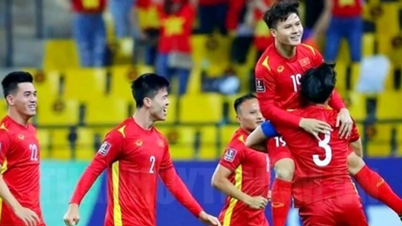
The Thai player (right) is not lacking in skill, but loses points for his attitude and behavior.
The Thai League also has a significant advantage. It is the most highly regarded national league in Southeast Asia in terms of professionalism. Its stable schedule, television broadcasting rights, sponsorships, transfer mechanisms, medical services , VAR infrastructure, stadium security, etc., all meet continental standards. The commercial value of the Thai League often surpasses that of other leagues in the region, allowing clubs to retain talented players, hire quality foreign coaches, and invest long-term in youth development.
Thailand is one of the few Southeast Asian countries with players regularly playing abroad. Chanathip, Theerathon, Thitiphan, Supachok, Ekanit Panya… have played or are currently playing in the J-League (Japan), Asia's top football league; some young players have gone to Europe on trials or short-term contracts. While the number of players going to the West may not be as high as in Japan or South Korea, compared to the regional average, this is a significant step forward.
Infrastructure is also a clear advantage. Stadiums like Rajamangala, Chang Arena, SCG Stadium, and training centers in Buriram and BG Pathum all meet AFC standards. Training facilities, sports medicine, data science , and fitness are all well-invested in. Clearly, in terms of "hardware," Thai football surpasses many Southeast Asian countries, and even Asian countries in general.
The barrier posed by the behavior of Thai players.
The "hardware" is fine, but the problem lies in the "software". The attitude, discipline, and conduct of a segment of Thai players, including those with significant influence, are very poor.
In recent years, a series of incidents have emerged that have disgusted the public in Thailand and the region; such as Jonathan Khemdee throwing away the silver medal after the loss to the U22 Indonesian team at the 32nd SEA Games; Supachok's unsportsmanlike goal, leading to Wirathep Pomphan's sending off in the 2024 ASEAN Cup final; and especially the controversial case of the talented but troublesome player Theerathon Bunmathan, which has left behind many negative consequences.

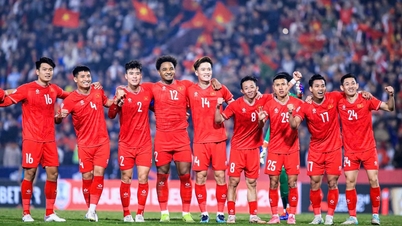
The U22 and U23 Thai teams (left) are easily perceived as lacking humility.
There were even times when quite a few players refused to join the Thai national team for personal reasons or disagreements about their roles, such as Ekanit Panya, Chanathip, and Theerathon... causing considerable headaches for the coaching staff and the Football Association of Thailand (FAT) in finding solutions to stabilize the squad. The fact that players don't prioritize national pride over personal gain shows a decline in a sense of responsibility, which is fundamental to top-level football.
In youth tournaments, especially the U22 and U23 teams, Thailand is often stereotyped as a team lacking humility and showing arrogance due to their condescending statements and attitudes. This, however, seems to further motivate and inspire other teams to give their all in the competition to defeat Thailand.
On the pitch, the issue of fair play is also a drawback. There have been instances of goals being scored while opponents were injured or controversies arose regarding sportsmanship , leading the regional public to question the "identity" of Thai football (the case of Supachok is a prime example).
On a personal level, some stars have been involved in incidents of reacting against referees, displaying uncontrolled behavior, and even being disciplined for unsportsmanlike conduct (such as Theerathon Bunmathan).
Even in this U23 Asian Championship, the Thai players didn't play badly at all, but their lack of self-control cost them a player when they lost to U23 Australia despite dominating the game, due to Maneekorn receiving a red card.
In matches against the U23 teams of Iraq and China, the lack of courageous fighting spirit was almost a defining characteristic, preventing them from securing victories. These behaviors contradict the professional spirit that the Thai League has painstakingly cultivated.
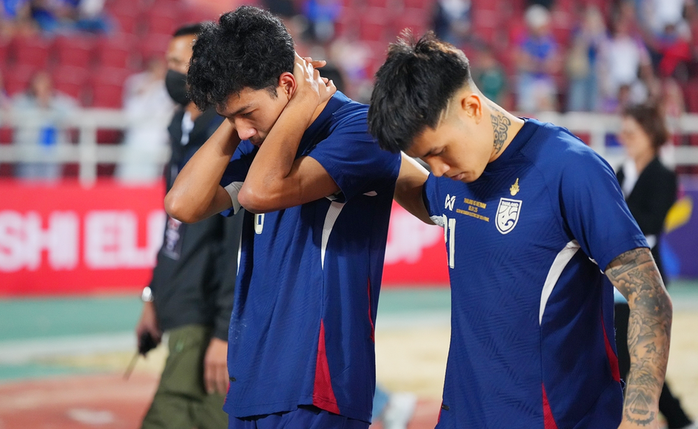
Thailand should re-establish team discipline, emphasize dedication, and educate players about social responsibility and proper conduct in competition.
In modern football, where every opponent improves rapidly, complacency or a lack of humility is the most dangerous enemy. For example, after Thailand's first defeat against Australia, while Vietnam won against Jordan, Thailand's current star, Chanathip Songkrasin, caused controversy with a social media message saying "I'd like to score against Vietnam."
This attitude will not help Thai football progress, but will only widen the gap between potential and reality, and make Thai football more vulnerable to harm.
The lesson for Thailand, therefore, is not about "tear down and rebuild" the training system or the Thai League, because they already have a solid foundation and many talented players. What needs to change is that Thailand should re-establish team discipline, emphasize dedication, educate players about social responsibility and proper conduct in competition, and encourage self-recognition of limitations to strive for improvement.
When faced with failure, instead of acknowledging their own shortcomings, many individuals, including experts, team leaders, and players, try to justify their actions, blaming the referee or circumstances. Some statements are made to "protect their ego," explaining the defeat through external factors instead of admitting tactical, psychological, or performance deficiencies.
Source: https://nld.com.vn/u23-thai-lan-bi-loai-som-khong-phai-trinh-do-da-phan-do-thai-do-196260115125036722.htm
![[Photo] General Secretary and President To Lam presides over a meeting with the Central Organizing Committee.](https://vphoto.vietnam.vn/thumb/1200x675/vietnam/resource/IMAGE/2026/06/03/1780482764658_a1-bnd-4741-3342-jpg.webp)
![[Photo] Secretary of the National Assembly Party Committee, Chairman of the National Assembly presides over the meeting of the Standing Committee and Executive Committee of the National Assembly Party Committee.](https://vphoto.vietnam.vn/thumb/1200x675/vietnam/resource/IMAGE/2026/06/03/1780480353201_ndo_br_bnd-2585-jpg.webp)

![[Photo] First session of the 14th Congress of the Vietnam Trade Union](https://vphoto.vietnam.vn/thumb/1200x675/vietnam/resource/IMAGE/2026/06/03/1780465947883_ndo_br_img-3852-jpg.webp)


















































![[Video] Sunset at Lap An Lagoon – Where the sun sets over the fishing nets](https://vphoto.vietnam.vn/thumb/1200x675/vietnam/resource/IMAGE/2026/05/31/1780192137701_beach-landscape-sea-water-nature-grass-745871-pxhere-com.jpeg)































Comment (0)