


As climate change intensifies, the challenge is no longer to respond to a single phenomenon, but to prepare for a broader, multi-risk scenario.
According to Nguyen Thuong Hien, Director of the Department of Meteorology and Hydrology, the World Meteorological Organization (WMO) officially confirmed in early January 2026 that 2025 will be the third warmest year on record. 2026 is predicted to be a year of increasing temperatures and heat waves globally.
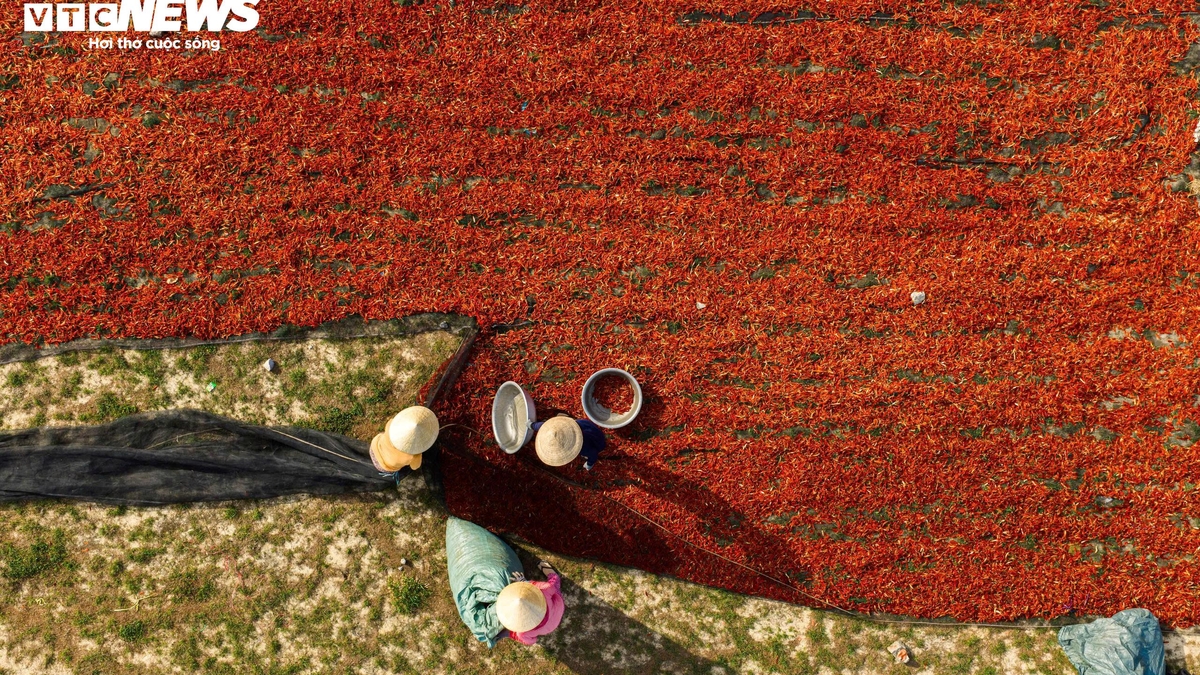
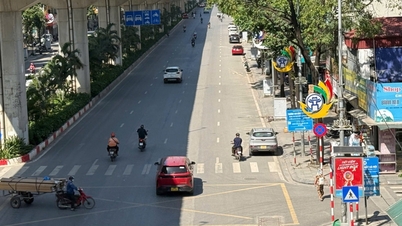
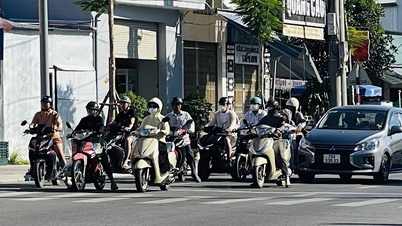
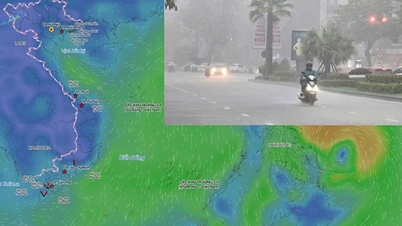
In Vietnam, in 2026, hot and dry conditions appeared early in the year and intensified earlier than the multi-year average. According to Nguyen Duc Hoa, Deputy Head of the Climate Forecasting Department at the National Center for Hydro-Meteorological Forecasting, hot weather began to appear widely in the southeastern region, from Nghe An to Quang Ngai, starting in March. Many areas across the country experienced heatwaves with temperatures ranging from 35-40 degrees Celsius, and even higher in some places. In the first half of May, a widespread heatwave occurred from May 13-15 in the northern and central regions; in the southern region, the heatwave continued to persist over a wide area from the beginning of the month.
According to Hoang Phuc Lam, Deputy Director of the National Center for Meteorological and Hydrological Forecasting, the El Nino phenomenon (an abnormal warming of the surface seawater in the central and eastern equatorial Pacific) is predicted to reappear from mid-2026 (June-September with an 85-95% probability), causing temperatures to be 0.5-1.5 degrees Celsius higher than the multi-year average for the same period, with more frequent and intense heatwaves than in 2025; and the possibility of setting more absolute record high temperatures.
El Nino also causes many other extreme weather patterns. "An El Nino year usually has fewer tropical depressions and storms, but it has the potential for more anomalies, both in intensity and trajectory," Mr. Hoang Phuc Lam emphasized.
It is noteworthy that El Nino typically causes rainfall deficits across much of the country, commonly ranging from 25 to 50%. Therefore, there is a high risk of localized or widespread drought in areas with high water demand for production and daily life during the dry season months of 2026. The low rainfall leading to drought, saltwater intrusion, and water shortages may occur nationwide in the early months of 2027.
Furthermore, the flow volume on major rivers in the Northern region is generally lower than the multi-year average. The total inflow to the Lai Chau, Son La, and Hoa Binh reservoirs is 10-30% lower than the multi-year average, and about 20-50% lower than the same period in 2025; the total flow volume on the Gam River to Tuyen Quang reservoir and the Chay River to Thac Ba reservoir is 5-10% lower, and 20-40% lower than in 2025. In the Central and Southern regions, from May to August, the flow on rivers along the Central coast and Central Highlands is low, with the flow volume generally 10-35% lower than the multi-year average.
Sharing the same view, Dr. Truong Ba Kien, Deputy Executive Director of the Center for Meteorological and Climate Research, Institute of Meteorology, Hydrology, Environment and Marine Sciences, analyzed that for Vietnam, El Nino is usually associated with a trend of higher-than-average temperatures, stronger evaporation, and reduced rainfall during certain periods, thereby increasing the risk of heatwaves, droughts, water shortages, and reduced water flow. However, the impact is not uniform across regions.
"El Nino increases the probability of above-average temperatures, while climate change raises the starting temperature. When these two factors combine, heatwaves tend to be more intense, longer-lasting, and have a greater impact," Dr. Truong Ba Kien explained.
Furthermore, if El Nino develops from the summer and intensifies towards the end of the year, the risks will not be uniform but will increase seasonally. In the summer and early autumn of 2026, the main risks will be widespread heatwaves, increased electricity demand, and localized water shortages, especially in the North and Central regions. From late summer into the dry season of 2026-2027, the risks of insufficient rainfall, reduced water flow, drought, and saltwater intrusion will increase in the Central, Central Highlands, and Southern regions.
To proactively respond, the Ministry of Agriculture and Environment has directed meteorological and hydrological agencies and related units to develop specific response plans; including increased monitoring, increased frequency of thematic bulletins on El Nino, and forecasts of rainfall and water resources in river basins.
The Ministry requests that localities direct specialized agencies to strengthen coordination with reservoir management and operation units to closely monitor water levels and upstream water release schedules. Based on this, they should promptly update and adjust water exploitation and utilization plans to suit the actual situation, while also flexibly operating water exploitation facilities according to reservoir release schedules; and accelerate infrastructure improvement and upgrading to enhance the ability to proactively supply water.
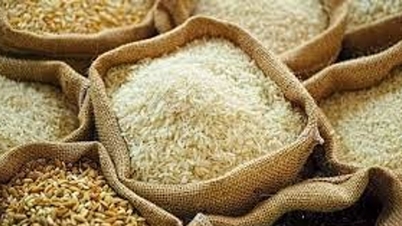
In the agricultural sector, localities need to implement comprehensive water-saving irrigation solutions, especially during the summer-autumn crop season. Utilizing water from small rivers, streams, ponds, and reservoirs is considered an important solution to reduce pressure on major water sources.
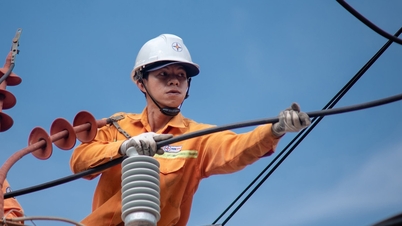
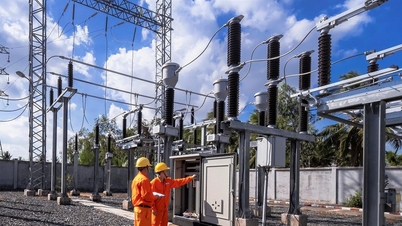
According to experts, the most important thing is not to prepare based on a scenario solely of heat and dryness, but rather to consider multiple risks. For agriculture, adjustments to planting schedules, crop structures, and water-saving irrigation are necessary. For water resources, monitoring water balance, early water storage, and developing contingency plans for water supply are crucial. For energy, preparation for a dual risk is needed: increased electricity demand due to heat while hydropower potential declines due to water shortages.
At the local level, it is necessary to simultaneously prepare solutions to respond to heatwaves, forest fires, and water shortages, but also not to neglect strong thunderstorms, hailstorms, localized heavy rainfall, and powerful storms with complex trajectories. The most appropriate approach is risk management based on multi-term climate forecasts and regularly updated information on the future development of ENSO (including the El Niño and La Niña weather phenomena).
Source: https://baotintuc.vn/xa-hoi/ung-pho-da-rui-ro-khi-el-nino-quay-tro-lai-20260601080627869.htm






























![[Photo] Reception to welcome General Secretary and President To Lam and his wife on their State visit to the Philippines](https://vphoto.vietnam.vn/thumb/1200x675/vietnam/resource/IMAGE/2026/06/01/1780295488620_vna-potal-chieu-dai-chao-mung-tong-bi-thu-chu-tich-nuoc-to-lam-va-phu-nhan-tham-cap-nha-nuoc-toi-philippines-8798060-7855-jpg.webp)
































































Comment (0)