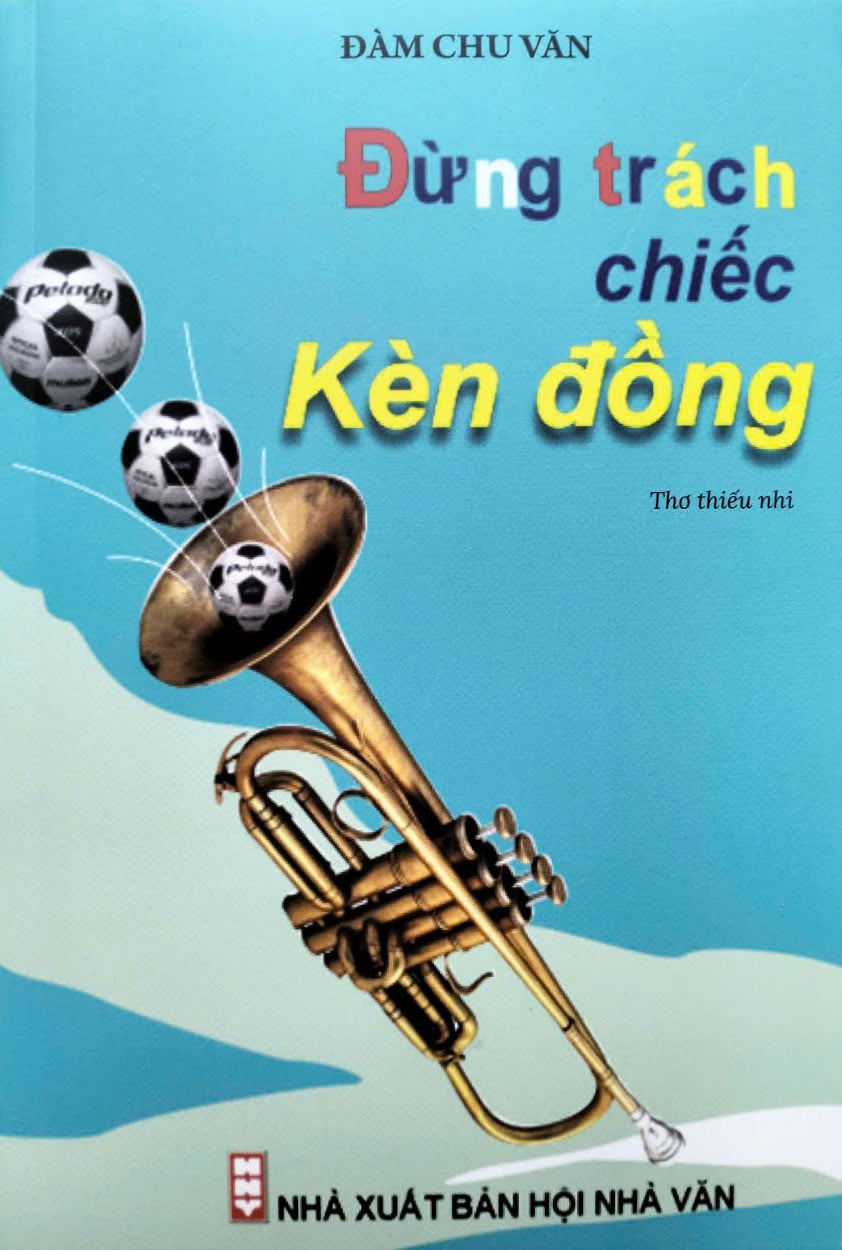
This book, with its 35 poems, is a loving, gentle whisper, nurturing curiosity , wonder, delight, innocence, and purity in every child's soul.
This is the fourth collection of poems for children by poet Dam Chu Van. The author's children's poems have been selected for inclusion in the Vietnamese Language textbook for 3rd grade, volume 2, part of the "Creative Horizons" series, published by Vietnam Education Publishing House, and in several other reference books.
The poetic forms in this collection are rich and diverse, with rhymes, rhythms, rhetorical devices, and stylizations that are very suitable for the comprehension, thinking, and psychology of children. The poems are written in various forms such as: Waves and Shore, Little Spider, Elephant Trunk Tree, Durian Fruit, Mangosteen Fruit, A Meal Between North and South - six-eight meter; Crab Claw Vegetable - a variation of six-eight meter; Children's Rhymes about Crabs and Fish - four-word verse; Mangrove Tree, Vegetable Name, Chili Seed, Two Long-winded People, Don't Blame the Brass Trumpet - five-word verse; Green Cockscomb Flower, Morning Glory Flower - six-word verse; Mr. Sun, Rambutan Fruit, Southern Fruit Festival - free verse. The rhyming, rhythm, and poetic techniques of dialogue, monologue, and narration are flexible and polyphonic.
Reading "Don't Blame the Brass Trumpet," besides the flexible use of end rhymes, internal rhymes, and alternating rhymes, the rhythm in each poem also shows diversity. In addition to the familiar 2/2/2, 4/4, 2/3, 3/2, and 2/2 rhythms, this collection also features unusual rhythms like 1/1/1/1 in "Spin! Spin! Spin! Spin!" in the poem "The Potter," or 3/1/1 in the line "Shouting loudly: Excellent! Excellent!" and 1/1/1/2 "Excellent! Excellent! Excellent!..." in the poem "The Story of the Bus and the Dump Truck." The tone of the poems is both intimate and conversational, patient and enthusiastic, explanatory, guiding, suggestive, comforting, and instructive, leading the child to the interesting things in the poetry collection.
In terms of subject matter and content, this children's book, despite its concise 71-page size, is remarkably rich. From depictions of objects, vegetables, and fruits to stories, animals, people, events, nursery rhymes, and food, everything reflects the distinctive flavor of Southern Vietnam and the harmonious blend of North and South, as well as the natural, relaxed, and logical integration of foreign names and objects in *Puskin's Garden*.
The poetry collection "Don't Blame the Brass Trumpet" by poet Dam Chu Van is a collection brimming with love for children. The love of family, homeland, country, nature, and life itself is dành for these little ones!
In "Don't Blame the Brass Trumpet," there are also allegorical lessons and parables to help children begin to learn how to behave appropriately towards people, the natural environment, and the social environment around them. For example, the allegorical elements are found in poems such as: "The Hedgehog and the Durian Orchard," "Two Long-winded People," "Don't Blame the Brass Trumpet," "The Story of the Bus and the Dump Truck," etc.
The poetry collection also serves as a refreshing stream, nurturing the love for homeland and country in every young soul. As Ilya Grigoryevich Ehrenburg wrote in his article "Trial by Fire," at the end of June 1942: "The initial love of country is the love of the most ordinary things: the love of the tree planted in front of the house, the love of the small street leading to the riverbank, the love of the refreshing sour aroma of an autumn pear or the scent of the steppe grass with a hint of strong liquor…". When each of our children learns to love purslane, mangrove trees, mangosteen, rambutan, star fruit, bellflower, oilseed flower, grapefruit orchard, windmill forest, mother's vegetable garden, the folk song about fish and shrimp, the teacher, the potter, the soldier… it means that this love for the roots of the nation begins simply and deeply.
Linh Nu
Source: https://baodongnai.com.vn/dong-nai-cuoi-tuan/202605/ung-trach-chiec-ken-dong-tap-tho-de-thuong-danh-tang-tre-tho-c590bd7/


![[Photo] The General Secretary, President and his wife lay flowers at the Ho Chi Minh Monument in Manila.](https://vphoto.vietnam.vn/thumb/1200x675/vietnam/resource/IMAGE/2026/05/31/1780219759477_anh-man-hinh-2026-05-31-luc-16-29-07.png)
















![[Video] Sunset at Lap An Lagoon – Where the sun sets over the fishing nets](https://vphoto.vietnam.vn/thumb/340x192/vietnam/resource/IMAGE/2026/05/31/1780192137701_beach-landscape-sea-water-nature-grass-745871-pxhere-com.jpeg)





























































Comment (0)