

Achievements and limitations
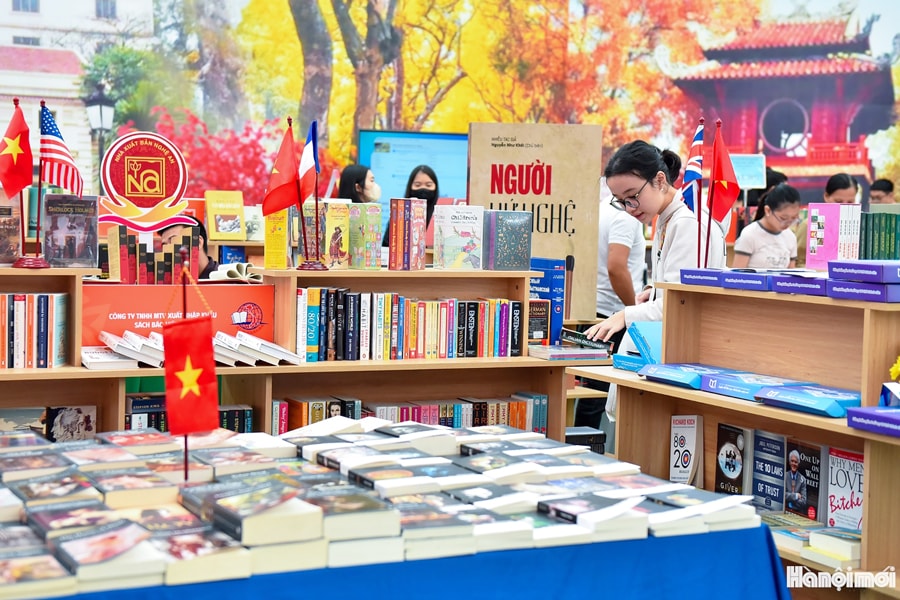
From the early years of the Doi Moi (Renovation) period, several works marked a turning point in aesthetic thinking, signifying a shift towards a strong reflective consciousness. "Reed Grass" (Nguyen Minh Chau) places the individual, with their internal conflicts, at the center of the narrative. "The Distant Past" (Le Luu) confronts the haunting memories of war and its aftermath, along with the mental constraints that need to be broken. These works not only renewed writing styles but also opened up more freedom for language, for individual voices, and for the hidden aspects of life.
Diversification is a prominent feature of the literature of the Renovation period. From rural areas ("The Land of Many People and Many Ghosts" - a novel by Nguyen Khac Truong, "The Endless Field" - a short story by Nguyen Ngoc Tu), to urban areas ("Old Stories of Hanoi " - a memoir by To Hoai), to ethnic minorities and mountainous regions ("The Song of January" - a poem by Y Phuong, "I Have Returned to the High Mountains" - an essay by Do Bich Thuy), to islands and seas ("The Epic of the Sea" - an epic poem by Huu Thinh, "The Sinking Island" - a memoir by Tran Dang Khoa). From the realm of spiritual culture ("Mẫu Thượng Ngàn" - a novel by Nguyễn Xuân Khánh), to intellectual tragedy ("A Wedding Without a Marriage Certificate" - a novel by Ma Văn Kháng), to war and post-war ("Retired General" - a short story by Nguyễn Huy Thiệp, "The Unmarried Woman's Wharf" - a novel by Dương Hướng, "Myself and Them" - a novel by Nguyễn Bình Phương, "The Waves of the Sun" - an epic poem by Thanh Thảo, "Family, Friends and Country" - a memoir by former Vice President Nguyễn Thị Bình)... All of this shows that literature is no longer confined to a single model. Realism and fantasy, tradition and modernity, epic and personal life, are widely experimented with, creating an open, multi-layered aesthetic "map".
“The Land of Many People and Many Ghosts” reflects a turbulent rural landscape as market mechanisms infiltrate every village. “Mother of the Mountains” incorporates folk beliefs, cultural identity, and the enduring history of Vietnamese villages into a narrative structure with profound contemplation. “Retired General” presents a sharp, ambiguous writing style, placing humanity to the harsh test of desire, power, and moral boundaries. “Endless Fields” offers a fierce yet pure female voice from the Mekong Delta, deeply etching the tragedy of human lives. “The Song of January” is the voice of an individual both private and communal, embodying the beauty of Tay culture while also containing the anxieties of people on their journey of self-discovery . “The Unmarried Women's Wharf” is imbued with the losses of the countryside during and after war, a historical tragedy but also the tragedy of women who silently endured their lives. “Me and Them” opens up a surreal space where war is not just an event but also a state of mind, a multi-layered obsession that permeates dreams and the depths of the unconscious. “Sunken Island,” with its simple yet poignant writing style, portrays the lives of soldiers on the Truong Sa Islands with the utmost authenticity. “Old Stories of Hanoi” is a precious legacy, profoundly recreating the customs, lifestyles, and the “unity” of Hanoi culture through many changes…
It's not difficult to recognize the outstanding strengths of literature during the 40 years of the Renovation period: humanism, placing people at the center, not shying away from pain and loss, but always seeking the light of conscience; diversity and richness, expressed through themes, genres, and writing styles; integration and digitalization, with new theoretical experiments, multimedia publishing, and a multi-centered operating mechanism – where each work must find its own reading community.
Despite significant reforms, Vietnamese literature still faces limitations that need to be addressed: there are not many large-scale works with international reach; while there are some talented young writers, a large group with truly distinctive styles has not yet formed; and professionalism in publishing and promotion is still lacking, preventing many good works from reaching a wider audience both domestically and internationally.
Challenges and opportunities
Entering the digital age, literature faces new opportunities and challenges: Artificial intelligence opens up possibilities for supporting creative writing, analyzing data, suggesting language, etc., but at the same time raises major questions about originality and the intellectual copyright of human beings in artistic creation. Literature in the future will be a dialogue between the creative subject and algorithms, where authors must maintain their authentic voice, avoiding being lost in the "saturated" language of machines.
Globalization and social media create an environment for works to spread more quickly, but they also require writers to have a deeper understanding of cultural identity to avoid being swept away. Works like "The Song of January" or "Mother of the Mountains" prove that the further literature travels, the more it needs to return to its national roots to have a foundation to flourish. Works about Hanoi such as "A Hanoian" (Nguyen Khai), "Street" (Chu Lai), "The Long, Rainy Riverbank" (Do Phan), "A City Dweller's Novel" (Nguyen Viet Ha) reinforce the belief that if a work delves deep into the soul of a region, it has the confidence to open up limitless encounters.
Looking back over the past four decades, it's clear that literature has matured through the clashes, ventures, and experiments of numerous writers. Outstanding works not only recount the history and soul of a nation but also pave the way for the future through their ability to constantly reinvent themselves.
Moving forward, what does Vietnamese literature need?
It takes courage to face the truth; sensitivity to listen to the people of our time; imagination, personal experiences, compassionate trembling, "wordplay," and inspired transcendence... to enter the digital space without losing oneself.
We need many courageous and insightful critical voices, acting as visionary "gatekeepers," not only to evaluate but also to predict and create new aesthetic standards, guiding readers through the multifaceted and complex world of literature.
Above all, we need to believe that the art of language – in any era – still has the power to uplift people, open up hope, connect generations, and shape the spiritual identity of a nation.
2026 – the Year of the Horse – evokes a spirit of courage and overcoming obstacles to achieve breakthroughs. After four decades of Doi Moi (Renovation), Vietnamese literature has reached a maturity level, ready to enter a more advanced phase: delving deeper into its cultural strengths, broadening its horizons, and preparing for dialogue with the world . If we continuously build our identity and character, and maintain our confidence and expectations, Vietnamese literature will continue to accompany the community, nurture national spirit, and position itself on the international literary map.
Source: https://hanoimoi.vn/van-hoc-viet-nhin-lai-de-di-toi-734130.html



![[Image] A brilliant symphony and explosive power in the skies of Da Nang.](https://vphoto.vietnam.vn/thumb/1200x675/vietnam/resource/IMAGE/2026/05/31/1780196945787_anh-man-hinh-2026-05-31-luc-10-08-51.png)












![[Video] Sunset at Lap An Lagoon – Where the sun sets over the fishing nets](https://vphoto.vietnam.vn/thumb/340x192/vietnam/resource/IMAGE/2026/05/31/1780192137701_beach-landscape-sea-water-nature-grass-745871-pxhere-com.jpeg)
































































Comment (0)