

AI isn't scary!
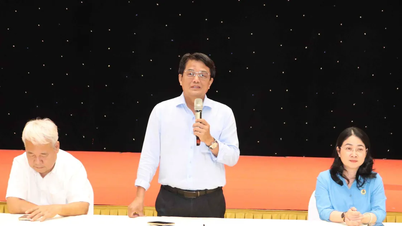
Poet Nguyen Quang Thieu, President of the Vietnam Writers Association , shared: “A critic once asked me: Does Vietnamese literature fear artificial intelligence (AI)? I think that AI will only surpass it when writers lose their individuality, personality, and convictions.”
The worrying aspect, according to poet Nguyen Quang Thieu, is not how AI writes, but where the writer's creativity lies. He argues that AI cannot replace writers unless the writers themselves become "robots in their writing," conforming to stereotypes, playing it safe, and lacking innovation.
"There was a time when some writers turned themselves into AI, becoming robotic in their writing, afraid to leave their old path, afraid to step out of their comfort zone," he said.
However, the Chairman of the Vietnam Writers Association also acknowledged that AI and digital technology are an unavoidable trend: "There are already signs and evidence of some works using AI to a certain extent. This is something we cannot avoid when living in the era of AI and digital technology."
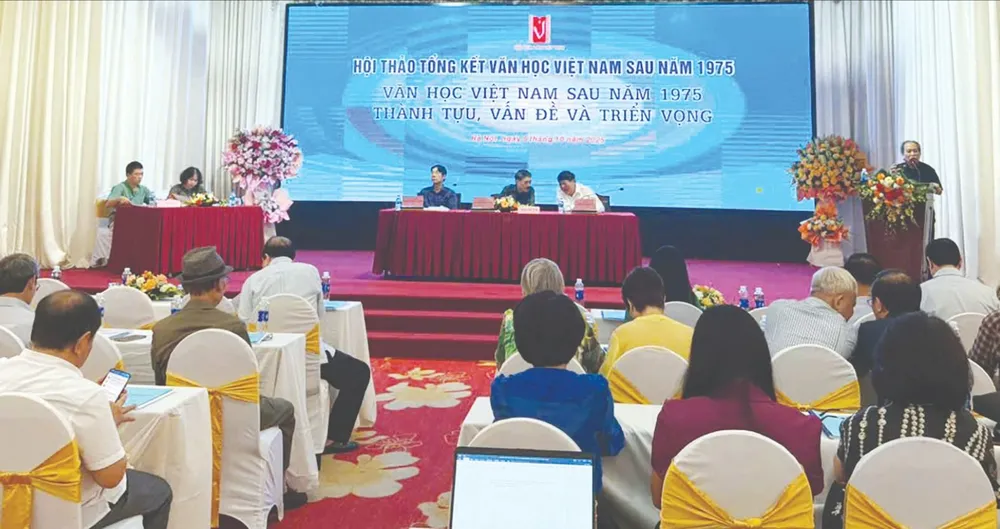
In fact, AI has made a significant impact on creative life: from assisting with editing and suggesting content to experimenting with poetry, short stories, and translation... But what the literary world fears is not the technology itself, but the fading of emotion and empathy.
Poet Nguyen Quang Thieu stated: "Each writer, through their creativity, their emotions, and their unique intellect, possesses the most important weapon against the interference of artificial intelligence." He emphasized that if AI were to replace writers, it would mean the end of literature, the end of literature in its essence.
In other words, AI isn't scary if humans remain creative. The difference between "artificial intelligence" and "human intelligence" lies in the capacity for empathy, which makes literature the art of the soul. Only humans, through their life experiences and emotional depth, can breathe life into words.
Literature is looking to the youth for inspiration.
At the seminar, writer Nguyen Binh Phuong, Vice President of the Vietnam Writers Association, emphasized: "Literature must originate from the reality of life, must draw nourishment from it, take root from it, and cast its shade upon it."
According to him, if literature over the past 50 years has lacked timeless works and powerful voices, the reason lies not in technology or the times, but in the writers themselves who have not dared to step out of their "comfort zone".
Sharing the same viewpoint, poet Nguyen Quang Thieu frankly stated that "the biggest obstacle to Vietnamese literature is the writers themselves." When writers do not dare to innovate, do not dare to experiment, do not dare to confront themselves, literature will close its own doors to development.
Over the past half-century, Vietnamese literature has traversed significant stages, from national reunification and reform to global integration. Each period has presented new creative opportunities, but also posed numerous challenges.
As poet Nguyen Quang Thieu observed: "The portrait of Vietnamese literature remains fragmented, failing to establish its rightful place," while "many European writers yearn for the turbulent and emotional reality of Vietnam, yet we ourselves have not created works that are commensurate."
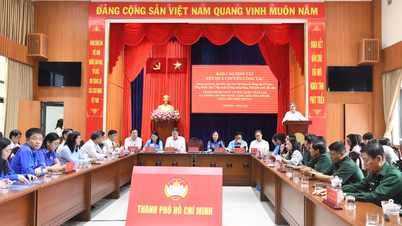
That spirit was endorsed by the poets, writers, and critics participating in the workshop. Many agreed that Vietnamese literature needs to look honestly at itself in order to develop, and must confront the limitations in its own creative thinking.
Poet Nguyen Viet Chien mentioned the role of memory and the responsibility of writers: after 50 years, the generation that directly experienced the war has gradually passed away, while the younger generation born in peacetime only receives that memory through fragmented pieces. "If literature does not speak up to piece together those fragments, collective memory will gradually fade, while the wounds will still fester," he said.
According to Professor Phong Le, Vietnamese literature is currently at a point of "generational transition," where youthful energy, creative individuality, and cultural strength will determine the new progress of the national literature. He emphasized that only when young writers dare to venture forth and break free from old paths can literature truly enter a period of innovation.
Source: https://www.sggp.org.vn/van-hoc-viet-nam-truoc-thach-thuc-tri-tue-nhan-tao-post816689.html


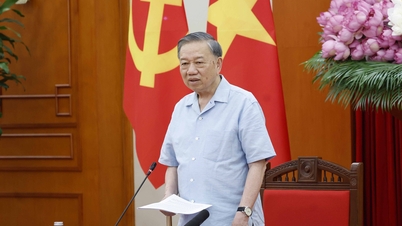
![[Photo] General Secretary and President To Lam presides over a meeting on preparations for the review of one year of operation of the three-tiered government system.](https://vphoto.vietnam.vn/thumb/1200x675/vietnam/resource/IMAGE/2026/06/02/1780391821195_a1-bnd-4595-9717-jpg.webp)












































Comment (0)