

 |
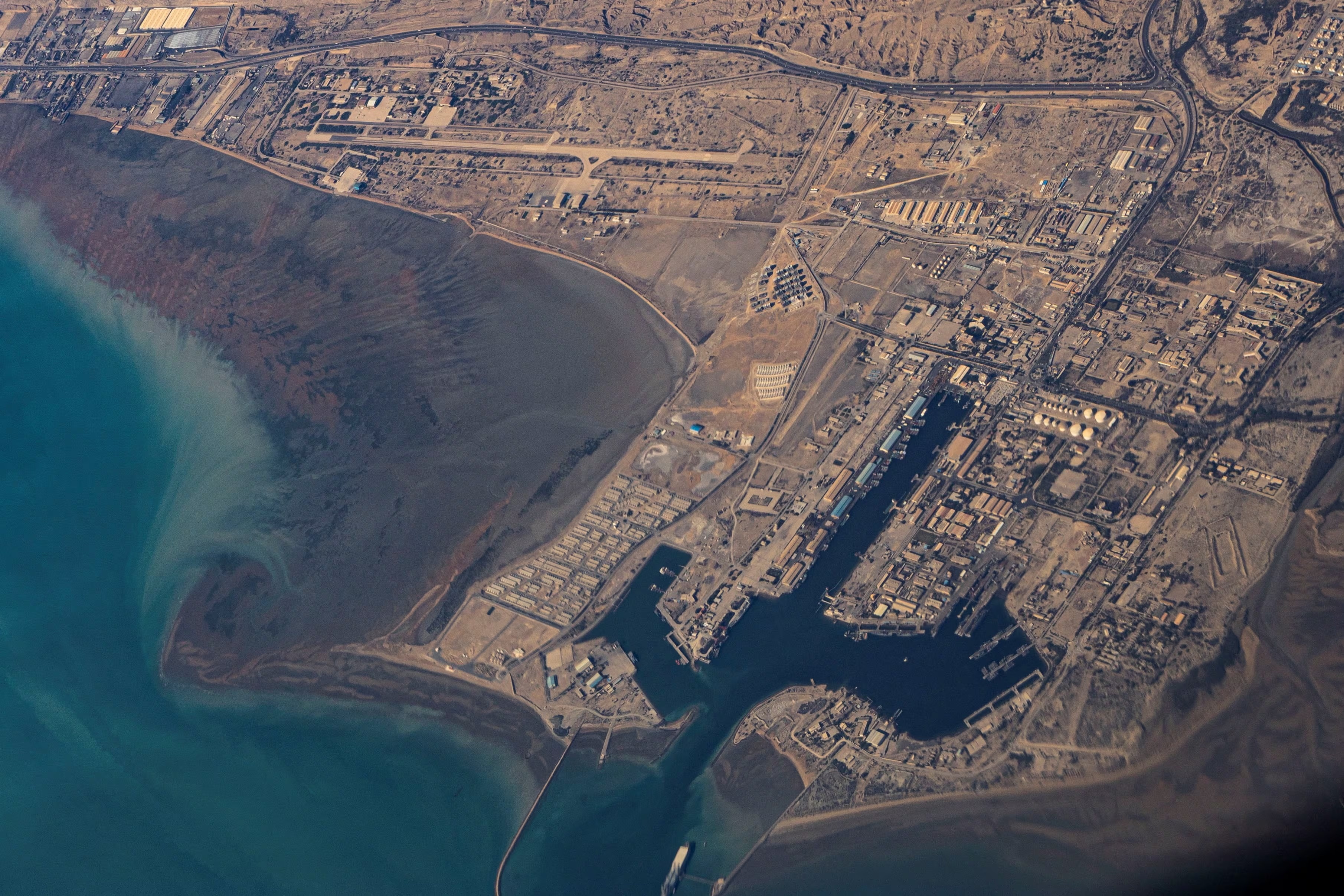
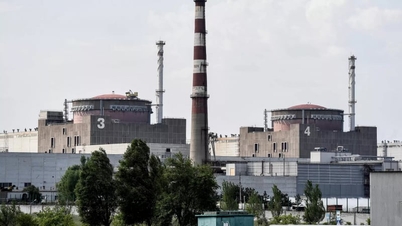
Bandar Abbas port and the Iranian coast in the Strait of Hormuz in 2023. Photo: Reuters. |
The US has just carried out another series of attacks near the port city of Bandar Abbas – the second airstrike in less than a week targeting a strategic Iranian stronghold, escalating tensions around the Strait of Hormuz despite the fragile ceasefire between Washington and Tehran that took effect on April 8.
Reuters and another source, citing unnamed U.S. officials, reported that U.S. forces shot down four Iranian drones and destroyed a drone control station in Bandar Abbas on May 27.
The attacks followed a series of explosions in Bandar Abbas on May 26. The Iranian Foreign Ministry accused Washington of violating the ceasefire with “aggressive actions” in Hormozgan province – where the strategic port city is located.
Iran's semi-official Tasnim news agency also reported that its forces attacked a "US air base" in the region in retaliation for the airstrike near Bandar Abbas.
Tensions escalated after US President Donald Trump declared during a cabinet meeting in Washington that "no one can control" the Strait of Hormuz, amid ongoing negotiations between the US and Iran.
Bandar Abbas – home to many of Iran's main naval forces – is located in one of the most strategically sensitive positions in the Gulf. Its position overlooking the Strait of Hormuz makes the city a crucial link in both Tehran's military posture and the broader confrontation with Washington.
How important is Bandar Abbas to Iran?
Bandar Abbas is located on the southern coast of Iran, north of the Strait of Hormuz – a narrow sea route connecting the Persian Gulf with the Gulf of Oman and the Arabian Sea. According to the 2016 Iranian census, the city has a population of over 526,000 and is situated approximately 60-70 km from the narrowest point of the Strait of Hormuz.
This location allows Iran to monitor one of the world's most important shipping lanes. In peacetime, approximately 20% of the world's oil and liquefied natural gas supply passes through the Strait of Hormuz.
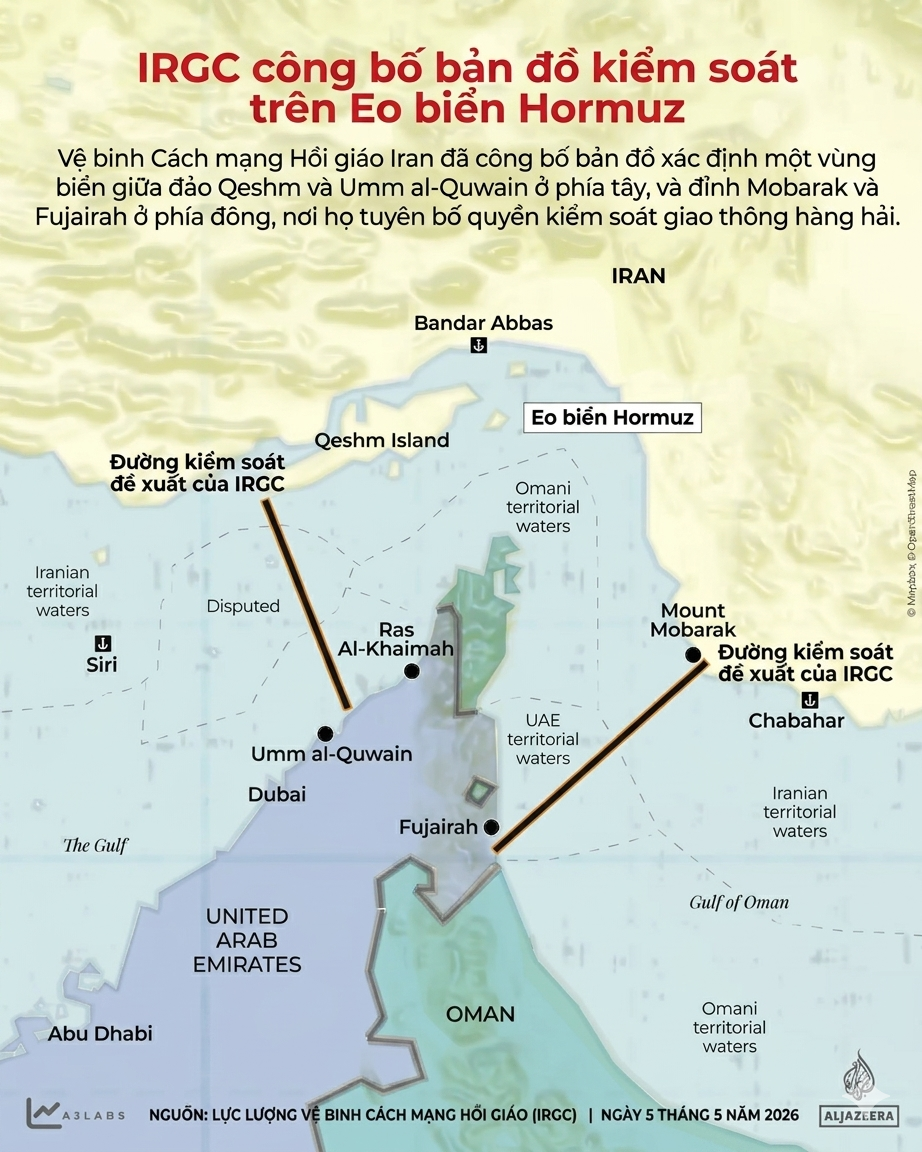 |
Holding a strategically important position, Bandar Abbas is the headquarters of both the Iranian regular navy and the naval forces of the Islamic Revolutionary Guard Corps (IRGC).
Since 1977, the Iranian navy has moved the majority of its fleet from Khorramshahr in the western Gulf to Bandar Abbas, making it the largest naval command center in the southern part of the country.
According to the Middle East Institute, the IRGC naval forces subsequently moved their headquarters from Tehran to Bandar Abbas to enhance their control over the Strait of Hormuz.
Despite claims by Trump and Israeli officials that Iran's naval capabilities have been severely damaged in recent attacks, Tehran still maintains a fleet of armed speedboats operated by the IRGC.
These vessels are designed to employ "swarm" tactics, often used to intimidate or prevent commercial vessels not authorized by Iran from passing through the Strait of Hormuz.
Recently, Iran used these boats to target two Indian vessels and two foreign container ships, MSC Francesca (flagged in Panama) and Epaminondas (flagged in Liberia), alleging that these ships had not been granted permission to transit.
The Strait of Hormuz is not only a military choke point but also an economic lifeline for Iran. Analysts estimate that more than 90% of Iran's crude oil exports pass through this sea route.
This makes Bandar Abbas and the Gulf infrastructure a lifeline for Tehran's budget, particularly in the trade network that helps Iran circumvent sanctions, especially in exporting oil abroad.
Why are the American attacks noteworthy?
Samir Puri, a lecturer in war studies at King's College London, told Al Jazeera that the ceasefire has not officially collapsed despite continued firefights between the two sides. According to him, current incidents are still "limited" compared to the period before April 8th.
"This resembles tit-for-tat military retaliations more than a large-scale infrastructure destruction campaign," he said.
According to this expert, the US is seeking to verify whether it can actually strip the IRGC and Iran of their control over the Strait of Hormuz. Meanwhile, Iran wants to demonstrate that it still has the capacity to maintain control of this shipping lane.
Currently, diplomatic and military activities are taking place simultaneously, with the US and Iran continuously exchanging proposals and counter-proposals since the ceasefire came into effect.
"On one hand, there's the battlefield; on the other, there's the negotiating table. These two processes are happening simultaneously," Puri said.
According to him, the current limited airstrikes are essentially part of the negotiation process.
"The negotiators can only draw leverage from what's happening on the battlefield. The U.S. wants to create a position strong enough to tell Iran that Tehran no longer has control over the Strait of Hormuz," he remarked.
However, Puri also suggested that Iran certainly does not want to be pushed into that situation, so Tehran will seek to demonstrate that it can still attack US ships and bases in the Gulf.
“Both Washington and Tehran still have an incentive to maintain dialogue, but their goals are very different. Trump and the US administration want to impose a win-win peace on Iran. Meanwhile, Tehran may want to prolong negotiations for as long as possible without making concessions,” Puri analyzed.
"This makes the situation similar to many other wars around the world: protracted negotiations with no clear end in sight, even though both sides still have reasons to continue participating," the expert concluded.
Source: https://znews.vn/vi-sao-my-lien-tiep-tan-cong-cang-bandar-abbas-cua-iran-post1655153.html

![[Image] Hanoi Police officially crowned champions of V-League 2025/2026](https://vphoto.vietnam.vn/thumb/1200x675/vietnam/resource/IMAGE/2026/05/31/1780244769054_ndo_br_039d561b692be875b13a-jpg.webp)
![[Photo] The General Secretary, President and his wife begin their state visit to the Philippines.](https://vphoto.vietnam.vn/thumb/1200x675/vietnam/resource/IMAGE/2026/05/31/1780230559452_anh-man-hinh-2026-05-31-luc-19-28-11.png)












![[Video] Sunset at Lap An Lagoon – Where the sun sets over the fishing nets](https://vphoto.vietnam.vn/thumb/340x192/vietnam/resource/IMAGE/2026/05/31/1780192137701_beach-landscape-sea-water-nature-grass-745871-pxhere-com.jpeg)





![[Photo] Solemn bathing ceremony and Buddha procession in Hue](https://vphoto.vietnam.vn/thumb/1200x675/vietnam/resource/IMAGE/2026/05/31/1780228263543_1-jpg.webp)
![[Photo] Admire the coral "masterpiece" amidst the million-year-old heritage of Dak Lak province.](https://vphoto.vietnam.vn/thumb/1200x675/vietnam/resource/IMAGE/2026/05/31/1780221235105_anh-man-hinh-2026-05-31-luc-16-53-27.png)









































































Comment (0)