

According to Dr. Lam Nguyen Thuy An, Specialist Level 2, University Medical Center of Ho Chi Minh City - Branch 3, fatty liver disease, also known as non-alcoholic fatty liver disease (NAFLD), is a condition where fat accumulates in the liver unrelated to alcohol consumption. Typically, this disease is associated with obesity, type 2 diabetes, and metabolic syndrome. However, many studies have shown that thin people are also at risk of developing this disease, and many people are complacent, leading to serious complications.
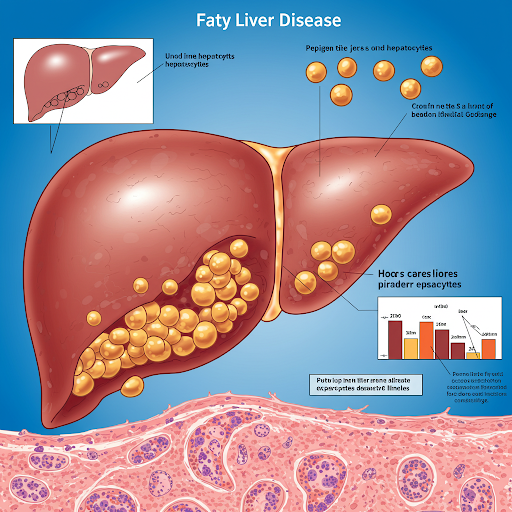
People who are thin or have a normal body mass index (BMI) can still develop fatty liver disease.
Photo: AI
According to Dr. Thuy An, although obesity is the main risk factor, people with a lean build or a normal body mass index (BMI) can still develop fatty liver disease. A 2019 study in the journal Gastroenterology showed that the rate of fatty liver disease among obese people is about 50-70%, with the remainder belonging to the lean group. In Vietnam, nearly 30 million people have fatty liver disease, of which 30-35% are at risk of developing cirrhosis. There are currently no specific statistics on the rate of fatty liver disease among lean people, but clinical practice shows that it is not an uncommon condition.
What are the main causes of fatty liver disease in thin people?
Visceral fat is fat that accumulates around the liver, blood vessels, and intestines. Unlike subcutaneous fat, visceral fat is more likely to cause metabolic diseases, even in thin individuals. Normally, the liver metabolizes sugar into energy. If the body lacks sugar (due to inadequate diet or excessive weight loss), the liver is forced to use fat as a substitute. Over time, this accumulation of fat in the liver leads to disease.
Genetics and metabolic disorders : Some people have genes that make them more susceptible to lipid metabolism disorders, increasing their risk of fatty liver disease.
Diabetes and insulin resistance : High blood sugar makes the liver more prone to fat accumulation, even in people who are not overweight.
An unbalanced diet : Consuming large amounts of saturated fat, sugar, and processed foods can increase fat accumulation in the liver, although it may not cause significant weight gain.
Unscientific vegetarian diets or excessive restrictions can lead to a deficiency of essential nutrients, causing an imbalance in fat metabolism.
Lack of exercise : Thin people who are inactive are also at risk of developing lipid metabolism disorders, leading to fatty liver disease. Side effects of medication and other factors.
Certain medications, such as corticosteroids, tamoxifen, and amiodarone derivatives, can increase fat accumulation in the liver. Smoking and excessive alcohol consumption, even if not obese, can damage the liver and lead to fat accumulation.

An unscientific vegetarian diet can also cause imbalances in fat metabolism.
ILLUSTRATIVE PHOTO: AI
Symptoms and diagnosis?
Fatty liver disease often has no obvious symptoms in its early stages. Some cases may experience persistent fatigue, a feeling of heaviness or discomfort in the upper right abdomen; blood tests may show elevated liver enzymes; ultrasound, CT scan, or liver biopsy may detect fat accumulation.
If left uncontrolled, fatty liver disease can progress to non-alcoholic steatohepatitis (NASH), leading to cirrhosis, liver failure, and even liver cancer.
How to prevent and treat it?
Regardless of whether you are thin or not, to protect your liver, you need:
- Maintain a healthy diet: Eat plenty of vegetables, fruits, whole grains, and protein.
- Limit sugar, processed foods, animal fats, and alcoholic beverages.
- Increase physical activity: Exercise for at least 30 minutes a day and maintain a regular exercise routine to support more efficient fat metabolism.
- Control underlying conditions: If you have diabetes, dyslipidemia, or high blood pressure, manage them closely as directed by your doctor.
- Avoid risk factors: Do not smoke, limit alcohol consumption.
- Use caution when taking medications that may harm the liver; always consult your doctor.
- Regular health check-ups: Annual health check-ups are recommended for healthy individuals, and at least twice a year for those with underlying health conditions, to comprehensively monitor their health. Patients with pre-existing conditions requiring monitoring should strictly follow their doctor's instructions to ensure their condition is safely managed.
"Fatty liver disease isn't just for overweight people. Even thin people, if they have an unhealthy lifestyle or metabolic disorders, are at high risk. Understanding the causes and adjusting your lifestyle appropriately will help you prevent and protect your liver health effectively," shared Dr. Thuy An.
Source: https://thanhnien.vn/vi-sao-nguoi-gay-van-bi-gan-nhiem-mo-185250327100048873.htm
![[Photo] Admire the coral "masterpiece" amidst the million-year-old heritage of Dak Lak province.](https://vphoto.vietnam.vn/thumb/1200x675/vietnam/resource/IMAGE/2026/05/31/1780221235105_anh-man-hinh-2026-05-31-luc-16-53-27.png)
![[Image] Hanoi Police officially crowned champions of V-League 2025/2026](https://vphoto.vietnam.vn/thumb/1200x675/vietnam/resource/IMAGE/2026/05/31/1780244769054_ndo_br_039d561b692be875b13a-jpg.webp)
![[Photo] Solemn bathing ceremony and Buddha procession in Hue](https://vphoto.vietnam.vn/thumb/1200x675/vietnam/resource/IMAGE/2026/05/31/1780228263543_1-jpg.webp)


![[Photo] The General Secretary, President and his wife begin their state visit to the Philippines.](https://vphoto.vietnam.vn/thumb/1200x675/vietnam/resource/IMAGE/2026/05/31/1780230559452_anh-man-hinh-2026-05-31-luc-19-28-11.png)














![[Video] Sunset at Lap An Lagoon – Where the sun sets over the fishing nets](https://vphoto.vietnam.vn/thumb/340x192/vietnam/resource/IMAGE/2026/05/31/1780192137701_beach-landscape-sea-water-nature-grass-745871-pxhere-com.jpeg)






































![[Photo] Admire the coral "masterpiece" amidst the million-year-old heritage of Dak Lak province.](https://vphoto.vietnam.vn/thumb/402x226/vietnam/resource/IMAGE/2026/05/31/1780221235105_anh-man-hinh-2026-05-31-luc-16-53-27.png)


































Comment (0)