

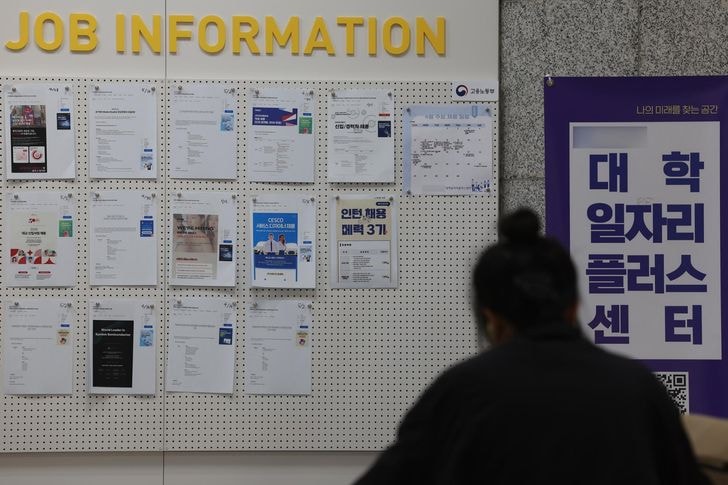
Amid slowing economic growth and the increasing application of artificial intelligence (AI), the South Korean job market is becoming more competitive for young people.
Ga-hyun Son, 26, who worked as a part-time teacher for nearly two years, spent months searching for opportunities in educational content development and textbook writing. However, all her efforts so far have been unsuccessful.
“Positions for newcomers are almost nonexistent, and even for internships, there are many applicants with prior experience,” Son shared. “Although the job is nominally open to both newcomers and experienced workers, it feels like I don’t really stand a chance when competing with people who have been working for many years.”
According to the young woman, in the context of an economic slowdown, companies are increasingly looking to hire candidates who can start working immediately rather than investing time and resources in training new employees.
A 24-year-old job seeker named Kim from Busan, who is preparing to enter the publishing industry, described a similar situation. According to him, the number of job openings for inexperienced candidates is decreasing, and it is very difficult to compete.
"The positions are much more geared towards experienced candidates," Kim said. "Even when companies hire from both groups, it still feels like experience is the deciding factor, so it's difficult to confidently apply."
Fierce competition for "good jobs"
The large-scale recruitment announcements from South Korean corporations, with plans to hire around 51,600 new workers this year, do not offer much hope to applicants like Son.
Many positions now prioritize skills in artificial intelligence (AI), information technology, or foreign languages, significantly narrowing opportunities for unskilled workers.
“The entry requirements for jobs are increasingly high, but many applicants don’t meet the qualifications,” Son said. “Ultimately, experienced workers compete with each other, while newcomers are left out.”
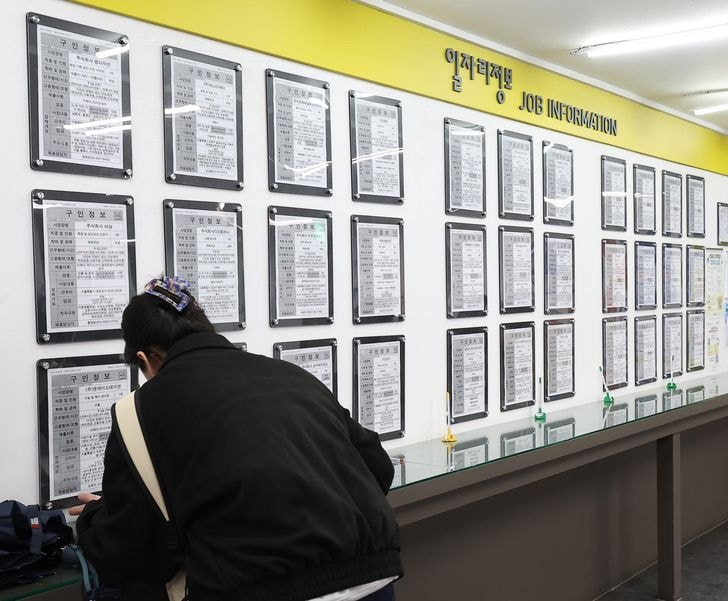
Moreover, the increasing number of highly educated job seekers is also intensifying the competition.
According to data from the Korean Ministry of Data and Statistics, approximately 623,000 young people are currently looking for jobs amid a prolonged period of sluggish recruitment.
Professor Hong Sok-chul, an economics professor at Seoul National University, argues that the trend of businesses prioritizing experienced hires reflects both business logic and changes in the labor market.
"From the employer's perspective, experienced workers simply bring greater efficiency; that demand has always existed," he said. "What's changing is on the applicant's side. Workers no longer expect to stay with one company for their entire lives; they are constantly applying to find better positions. The pool of applicants is therefore increasingly more experienced, and businesses are recruiting accordingly."
AI is changing the labor market.
Besides the pressure from the economic downturn, the proliferation of AI generation is also changing the nature of many jobs for young workers, especially in fields that are highly repetitive and standardized.
A 2025 report by the Bank of Korea indicated that in the three years since ChatGPT launched, approximately 211,000 jobs for young workers had disappeared. Of these, about 208,000 were in sectors heavily impacted by AI, such as programming and information services.
The report identifies this as a phenomenon of "seniority-driven technological change," where AI tends to replace repetitive tasks at the younger workforce level, while supporting increased productivity for senior-level employees.
This trend will continue to lead the labor market to prioritize highly experienced and specialized workers.
“Individuals with deep expertise and who are difficult to replace are becoming more valuable. In a job market that increasingly prioritizes experience and with AI continuing to reshape recruitment structures, young people will continue to face significant challenges in finding employment,” Professor Hong concluded.
Source: https://daibieunhandan.vn/vi-sao-nguoi-tre-ngay-cang-kho-tim-viec-10418346.html
![[Image] Pleasant weather helps students enter the 10th grade entrance exam with confidence.](https://vphoto.vietnam.vn/thumb/1200x675/vietnam/resource/IMAGE/2026/05/29/1780034401612_ngay-1-thi-lop-10-minh-duy-8-5009-jpg.webp)
![[Photo] Ba Lang An Lighthouse - the "eye of the sea" amidst the "rock museum" of Quang Ngai province.](https://vphoto.vietnam.vn/thumb/1200x675/vietnam/resource/IMAGE/2026/05/29/1780038698840_anh-man-hinh-2026-05-29-luc-14-10-42.png)













































































Comment (0)