

Despite being the peak tourist season, Pling Island in southern Thailand has been closed since May 9th to allow time for environmental recovery after widespread coral bleaching was discovered.
Coral bleaching is a phenomenon where corals push algae out of the water when sea temperatures rise abnormally high and ultraviolet radiation increases.
This process causes the vibrant colors of coral to disappear, leaving only white. Coral can recover from bleaching over time, only when temperatures decrease and ocean conditions return to normal.
According to the Department of National Parks, Wildlife and Plant Conservation (DNP) under the Ministry of Natural Resources and Environment of Thailand, in addition to the aforementioned island, Sirinart National Park in Phuket (a southern province of Thailand) will also cease welcoming visitors to the surrounding coral reefs due to widespread coral bleaching caused by rising sea temperatures.
The agency is also monitoring coral bleaching in other national parks across various locations in southern Thailand.
Widespread coral bleaching has occurred in Thailand after the Southeast Asian nation experienced a severe heatwave in recent weeks.
Back in 2018, authorities had to close Maya Bay – a famous Thai bay thanks to the Hollywood film "The Beach," which featured scenes there – for over four months to allow time for the coral reefs and marine life to recover from the impact of external factors caused by the large number of tourists.
On the same day, Thai officials said that many other resort islands in the country were also facing severe water shortages following a severe heatwave across Asia.
Each year, Koh Phi Phi island, off the west coast of southern Thailand, welcomes hundreds of thousands of tourists to its pristine beaches and crystal-clear waters.
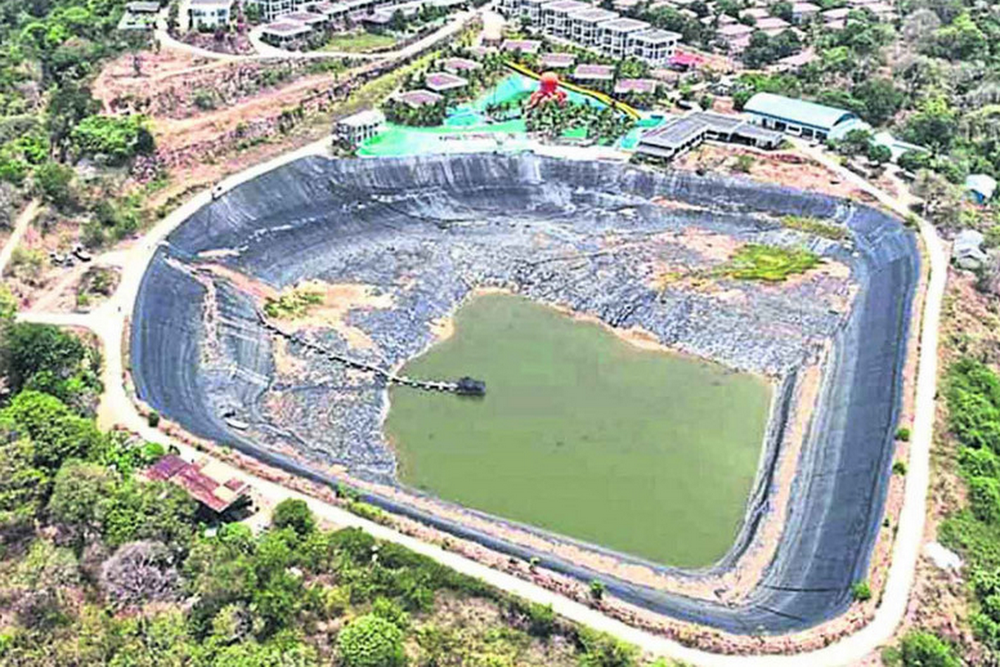
However, the intense heatwave has caused temperatures to rise to record levels in the area in recent weeks, and coupled with prolonged low rainfall, this has led to the gradual depletion of reservoirs.
Wichupan Phukaoluan Srisanya, President of the Krabi Hotel Association, which represents hotels on Koh Phi Phi island, warned that private companies supplying water to the area may have to cease their services.
She said that officials on Koh Phi Phi island are considering transporting clean water from the mainland to the island if the drought continues.
Some locals revealed they had been suffering from a shortage of fresh water for months, while many hotels on the island had to limit bookings due to concerns about not being able to supply enough water for tourists.
Scientists have long warned that human-induced climate change will create more frequent and intense heatwaves.
According to the United Nations' World Meteorological Organization, the El Niño phenomenon is causing warmer weather this year, and Asia is no exception, with temperatures rising at a faster rate than the global average.
Local tourism operators have repeatedly called for investment in a long-term water supply for Koh Phi Phi island, which lacks sufficient reservoirs and has dilapidated infrastructure.
In the Gulf of Thailand, another popular tourist island, Koh Samui, is also experiencing hot and dry weather, but local tourism officials insist this will not affect tourists.
Ratchaparon Poolsawadee, president of the Koh Samui Tourism Association, said that accommodations have to purchase fresh water, which triples hotel operating costs.
In recent times, intense heatwaves have severely impacted Asia, leading to numerous deaths from heatstroke and causing many schools to close.
Last April, Bangkok city authorities issued a warning about high daytime temperatures when the heat index, which takes into account factors including humidity, reached 52 degrees Celsius.
TH (according to Vietnam+)Source






















































































Comment (0)