

Vam Thu's famous banh tet (sticky rice cake)
Nestled beside the Vam Thu stream – a branch of the Vam Co Tay river – the Vam Thu sticky rice cake village in My Thanh commune becomes more bustling than usual in the days leading up to Tet (Lunar New Year). People chat and laugh merrily while quickly wrapping cakes to deliver to customers. Ms. Tran Thi Kim Thoa (a resident of Vam Thu sticky rice cake village) said: “During Tet, almost every household has sticky rice cakes, both for offering to ancestors and for entertaining guests. In modern life, many families are busy and no longer have time to wrap the cakes themselves, so they mainly order them. Thanks to this, during the Lunar New Year, the Vam Thu sticky rice cake village is bustling and considered the happiest time of the year.” The unique feature that makes Vam Thu sticky rice cakes famous is that the sticky rice is not cooked but wrapped in raw sticky rice mixed with coconut, black beans, and a little salt. The filling comes in two types: banana and mung bean paste. Each bakery has its own secret recipe for the filling to ensure a rich, fragrant flavor. The deliciousness of a banh tet (Vietnamese sticky rice cake) is not only about its quality but also its appearance, which requires skilled hands to wrap each cake evenly and beautifully. Typically, a skilled banh tet wrapper can wrap 50 cakes per hour.
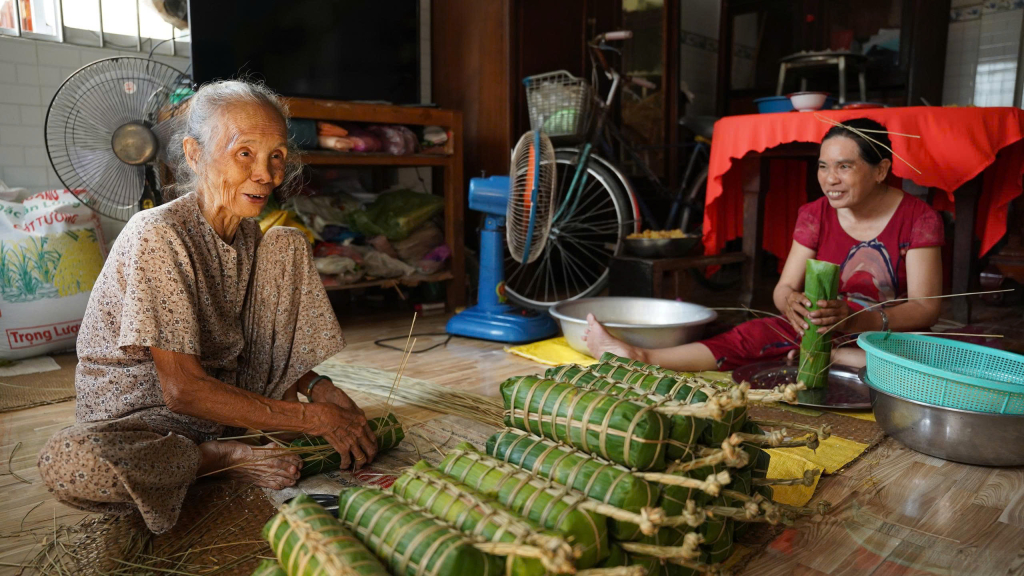
Mr. Le Trung Chanh (a resident of Vam Thu sticky rice cake village) shared: “This sticky rice cake village has existed for over 40 years. From selling only in local markets, Vam Thu sticky rice cakes have now expanded their market to Ho Chi Minh City. On normal days, each workshop makes about 500 cakes, but during Tet (Lunar New Year), the production increases fivefold. To have enough workers to wrap the cakes, the workshops usually divide the hours, wrapping in rotation from one workshop to another, so everyone earns extra income during Tet.”
Currently, only three bánh tét (Vietnamese sticky rice cake) making workshops remain in the village, so it's no longer as bustling as before. Most of those still practicing the craft are elderly. To preserve the tradition, the workshop owners have to stay up late and wake up early, especially during Tet (Vietnamese New Year), working through the night to prepare ingredients and finish before 6 am so the workers can gather to wrap the cakes. Ms. Nguyen Thi Gon confided: “Most of the young people in the village work as factory workers; only the older people continue this profession. This is a traditional craft, so we all want to preserve it. Although the income isn't high, everyone who follows this profession can make a living from it.”
Every Tet holiday, mothers and grandmothers gather to wrap bánh chưng (traditional Vietnamese rice cakes) in a warm and affectionate atmosphere by the Vam Thu River. The smoke from the kitchen fires and the aroma of the cakes further enhance the festive spirit, contributing to the preservation of this unique and indispensable traditional cake during the Tet celebrations.
Rich and flavorful traditional shrimp paste
In the bustling atmosphere of the days leading up to Tet (Lunar New Year), the business of Vo Thi Hong Hai (Vam Co commune) is preparing the ingredients for producing shrimp paste, anchovy paste, and roosterfish paste. According to Ms. Hai, when the northeast monsoon season arrives, some people living along the Vam Co River begin the profession of setting traps to catch shrimp, roosterfish, anchovies, etc. Initially, there was so much fish that they couldn't eat it all, so her family came up with the idea of making shrimp paste, anchovy paste, and roosterfish paste for personal use and to give to relatives and friends. "Seeing how delicious the paste was, many people ordered it, and from there I decided to do business selling various types of paste, with shrimp paste being the main product," Ms. Hai recounted.
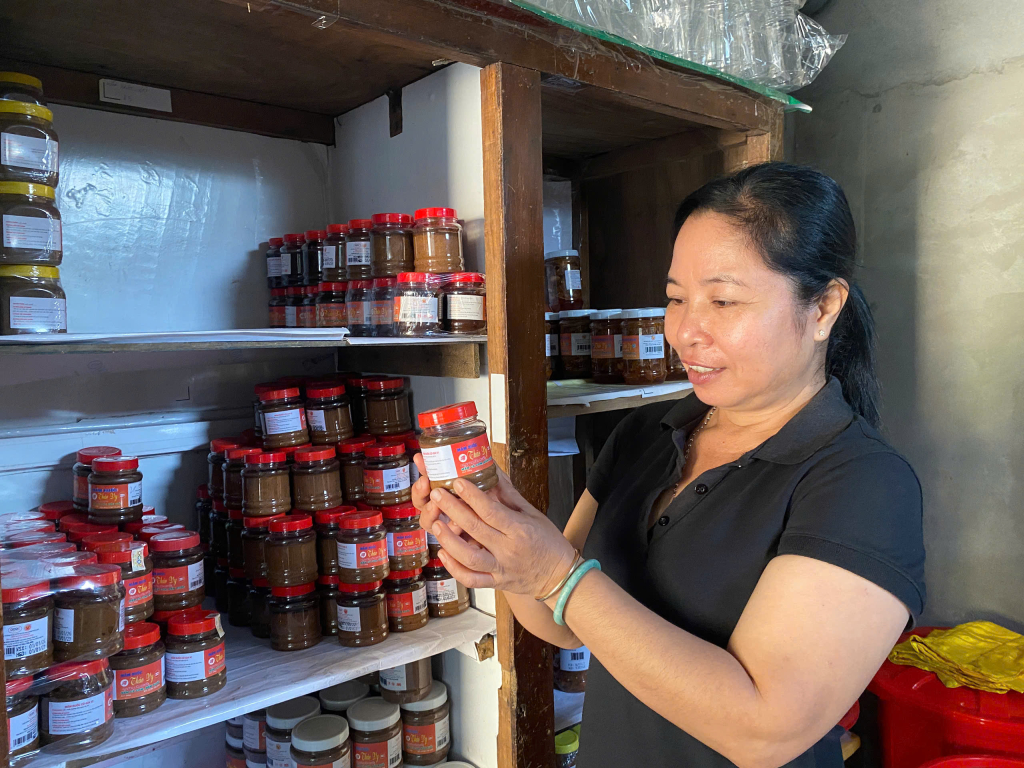
The secret to making delicious shrimp paste is to select large shrimp, remove all unwanted fish, and salt and dry them immediately after catching. If the shrimp contain unwanted fish, the paste will not be fragrant or firm. After drying in the sun for one day, the shrimp are fermented for 1-1.5 months and then dried again under intense sunlight for about one day. During this time, the worker must frequently turn the paste to ensure even cooking. Next, it is ground and fermented again. If making traditional shrimp paste, it can be used immediately after fermentation. However, Ms. Hai's seasoned shrimp paste is mixed with sugarcane juice, garlic, chili, lemongrass, and sugar. Ms. Hai's family's traditional shrimp paste product has achieved OCOP 3-star certification.
She said: “The period leading up to the Lunar New Year is both the fishing season and the peak season for selling various types of fermented shrimp paste. Fermented shrimp paste is used in many dishes such as stir-fried pork belly with fermented shrimp paste, steamed fermented shrimp paste, fermented shrimp paste in hot pot,... or simply as a dipping sauce for everyday meals. For many people, fermented shrimp paste has become a familiar traditional dish during the Lunar New Year because it evokes childhood memories with family. Thanks to this, my family's income triples during the Lunar New Year compared to normal days.”
Build a brand, build trust.
Back in Vinh Cong commune, Nguyen Tuan Thanh's Tan Tu food production facility is busy completing the final stages of making pork sausage and grilled spring rolls to deliver to customers before dawn. Mr. Thanh shared: “The pork sausage is made from fresh meat taken directly from the slaughterhouse, with 7 parts lean meat and 3 parts fat. The meat is then washed, ground, mixed with spices, and steamed. Importantly, our sausage doesn't contain added sugar; it only has the sweetness of the meat and the richness of the fat. Since our sausage achieved OCOP 3-star certification, sales have increased. Before, I only sold a few kilograms a day, but now I average 150 kg a day. From the 23rd of the 12th lunar month to the 4th day of Tet (Lunar New Year), I supply about 1 ton of pork sausage per day to the market.”

Besides his unique processing techniques, Mr. Thanh also pays attention to food safety. His facility is clean, and he applies machinery and equipment to production, helping to increase output and reduce costs. Currently, the facility has invested in 3 grinding machines, 2 steaming machines, and a vacuum packaging machine. He sources his raw materials from reputable, high-quality suppliers, absolutely not prioritizing profit over quality. This helps Mr. Thanh's production facility build a brand, create strong customer trust, and especially promote the value, meaning, and effectiveness of the OCOP program.
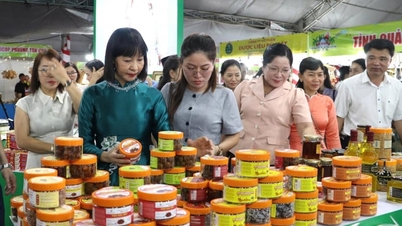
Deputy Director of the Department of Agriculture and Environment, Truong Tan Dat, emphasized: “The Lunar New Year is a time when OCOP products are sought after by many people for family use and as gifts for friends and relatives, because the products have clear origins and carry the distinctive flavors of their hometowns. Compared to previous years, the OCOP market during this year's Tet holiday has many positive new features. Notably, there is a greater diversity in types and segments, from everyday consumer products to gifts and Tet presents with beautiful designs and prices suitable for many different groups.”

The proportion of deeply processed products has increased significantly, extending shelf life, facilitating transportation, and enabling year-round consumption. Packaging and labeling have become more professional, clearly showcasing the origin, quality standards, and stories associated with local identity, building consumer trust. Distribution channels have been expanded through a system of OCOP product introduction and sales points, with 13 points of introduction,...
Source: https://baotayninh.vn/vi-tet-tu-dac-san-que-huong-138714.html


















































































Comment (0)