


General Secretary and President To Lam delivers the opening remarks at the 23rd Shangri-La Dialogue - Photo: Nguyen Khanh
"Peace, stability, and development are the common denominators of all nations and peoples," General Secretary and President To Lam emphasized in his speech titled "Proactively building peace, stability, and development in a volatile world ."
The speech focused on the Asia-Pacific region, and Vietnam's perspective and proposals in the current context. Throughout the speech was a spirit of action: peace cannot be passively waited for but must be actively created; stability cannot rely solely on deterrence but must be nurtured by rules, dialogue, self-restraint, and trust; and development cannot stand outside of security, but rather must be the foundation for sustainable security.

Guests applaud after General Secretary and President To Lam concludes his keynote speech at the Shangri-La Dialogue - Photo: NGUYEN KHANH
Three crises and their solutions.
In his speech, General Secretary and President To Lam did not speak generally about instability, but clearly named the "three fundamental crises" of the era: the crisis of international order, the crisis of the development model, and the crisis of strategic trust. Among these, the crisis of strategic trust is "a silent but dangerous crisis, because it makes nations easily view each other's actions through a lens of suspicion and insecurity."
According to him, the three crises mentioned above are clearly converging in the Asia-Pacific region, which is the world's dynamic growth center but also a place of intense strategic competition. "Because it is a convergence point of challenges, the Asia-Pacific must also be the source of solutions," he emphasized.
To jointly build a peaceful, stable, developed, and resilient Asia-Pacific, the Vietnamese leader proposed that the first step is to make rules and dialogue effective means of mitigating real risks – something he believes is particularly important for the seas and oceans.
"No country benefits if these connecting routes become a place for displays of power, coercion, or confrontation," he emphasized.
Secondly, it is necessary to create an open, inclusive regional structure centered on ASEAN. Thirdly, human security and social resilience must be placed at the heart of sustainable security.
Fourth, it is necessary to establish accountability standards for new technologies and the defense industry, promote dialogue on AI in defense and security, and ensure ultimate human responsibility in decisions with serious consequences. Fifth, it is necessary to strengthen the social foundation and resilience, protect the information space, and raise awareness. According to him, a society capable of distinguishing right from wrong, maintaining consensus in the face of change, and not being led astray by fear, hatred, or manipulation will be a crucial foundation for sustainable security.
Finally, the General Secretary and President called for enhancing the capacity for preventive diplomacy, reconciliation, and mediation in the region. The goal is to create "diplomatic escape routes" before parties are drawn into a spiral of escalation leading to the risk of conflict.
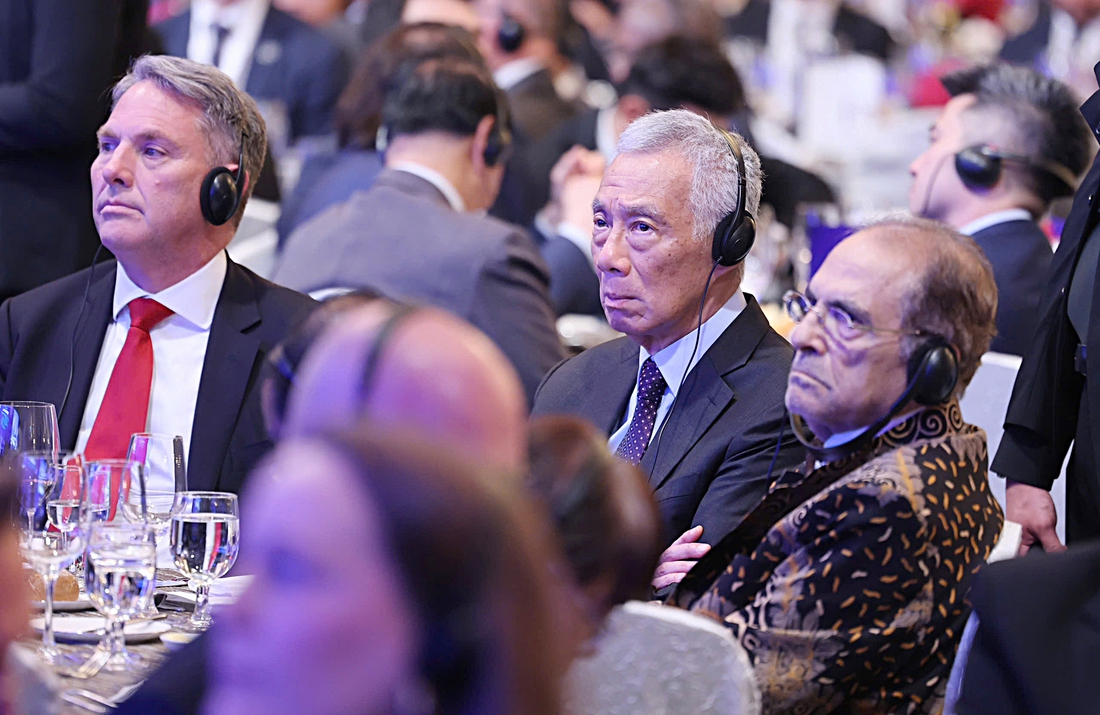
Former Singapore Prime Minister Lee Hsien Loong attentively listens to the speech by General Secretary and President To Lam - Photo: NGUYEN KHANH
Vietnam's growing influence
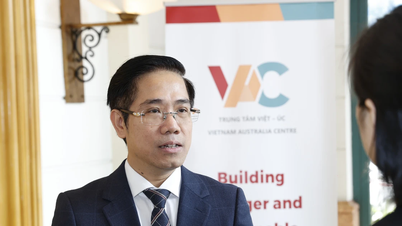
At a forum like Shangri-La, the role of the keynote speaker is never merely ceremonial. It's where countries send strategic signals about how they perceive the regional order and their own position and role within it. Speaking to Tuổi Trẻ newspaper, senior researcher Phan Xuân Dũng (ISEAS-Yusof Ishak Institute, Singapore) stated that a country being invited to deliver the keynote speech is always a calculated decision made by both the inviting and the invited parties.
Viewed in that light, the presence of General Secretary and President To Lam is an acknowledgment of Vietnam's increasingly prominent role, prestige, and voice in regional security issues. "Now, Vietnam is in a position to directly present to the world its perspective on regional security and propose its own framework of reference. This represents the maturity of a diplomacy that has moved beyond the stage of 'integration for survival' and is entering the stage of 'integration to contribute to shaping,' naturally in areas where Vietnam has strengths and prestige," Mr. Dung emphasized.
It is noteworthy that this event demonstrates both continuity and a new emphasis in how Vietnam presents its international role. Continuity lies in the fact that Vietnam continues on its familiar path: independence, self-reliance, multilateralism, diversification, flexibility, but with principles. The new emphasis is in its mindset: from being an active participant, Vietnam is shifting to becoming a contributing and shaping force, according to an expert from the ISEAS-Yusof Ishak Institute.
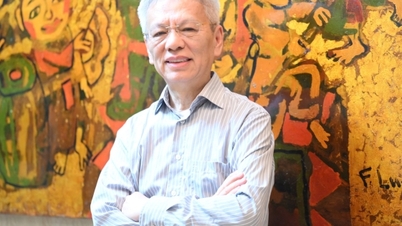
Meanwhile, Professor Sarah Teo (S. Rajaratnam School of International Studies, Nanyang Technological University, Singapore) noted that the presence of General Secretary and President To Lam reflects Vietnam's growing prominence and influence in regional affairs. According to her, this appearance should not be interpreted as a sudden policy shift. In other words, the Shangri-La Dialogue 2026 is not an exception, but rather a clearer manifestation of a higher standing that Vietnam has accumulated over time.
According to the Singaporean expert, at the regional level, the message from the 2026 Shangri-La Dialogue goes beyond just Vietnam's position, demonstrating how Hanoi can make a substantial contribution to ASEAN's strategic strength and to an open, inclusive, and rules-based regional order. With its broad relationships with both major powers and ASEAN members, Vietnam is well-positioned to play a consensus-building role, narrow differences, and contribute to making ASEAN's central role more substantive.
Professor Sarah Teo also believes that Vietnam can add weight to ASEAN by supporting multilateralism, ASEAN-led mechanisms, and a more coordinated regional voice on maritime security and economic resilience. The more a country maintains its principles while remaining flexible in its relations with major powers, the more it demonstrates the character of a responsible middle nation.
Vietnam is a reliable partner.
In the question-and-answer session following his keynote address, General Secretary and President To Lam affirmed that the extensive reforms within the country have not altered the fundamental basis of Vietnam's foreign policy, but rather helped Vietnam become a more reliable and responsible partner in the region and the world.
Vietnamese leaders have identified ASEAN as a strategic space linked to regional peace and security. As national capacity is enhanced, Vietnam will contribute more, strengthen ASEAN's central role, and coordinate with members to make the region a strategic focal point for economic growth, digital transformation, supply chain security, maritime security, and narrowing the development gap.
Responding to a question about the Middle East crisis, the General Secretary and President stated that Vietnam aims for self-reliance and increased resilience, maintaining necessary supply chains and reserves, diversifying energy sources, expanding both input and export markets, and strengthening logistics cooperation. Thanks to these efforts, Vietnam has basically maintained production, continued to attract foreign investment, and kept import and export stable. However, Vietnamese leaders also noted that if the situation persists, it will pose further challenges.
Message to major partners
Speaking with influential partners both within and outside the region, General Secretary and President To Lam affirmed that the Asia-Pacific is an open space where all nations with legitimate interests can contribute to peace, stability, and development. "What the region desires is not merely the presence or absence of any major power, but a responsible commitment. We recognize competition as inevitable, but competition must be within the limits of the law, transparency, and self-restraint," he asserted.
According to General Secretary and President To Lam, the choice for the Asia-Pacific region is not between competition or non-competition, because competition is a reality of international relations. The more important choice is between uncontrolled competition and responsible coexistence; between division and dialogue; between suspicion, coercion, and an order based on rules and trust.
Source: https://tuoitre.vn/vi-the-viet-nam-nhin-tu-doi-thoai-shangri-la-2026053008212211.htm































































Comment (0)