From revolutionary fervor to military doctor
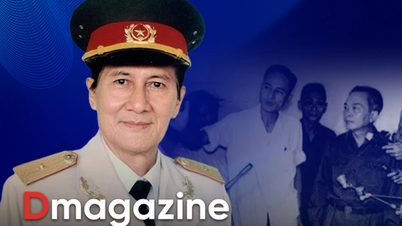
Major General Nguyen Tu was born in 1928 in Lau Thuong commune, Hac Tri district, Phu Tho province (now Viet Tri ward, Phu Tho province), a land rich in revolutionary traditions. From a young age, Nguyen Tu was early enlightened by revolutionary ideals and actively participated in local activities such as: the scouting movement; establishing literacy classes; and working with the youth team to actively propagate and mobilize people to participate in movements initiated by the revolution. This training fostered a fervent revolutionary spirit, leading him to dedicate himself to serving the resistance cause. After enlisting in the army, Nguyen Tu was admitted to the Party at the young age of 20. With a particular fondness for medicine, he applied for and was accepted into military medical training, beginning his career in caring for, treating, and protecting the health of soldiers and civilians.

|
Major General, Professor, Doctor Nguyen Tu received the title of Hero of the People's Armed Forces on October 16, 2018. |
During the resistance war against French colonialism, he participated in many major campaigns, both organizing and commanding military medical duties and directly treating wounded and sick soldiers. He consistently stayed close to the troops and units, working with the medical force to effectively provide emergency care, treatment, and transportation for the wounded and sick. After each battle and campaign, he summarized and drew lessons to develop and refine the theory and practice of military medical organization and tactics, adapting them to the conditions of Vietnam. In the Dien Bien Phu Campaign of 1954, he participated in planning military medical support and consistently assisted the emergency medical teams in providing effective treatment for wounded and sick soldiers.
During the resistance war against the US, Comrade Nguyen Tu was assigned to work in the Central Highlands as Deputy Head and then Head of the Frontline Military Medical Corps. Together with the Frontline Military Medical Corps, he made many innovative contributions to emergency care, malaria treatment, wound treatment, and the development of plans to ensure military medical support for major battles and campaigns such as the 1968 Tet Offensive, the Central Highlands Campaign, and the Ho Chi Minh Campaign. During his years working in the Central Highlands battlefield, Doctor Nguyen Tu proposed many groundbreaking solutions, such as: strengthening personnel, building up a reserve for emergency treatment of severe malaria, and providing on-site treatment; and, together with his colleagues, successfully researching "high-protein" from earthworms (earthworms), helping wounded and sick soldiers recover quickly. He produced "elephant bone extract" from the carcasses of elephants killed by bombs and bullets... Notably, even in the harsh battlefield conditions, he devoted himself to scientific research and published 21 volumes of the "Central Highlands Military Medical Journal," proposing the establishment of the Central Highlands Military Medical Council, thereby contributing to raising the professional level of military medical officers and personnel on the battlefield.

|
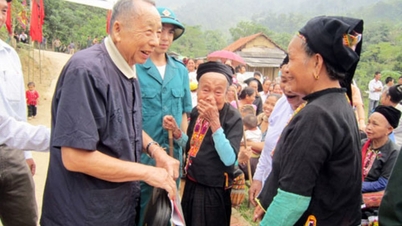
Major General, Professor, Doctor, Hero of the People's Armed Forces Nguyen Tu. |
Contributing to laying the foundation for military medicine in our country.
With the country at peace and unified, Comrade Nguyen Tu was sent to the Soviet Union to study military medical organization and tactics. Driven by a desire to learn and contribute to national medicine, he approached the experiences of the Soviet Union regarding military medical organization and tactics in modern warfare, combining this with his own practical experience and that of his colleagues to research and develop a "centralized, unified, and specialized" military medical organization. Simultaneously, he developed the perspective and principles for building a unified, streamlined, strong, and modern military medical sector suitable for our Army. He was very interested in building the theoretical and practical foundations for Vietnamese military medicine, with military medical organization and tactics being of paramount importance. Upon returning to Vietnam, with the professional experience accumulated on the battlefield and the knowledge acquired abroad, he quickly identified shortcomings and proposed solutions, such as: adjusting the university training program, compiling textbooks on military medical organization and tactics, building specialized lecture halls, and developing additional scenarios for military medical support suitable to Vietnamese military art.
Having held various positions, including as Deputy Director of the Military Medical Academy, Professor, Doctor Nguyen Tu made significant contributions to defining the goals and principles for building the military medical sector, such as: building a Vietnamese military medical system to serve soldiers in combat, labor, and work according to the motto "technology serves tactics, tactics create conditions for the development of technology, occupying high points in emergency care and treatment of wounded and sick soldiers in military operations," "military medicine depends not only on the general development of medicine but also on military art," and "building the theory and practice for the Vietnamese military medical system according to the orientation of building a regular, elite, and progressively modern army." Professor, Doctor Nguyen Tu also defined the strategic goals for building the Military Medical Academy, such as: First and foremost, it must possess the unique characteristics of a military medical academy; the academy must be the only place to train doctors to serve the "target" audience, which is the Army. These theories laid the foundation for the development of Vietnamese military medicine.
After retirement, Professor Nguyen Tu continued to contribute by supervising doctoral and master's students, and participating in hundreds of dissertation defense committees for doctoral, master's, and specialist doctoral degrees. In addition, Professor Nguyen Tu actively participated in committees determining scientific and technological tasks, committees selecting individuals and organizations to participate in research, and committees accepting projects at all levels; contributing many valuable professional papers at scientific conferences and seminars.
Speaking about his mentor, Lieutenant General, Dr. Chu Tien Cuong, former Director of the Military Medical Department, clearly expressed his respect: “When I was a doctoral student, although I had graduated more than 15 years earlier and had completed a short refresher course on military medical command and organization, my knowledge of military medical command and organization in particular, and military medicine in general, was still limited. Thanks to Professor, Dr. Nguyen Tu's meticulous and thorough guidance, I completed my dissertation and defended it before the National Doctoral Dissertation Examination Council in April 1994. In addition, the Military Medical Department also received strategic advice from Professor Nguyen Tu on many aspects of sector development, training, scientific research, material support, international cooperation, and the integration of military and civilian medicine. Professor Tu is always a shining example for us and future generations to learn from and emulate, continuing to build a strong military medical sector in the Army, strong in organization and mobility, excellent in professional expertise, and solid in service.” Politics and medical ethics contribute to building our army into a revolutionary, regular, elite, and modern force in the new era.”
Deeply impressed by Professor, Doctor Nguyen Tu, Lieutenant General, Professor, Doctor Pham Gia Khanh, former Director of the Military Medical Academy, expressed: “Professor, Doctor Nguyen Tu was a military doctor who wholeheartedly dedicated himself to the wounded and sick soldiers and to the development of the Vietnamese military medical sector. He was a doctor who was eager to learn, not only in school but also on the fierce battlefield, learning not only from his teachers, senior colleagues, friends, and even his students; learning not only while still in office but even after retirement. I am very impressed by Professor, Doctor Nguyen Tu's scientific research mindset, which is that scientific research is not just about large-scale projects but also about finding solutions to the assigned tasks.”
For his contributions, Major General, Professor, Doctor Nguyen Tu was awarded many prestigious honors: the title of Hero of the People's Armed Forces; the Third-Class Victory Medal; the First-Class Resistance Medal; the Second and Third-Class Military Merit Medals; the First, Second, and Third-Class Liberation War Medals; the State Prize for Science and Technology, and many other prestigious awards. |
Source: https://www.qdnd.vn/phong-su-dieu-tra/cuoc-thi-nhung-tam-guong-binh-di-ma-cao-quy-lan-thu-17/vi-tuong-duc-do-tai-nang-1032501


![[Photo] General Secretary and President To Lam presides over a meeting on preparations for the review of one year of operation of the three-tiered government system.](https://vphoto.vietnam.vn/thumb/1200x675/vietnam/resource/IMAGE/2026/06/02/1780391821195_a1-bnd-4595-9717-jpg.webp)




















































Comment (0)