

Recently, calls for Western nations to recognize the State of Palestine have become increasingly common. As is known, with the exception of these countries, the vast majority of United Nations members (139/193) have recognized the present-day Palestinian territories as a unified state.
This recognition appears to be under consideration by the US, despite its previous veto of most attempts to recognize a Palestinian state. The United Kingdom, a US ally, is also considering it, although it has historically opposed it in a similar way to the US.
In February, British Foreign Secretary David Cameron said: "What we need to do is give the Palestinian people a horizon toward a better future, a future with a state of their own."
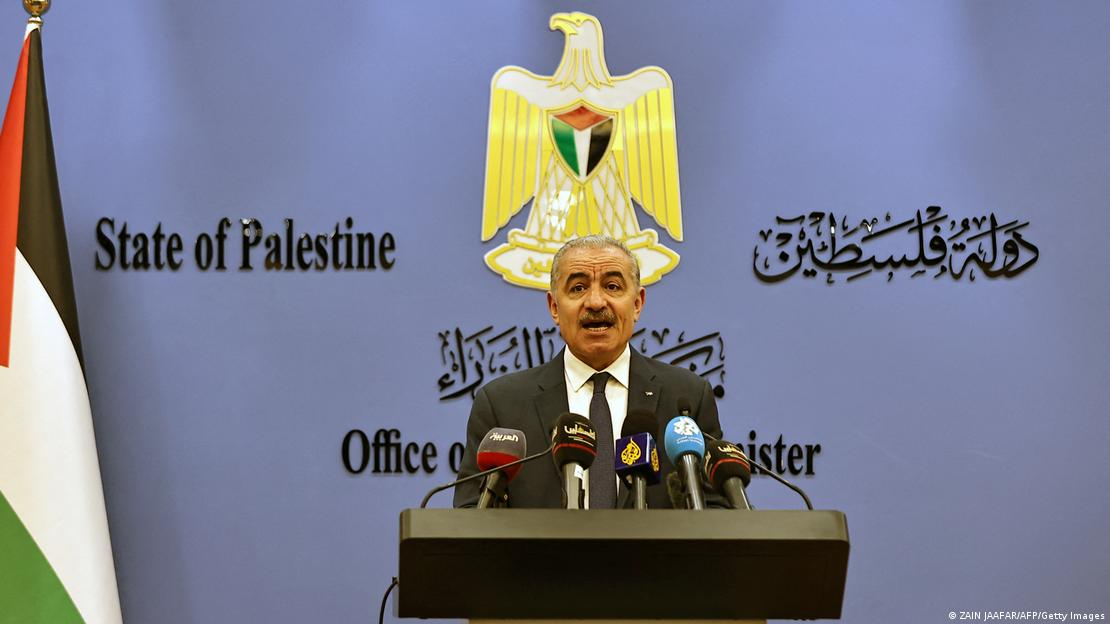
At the United Nations, Palestine is considered a "non-member observer state". Photo: AFP
In particular, a major shift in the policies of Western European nations has just occurred, with Spain, Norway, and the Republic of Ireland all simultaneously recognizing the State of Palestine.
These countries argue that the decision to recognize the State of Palestine will accelerate efforts to secure a ceasefire in the Israeli-Hamas conflict in Gaza, which is now in its eighth month.
Why is this issue controversial?
For many Western countries, most of which do not recognize the State of Palestine, a change in the Palestinian status would occur if negotiations on a two-state solution were successful, where the Israeli and Palestinian states would coexist side-by-side.
This is why pronouncements about recognizing a Palestinian state are so controversial. Some argue that recognizing a Palestinian state would be the first step toward a lasting and peaceful solution to the decades-long conflict.
However, other opinions suggest that unless the actual conditions change, recognition would not bring any benefits, and therefore the State of Israel should continue to retain all power.
Positive impact
Recognition would grant the Palestinian state greater political , legal, and even symbolic power. In particular, Israel's occupation or annexation of Palestinian territory would become a much more serious legal issue.
"Such a change would lay the groundwork for negotiations on a permanent status between Israel and Palestine, not as a concession between occupier and occupied, but between two equal entities under international law," a former U.S. State Department official wrote in the Los Angeles Times earlier this year. He had previously resigned due to disagreements with U.S. policy in Gaza.
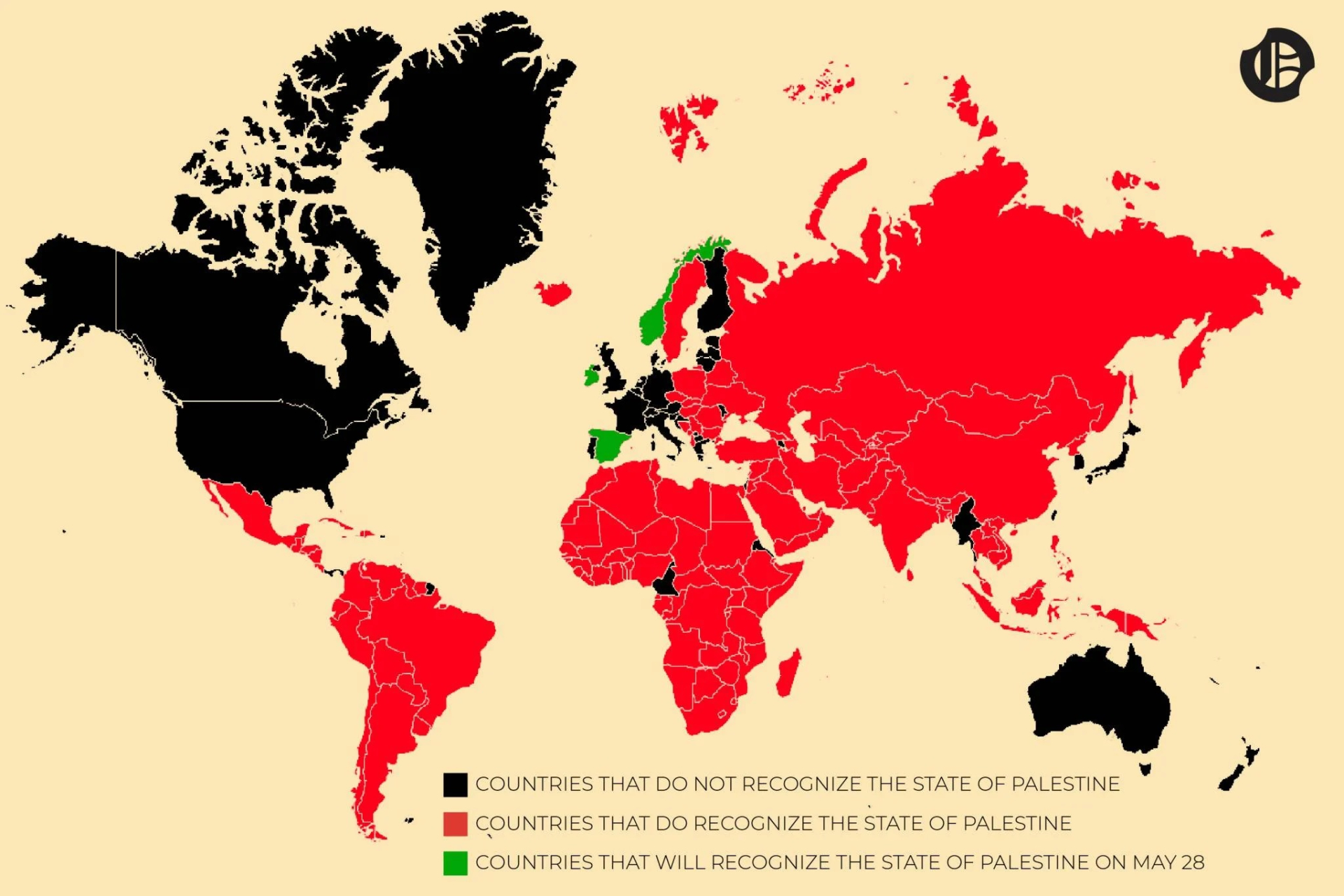
The map shows which countries have recognized and are about to recognize the State of Palestine (black represents countries that do not recognize it, red represents those that do, and blue represents those about to recognize it). Graphic: Jaimee Haddad / L'Orient Today
However, perhaps the biggest advantage for the Palestinians is symbolic. A Palestinian state could take Israel to some international court, but that would be a long way off, according to Middle East analyst Philip Leech-Ngo.
Analyst Leech-Ngo stated that, for the Palestinian Authority, recognition is their entire aspiration and ideal. The Palestinian Authority currently administers only certain areas in the Israeli-occupied West Bank, which are recognized as part of the official representation of the Palestinian people.
However, "the authorities cannot offer the Palestinian public much. They cannot confront Israel, they are unable to improve the lives of the Palestinian people under their jurisdiction... So the only thing they can do for the Palestinian people is to promise international recognition," Leech-Ngo said.
What are the disadvantages?
Recent polls show that most Israelis do not want a Palestinian state. Israeli Prime Minister Benjamin Netanyahu has stated this repeatedly over the years. For Israel and its supporters, there are concerns that if a Palestinian state is recognized, it could be a victory for those who advocate violence.
Jerome Segal, director of the International Peace Consultative Organization, said in February that if the Palestinian state were recognized now, Hamas could use that recognition to demonstrate that only armed struggle would yield results.
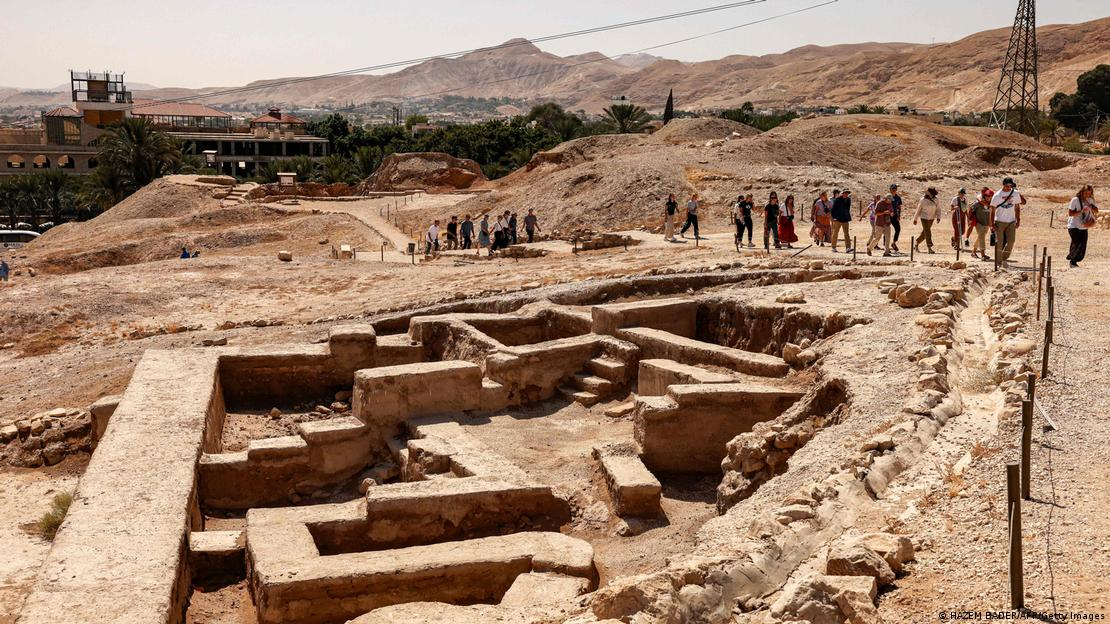
Palestine has joined several different international organizations, such as UNESCO, where it is recognized as a state. Photo: AFP
Despite the legal and symbolic advantages, recognizing a Palestinian state would not immediately change anything in practice.
Dahlia Scheindlin of the American research organization Century International stated: "First and foremost, the Israeli political leadership is determined to prevent Palestinian independence at all costs. Second, the Palestinian leadership is completely divided and has virtually no legitimacy in the country. All these obstacles have only worsened since October 7th."
Middle East analyst Leech-Ngo points out that if a Palestinian state were suddenly recognized, the enormous problems would not be immediately resolved.
"It will still be occupied, there will still be settlements, Gaza will still be devastated, the borders will still be uncontrolled... Ultimately, there will still be many problems that will not be solved immediately," he concluded.
Ngoc Anh (according to DW)
Source: https://www.congluan.vn/viec-cong-nhan-nha-nuoc-palestine-co-y-nghia-gi-post296694.html



![[Image] Nearly 125,000 Hanoi students completed the Literature exam for the 10th grade entrance exam.](https://vphoto.vietnam.vn/thumb/1200x675/vietnam/resource/IMAGE/2026/05/30/1780117233041_ndo_br_thiet-ke-chua-co-ten-2-png.webp)







































































































Comment (0)