

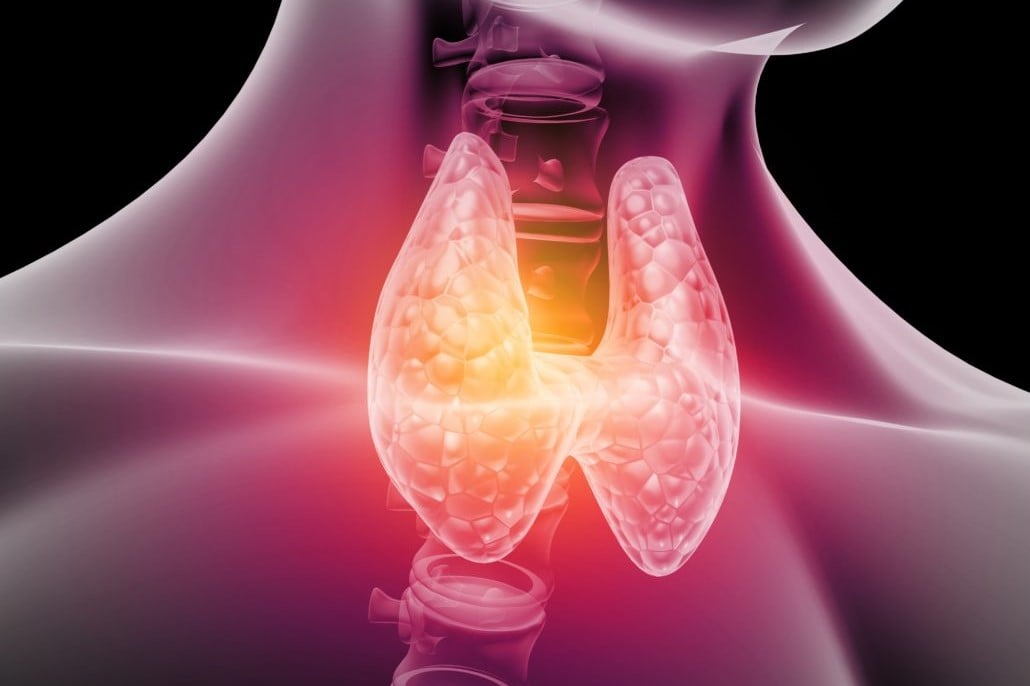
Hashimoto's disease is an autoimmune disorder that occurs when the body's immune system mistakenly identifies the thyroid gland as a "foreign agent" and produces antibodies that attack the gland itself. Over time, the thyroid gland is gradually damaged, impairing its ability to produce hormones essential for the body.
Hashimoto's disease is a common autoimmune disease in women.
The thyroid gland is a small endocrine organ located in the front of the neck that produces hormones regulating metabolism, growth, and many other important bodily functions.
In individuals with Hashimoto's thyroiditis, white blood cells infiltrate the thyroid tissue and produce antibodies against the thyroid gland, particularly antibodies against thyroid peroxidase (TPO-Ab).
According to statistics, approximately 50% of Hashimoto's patients already exhibit hypothyroidism at the time of diagnosis. In the remaining cases, thyroid function is initially normal, sometimes even experiencing transient hyperthyroidism, but the majority will progress to hypothyroidism over time.
The disease is more common in middle-aged and older women and has a familial component. Additionally, individuals with other autoimmune diseases such as type 1 diabetes, rheumatoid arthritis, systemic lupus erythematosus, Sjögren's syndrome, or pernicious anemia are at a higher risk of developing Hashimoto's disease.
Hashimoto's disease can cause endocrine disruption, affecting fertility in both men and women.
Symptoms of Hashimoto's thyroiditis
In its early stages, the disease can progress silently for many years without causing noticeable symptoms. Many cases are only discovered incidentally during routine health checkups.
The most common sign is a goiter, which is an enlarged goiter in the front of the neck. The thyroid gland typically has the following characteristics:
- To spread or to have many small nodules
- It feels firm, like rubber.
- No pain or only a mild, dull ache.
- When the goiter is large, patients may experience: difficulty swallowing, hoarseness, a feeling of something stuck in the throat, and mild shortness of breath due to compression.
If the disease progresses to hypothyroidism, the patient will experience additional symptoms such as:
- Chronic fatigue
- Afraid of the cold
- Weight gain
- Dry skin
- Constipation
- Hair loss
- Memory loss
- Feeling very sleepy.
Conversely, in a few early-stage cases, transient hyperthyroidism may occur with symptoms such as palpitations, anxiety, hand tremors, and intolerance to heat.
Is Hashimoto's thyroiditis dangerous?
Hashimoto's disease is not extremely dangerous if detected early and properly monitored. However, if left untreated, it can lead to prolonged hypothyroidism and cause many serious complications.
- Cardiovascular complications
Prolonged hypothyroidism can increase blood cholesterol levels, raising the risk of atherosclerosis, arrhythmias, and heart failure. In some cases, patients may experience an enlarged heart, bradycardia, or decreased cardiovascular function.
- Psychiatric and neurological effects
Individuals with Hashimoto's hypothyroidism often experience fatigue, reduced concentration, memory impairment, and a higher risk of depression. In older adults, prolonged hypothyroidism can also affect cognitive function.
- Reproductive disorders and pregnancy
Hashimoto's disease can cause endocrine disorders, affecting fertility in both men and women. In women, it can lead to: menstrual irregularities, decreased ovulation, and an increased risk of miscarriage or premature birth. If pregnant women have uncontrolled hypothyroidism, the fetus is at risk of birth defects or intellectual disability.
In cases of severe, prolonged, untreated hypothyroidism, patients may develop myxedema. This is a dangerous complication with symptoms such as hypothermia, low blood pressure, bradycardia, lethargy, seizures, and coma. If not treated promptly, myxedema can be life-threatening.
Treatment of Hashimoto's thyroiditis
To diagnose a disease, doctors will combine clinical symptoms with specialized tests.
Commonly ordered tests include: quantitative measurement of thyroid hormones TSH, T3, T4; thyroid antibody tests such as TPO-Ab, Tg-Ab; thyroid ultrasound; thyroid scintigraphy; fine-needle aspiration cytology if an abnormal thyroid nodule is suspected... Among these, thyroid antibody testing is a crucial basis for diagnosing Hashimoto's disease.
Treatment depends on the stage of the disease and the patient's thyroid function. If thyroid hormones are normal and there are no symptoms, the patient may not need medication but should have regular check-ups for monitoring.
When hypothyroidism occurs, doctors will prescribe levothyroxine hormone replacement therapy to supplement the deficient hormone levels.
Proper dosage of treatment helps to: improve symptoms of hypothyroidism, stabilize metabolism, reduce goiter size, and prevent complications...
Most patients with Hashimoto's disease require lifelong thyroid hormone treatment. In a few cases where the goiter is too large, causing difficulty swallowing or breathing, or if malignancy is suspected, surgery may be recommended.
What should patients be aware of?
Since Hashimoto's disease is an autoimmune disease, there is currently no way to completely prevent it. However, patients can manage the disease effectively by:
- Follow-up appointments should be kept as scheduled.
- Take your medication regularly as prescribed.
- Do not stop taking medication without consulting your doctor.
- Eat a balanced diet
- Avoid excessive iodine supplementation without a doctor's guidance.
- Maintain physical activity and get enough sleep.
People with Hashimoto's disease should be cautious when using products containing high doses of iodine, as this may disrupt thyroid function.
For pregnant women, iodine supplementation should be done according to medical recommendations to ensure both maternal health and fetal development.
In summary: Hashimoto's thyroiditis is a chronic condition, but the prognosis is generally quite good if detected early and treated properly. Patients should not be overly worried but should proactively monitor their health, have regular check-ups, and follow their doctor's instructions to prevent long-term complications.
Source: https://suckhoedoisong.vn/viem-tuyen-giap-hashimoto-co-nguy-hiem-khong-169260520165218585.htm

![[Photo] Ba Lang An Lighthouse - the "eye of the sea" amidst the "rock museum" of Quang Ngai province.](https://vphoto.vietnam.vn/thumb/1200x675/vietnam/resource/IMAGE/2026/05/29/1780038698840_anh-man-hinh-2026-05-29-luc-14-10-42.png)
![[Image] Pleasant weather helps students enter the 10th grade entrance exam with confidence.](https://vphoto.vietnam.vn/thumb/1200x675/vietnam/resource/IMAGE/2026/05/29/1780034401612_ngay-1-thi-lop-10-minh-duy-8-5009-jpg.webp)






















































































Comment (0)