

The proliferation of killer UAVs on the front lines has stalled the Ukrainian conflict, leaving soldiers on both sides in a situation where it's "easy to defend, difficult to attack".
The Russian army recently mobilized tens of thousands of troops to attack Kupyansk, a strategically important city for transportation, connecting railway and road networks in northeastern Ukraine. Russia had captured the city at the beginning of the conflict, but had to withdraw from Kupyansk during Ukraine's lightning counteroffensive in September 2022.
Fierce fighting is raging here, with Russian forces launching raids every few days in an attempt to break through enemy lines.
"The situation here is very bad," said Gleb Molchanov, a member of Ukraine's drone (UAV) control unit at the Kupyansk front in the Kharkiv province.
Russian forces have achieved some tactical victories, pushing Ukrainian forces out of several villages and forests, but have yet to capture Kupyansk. Molchanov shared a video he filmed on January 4th, showing about 10 Russian tanks and armored vehicles exploding after being attacked by Ukrainian drones near the village of Sinkovka, about 6 km northeast of Kupyansk.
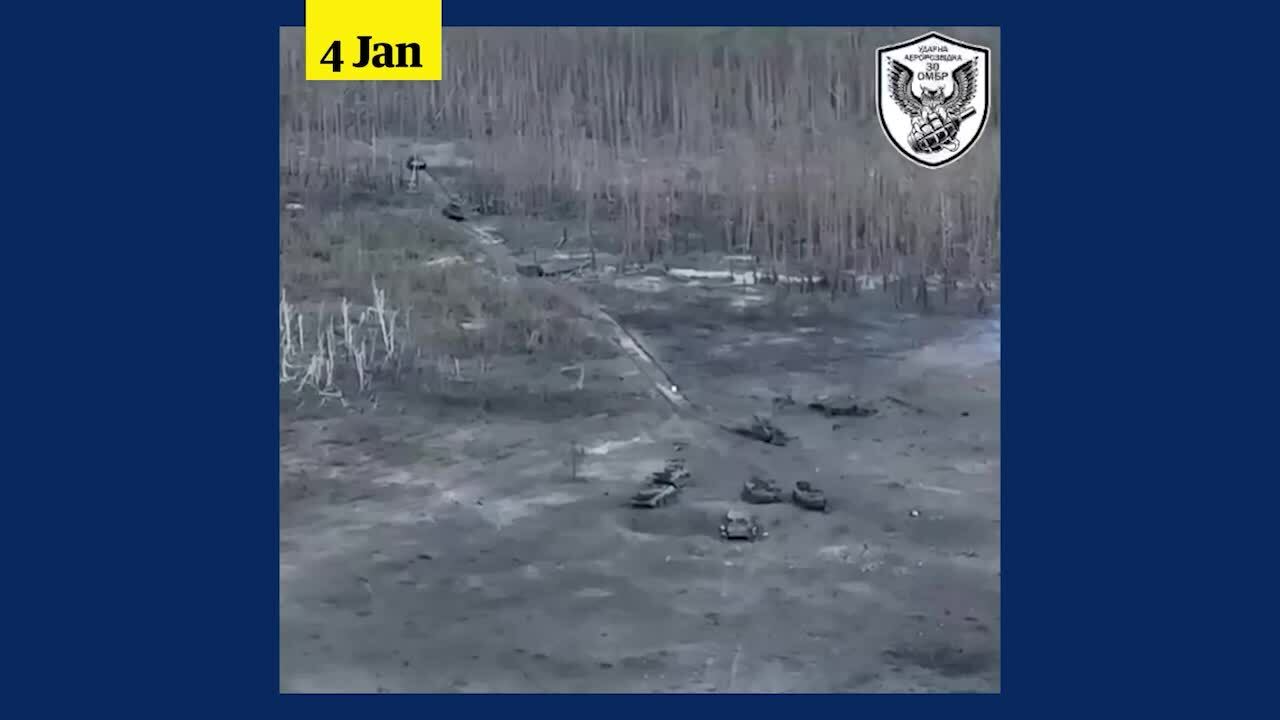
Russian armored vehicles were attacked near Kupyansk, Kharkiv on January 4. Video: Guardian
According to Molchanov, Russian forces are unlikely to achieve a major breakthrough in Kupyansk and other fronts due to the threat from UAVs, a type of weapon that is inexpensive but can inflict significant damage. Ukraine had previously abandoned its counter-offensive and switched to a "proactive defense" strategy, so the fighting in Ukraine is likely to remain in its current "frozen" state in the near future.
"Neither side knew what to do to launch an attack. Everything that attacked was destroyed by UAVs or artillery fire," Molchanov said.
UAVs, especially first-person view (FPV) drones, are currently one of the main weapons on the Ukrainian battlefield. FPV UAVs are remotely controlled using a joystick and a head-mounted device, giving the user a realistic view similar to being in the cockpit. Their operating range is approximately 15 km, depending on the payload.
The biggest advantage of this type of equipment is its quantity, as they are inexpensive, easy to manufacture, and can be assembled right on the battlefield. Molchanov said his team can easily purchase FPV UAVs from online sales platforms, at a price of about $400 each.
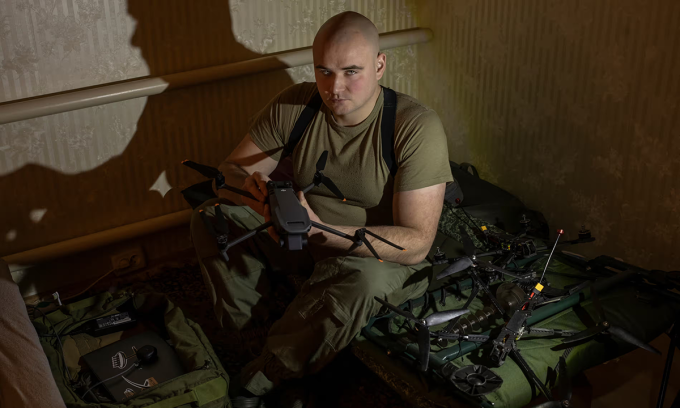
Ukrainian UAV pilot Gleb Molchanov is pictured in this photo published on January 25. Photo: Guardian
Despite their low cost, FPV UAVs can perform various roles such as monitoring enemy movements, designating targets for artillery, or being used as suicide weapons to attack infantry and heavy equipment that would cost thousands of times more. They can also be used to drop explosive warheads, although this method is less commonly used.
"The emergence of UAVs has rendered NATO's traditional warfare doctrine obsolete," Molchanov stated.
According to NATO tactics, attacks are conducted in the form of combined arms operations, leveraging the mobility and firepower of modern tanks and armored vehicles to break through enemy defenses, thereby developing a deeper offensive.
This tactic was previously employed by the Ukrainian army in the early stages of the counteroffensive, but it failed due to encountering a heavily mined and fortified Russian defensive line, forcing Kyiv to switch to traditional tactics, organizing small-scale battles to minimize casualties.
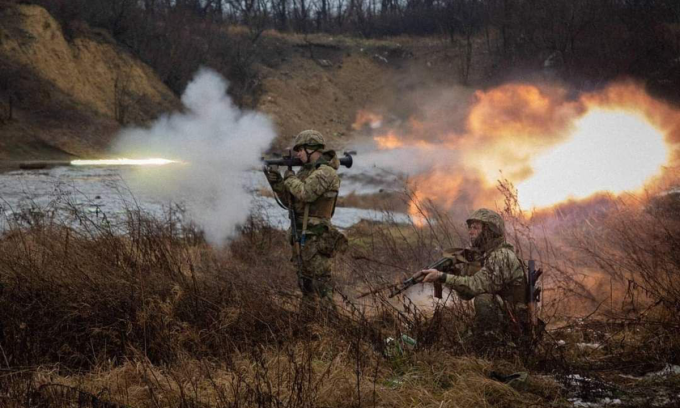
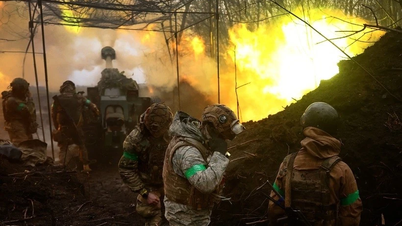
Ukrainian forces are shown in action in this photo published on January 25. Photo: Ukrainian Army
The rise of FPV drones, considered the "nemesis of tanks" as they can take them down with a single suicide attack on their most vulnerable positions, has further diminished the role of heavy combat vehicles in Ukraine.
According to Molchanov, the fact that vehicles acting as assault and support vehicles for infantry are becoming more "vulnerable" to the destructive power of UAVs means both sides are facing a situation where it's "easy to defend, difficult to attack." "This is a war between armor and bullets. Bullets are currently the winning side," he said.
Molchanov believes that Russia will not be able to penetrate the defenses in Kupyansk until it finds a solution to counter FPV drones.
"We're at a technological stalemate," he said. "I don't think they'll capture Kupyansk. Neither side can win unless they find new tactics or make technological advancements."
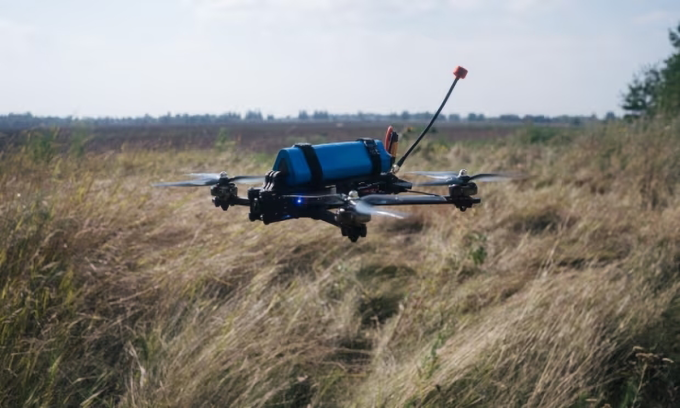
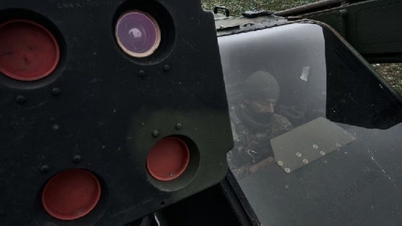
A Ukrainian FPV drone prototype. Photo: Guardian
Cold winter weather can also limit the operational capabilities of FPV UAVs, as low temperatures cause their batteries to drain faster. Ukraine is believed to be more affected by this phenomenon, as Kyiv relies more heavily on inexpensive, battery-powered UAVs than its adversaries.
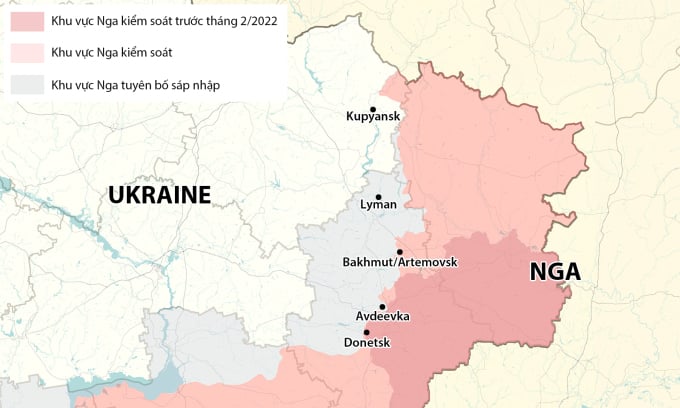
Location of Kupyansk and surrounding areas. Graphic: RYV
Pham Giang (According to Guardian, Ukrainska Pravda, RIA Novosti )
Source link


![[Image] Hanoi's urban life under the challenge of a "scorching hot" environment](https://vphoto.vietnam.vn/thumb/1200x675/vietnam/resource/IMAGE/2026/05/25/1779706979265_nang-nong-t5-2026-minh-duy-7-4636-jpg.webp)




















































































Comment (0)