

Forty-six years after the battle to defend the northern border, Dong Dang town (Cao Loc district, Lang Son province) - a borderland of the Fatherland - has "revived," becoming more bustling and vibrant than before.
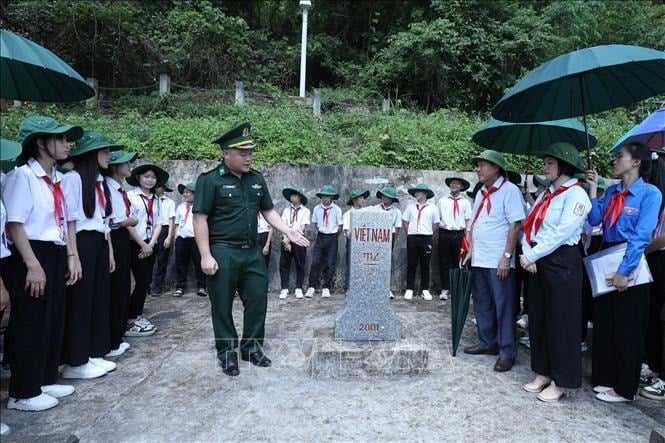
Following the normalization of relations in 1991, the cooperative and friendly relationship between Vietnam and China has developed extensively in many fields, contributing to the promotion of vibrant trade between Dong Dang in Lang Son (Vietnam) and Pingxiang, Guangxi (China), creating jobs and increasing income for people on both sides.
Historical evidence
Dong Dang is a border town with 3.916km of border shared with Bang Tuong (Guangxi, China); it has Dong Dang International Railway Station and Huu Nghi International Border Gate. Its natural area is over 459 hectares, divided into 7 wards. Dong Dang holds a strategic position in terms of politics , economics, national defense, and security for Lang Son province and the entire country.
According to historical documents recorded in the history book of the Dong Dang Town Party Committee, this place was one of the locations where the battle to defend the northern border began on February 17, 1979. The battle caused heavy damage to Dong Dang town in particular and the northern border region of our country in general.
Currently, at Dong Dang Fortress, located on Hill 339, Wire Road area, Dong Dang town, Cao Loc district, there are still clear historical evidence of the battle to defend the northern border by the army and people of the town in particular, and Lang Son province in general. Here, the army and people of various ethnic groups in Lang Son bravely fought and sacrificed to hold firm this crucial battleground.
Nearly half a century has passed, yet the traces of the battles at Dong Dang Fortress remain almost intact. Many officers, soldiers, and civilians of our army and people have forever rested here. The fortress has become an epic, symbolizing the indomitable and heroic spirit of the army and people of Lang Son province.
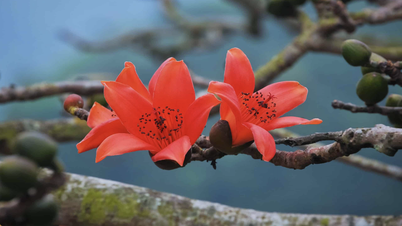
Now, amidst the sprawling concrete structures, many flowers have bloomed, spreading their fragrant scent. The grass and plants have turned green on the paths leading up to the fortress, as if to soothe the pain of those whose loved ones lie buried here...
Ms. Vy Thi Bich Ky (born in 1964), whose house is about 100m from Dong Dang Fortress, shared: “I joined the Dong Dang Fortress Management and Protection Team with the desire to contribute to preserving this national historical site; to commemorate the gratitude owed to the heroic martyrs and people of Dong Dang who bravely fought and sacrificed here.”
Tourist attractions
Around 1989, ten years after the war, with investment and attention from the central and local governments and the people, Dong Dang town was gradually rebuilt, and people returned home. Infrastructure was gradually invested in, built, completed, and developed, becoming a destination attracting tourists from near and far. Visiting this border town today, one can clearly feel the changes on the streets and neighborhoods. Looking down from Dong Dang fortress, this small town resembles a beautiful and picturesque landscape painting.
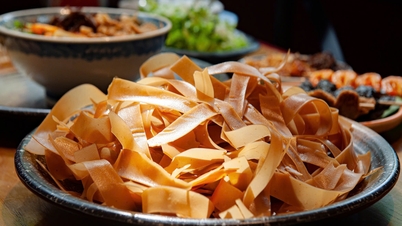
Tall buildings line the neighborhoods, nestled on hillsides interspersed with blossoming peach trees in the spring. The streets are ablaze with red flags and flowers. Restaurants, eateries, entertainment venues, and shopping centers are springing up in increasing numbers. Markets and shopping malls operate day and night, creating a bustling and lively atmosphere that attracts tourists from near and far...
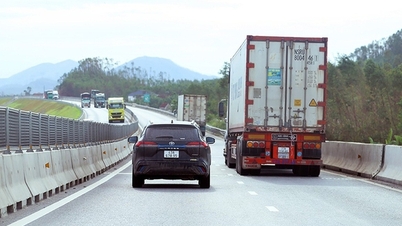
According to Sai Vinh Chung, Chairman of the People's Committee of Dong Dang town, with its advantageous location as a border town and border gate, and with major transportation routes such as the Hanoi - Lang Son railway, National Highways 1A, 1B, and 4A running through it, there are currently three important key projects underway in the area: the Huu Nghi - Chi Lang border gate expressway project, expected to be completed in 2025; the project to expand the specialized cargo transport road at border markers 1119-1120 of the Huu Nghi international border gate; and the project to renovate the Dong Dang international railway station.
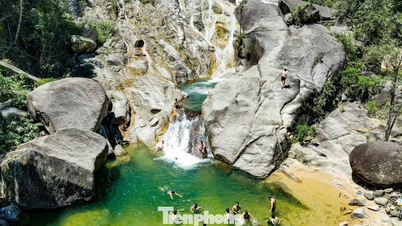
These projects, once completed and operational, will open up opportunities for development and breakthroughs for the locality, especially in the trade of goods, service development, and commerce. In addition, Dong Dang town also has the potential to develop border tourism, visiting border gates; spiritual tourism, and cultural and historical tourism with the famous Dong Dang Mother Goddess Temple and Dong Dang Fortress, which are well-known throughout the country and are part of the Lang Son Geopark tourism route...
Thanks to leveraging resources from the central and provincial governments, and effectively exploiting its potential and strengths, Dong Dang town has accelerated its economic, cultural, and social development, while maintaining a strong national defense and security. Trade, services, and tourism have seen significant growth. It is estimated that over 70,000 domestic and international tourists visit Dong Dang. The average per capita income is approximately 50-55 million VND per year.
Entering a new era of national development, Dong Dang town continues to exploit its potential and advantages to develop trade, services, and tourism; attracting more businesses operating in the fields of industry, trade, import-export, processing, and logistics... Trade and services will account for 90-91% of the economic structure by 2025. The locality will coordinate with relevant units to build and develop tourist destinations and routes connecting historical and cultural relics and scenic spots of Dong Dang with other localities in the province to increase employment and income, improve the lives of the people; and build Dong Dang into an attractive tourist destination...
Source: https://daidoanket.vn/vung-dat-bien-cuong-no-hoa-10300004.html
![[Photo] The heat at the fireworks display site on the opening night of the Da Nang International Fireworks Festival 2026](https://vphoto.vietnam.vn/thumb/1200x675/vietnam/resource/IMAGE/2026/05/27/1779889741485_ndo_br_z7872039145157-fecaba5112f39e8352544099d7ef4738-5140-jpg.webp)









































































Comment (0)