Formed after the French colonialists occupied Gia Dinh province, along with Saigon, Cholon was one of the two cities that experienced a period of brilliant development. Because it was an area with a large Chinese population, it was often referred to as "Chinatown".
Place names have become ingrained in our lives.
In the past, Cholon served as the commercial hub of the entire southern region, a place where merchants gathered to trade, thus forming many market areas.
On July 1, 2025, this area officially marked itself on the administrative map of Ho Chi Minh City under the name "Cho Lon Ward," after merging wards 11, 12, 13, and 14 of the former District 5, with an area of approximately 1.67 km2 and a population of nearly 85,000 people.
Despite the changes and ups and downs over time, today, anyone who comes here can easily recognize the Chinese identity through the series of ancient buildings, centuries-old craft streets, the rhythm of life, and the very unique way of communicating and behaving.

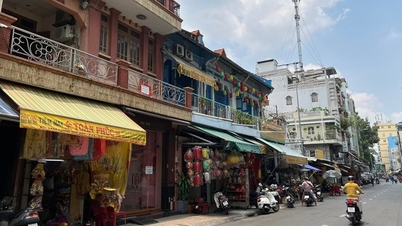
The streets of Cholon are a blend of vibrant energy and peaceful tranquility. Photo: HUYEN TRAN
Just by strolling through a few streets, visitors can fully appreciate the culture of the Chinese community in Vietnam. Ms. Ho Bao Nhi is one of them. After visiting and experiencing it firsthand, she said that it further reinforced her belief that although the name has changed at different times, "Cho Lon" is an extremely familiar term in daily life.
The female tourist cited the names of On Lang Assembly Hall, Tue Thanh Assembly Hall, Nghia An Assembly Hall, and famous Chinese restaurants… whenever someone suddenly asked where they were located, they always received the answer that they were in Cholon.
"Back then, there was no need to consult a map because most people, upon hearing the name, knew it was in the Cholon area and went there," said Ms. Ho Bao Nhi, agreeing that for many residents, Cholon is not just a name but also a place that holds deep memories for many families and generations.
Blending memories and the present.


Walking along the many streets in the Cholon area, one can easily sense the distinct atmosphere. The yin-yang tiled roofs, weathered by time, the Chinese-language signs, the long-standing traditional medicine shops, and the scent of incense from the assembly halls create a unique charm that many other places lack.
To this day, Cho Lon ward retains its distinctive character as a locality that is rich in the cultural heritage of the Chinese community in Vietnam.
The ward is home to many long-standing religious structures of the community, such as Ong Pagoda (Nghia An Assembly Hall), Thien Hau Temple, Tam Son Pagoda, etc. These structures are not only places of religious activity but also preserve many architectural, artistic, and cultural values that have been maintained through generations.
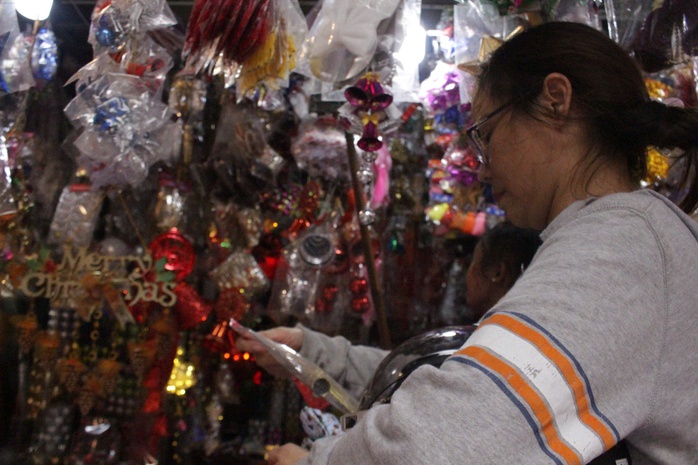
The shops on Hai Thuong Lan Ong Street are a popular destination for locals and tourists. Photo: NGOC VAN
One of the things that gives Cholon its vibrancy is the street names that reflect the main characteristics of the area, such as the traditional medicine street with its rows of herbal medicine shops, the colorful lantern street, and the street specializing in selling brightly lit decorations for festivals, Tet, Christmas, and other holidays.
Ms. Uyen Phuong (residing in Nhuan Duc commune) said that what excites her most whenever she visits the Cholon area with her family or friends are streets like these.
Each street has its own specific type of business, much like the specialized shopping streets in Hanoi . And when you want to buy something, it's very easy because the addresses are already set. "Like when my friend and I go to Cholon and want to choose a dish, we go to a street and there are many shops and restaurants to choose from. It's a very interesting experience!" - Ms. Phuong said.
It can be seen that amidst the modern Ho Chi Minh City with its rapid urbanization, Cho Lon possesses both the vibrant energy of daily life and the timeless charm of a museum. The inclusion of Cho Lon on the administrative map this time serves as another reminder of a city that once contributed to shaping the face of the South in the past. It is also an acknowledgment of the cultural and historical values preserved here...
A bridge connecting values
During the Lantern Festival or the Thien Hau Goddess festival, Cho Lon attracts a large number of locals and tourists who come to enjoy the unique cultural activities...



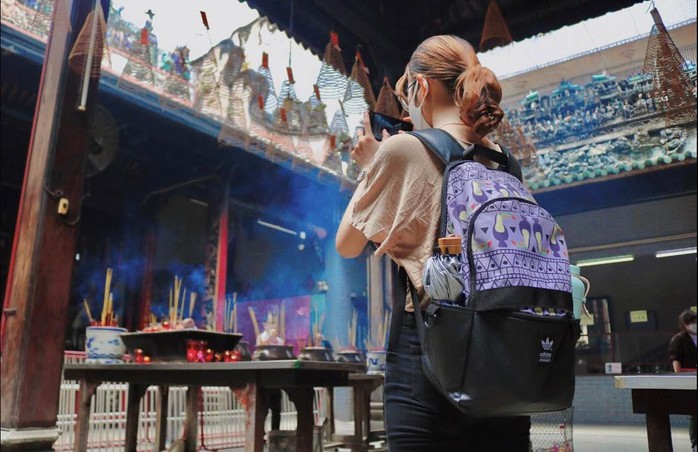
Young people come to light incense, pray for peace, and visit and learn about the Tue Thanh Assembly Hall, also known as the Thien Hau Temple. Photo: HUYEN TRAN
Ms. Chau Thi Hieu (a resident of Binh Phu ward) remarked upon her visit that the long-standing assembly halls in the Chinese quarter are large, symbolic, and possess high cultural value. According to her, these assembly halls act as a bridge connecting the Chinese community with the local community through religious activities, charitable work, and the preservation of traditional culture.
(*) See Nguoi Lao Dong Newspaper, issue dated June 22nd.
Source: https://nld.com.vn/vung-dat-men-thuong-khong-lan-voi-bat-cu-noi-dau-196260623203448071.htm


![[Photo] Prime Minister Le Minh Hung presides over the thematic session on promoting science and technology development and innovation.](https://vphoto.vietnam.vn/thumb/1200x675/vietnam/resource/IMAGE/2026/06/23/1782207872934_ndo_br_dsc-1724-jpg.webp)