

SECOND DAY OF LUNAR NEW YEAR
Every year at the end of August, the Muong people in Hao Ly village, Sa Loong commune (Ngoc Hoi district, Kon Tum province ) are busy preparing for their second national holiday - Independence Day.
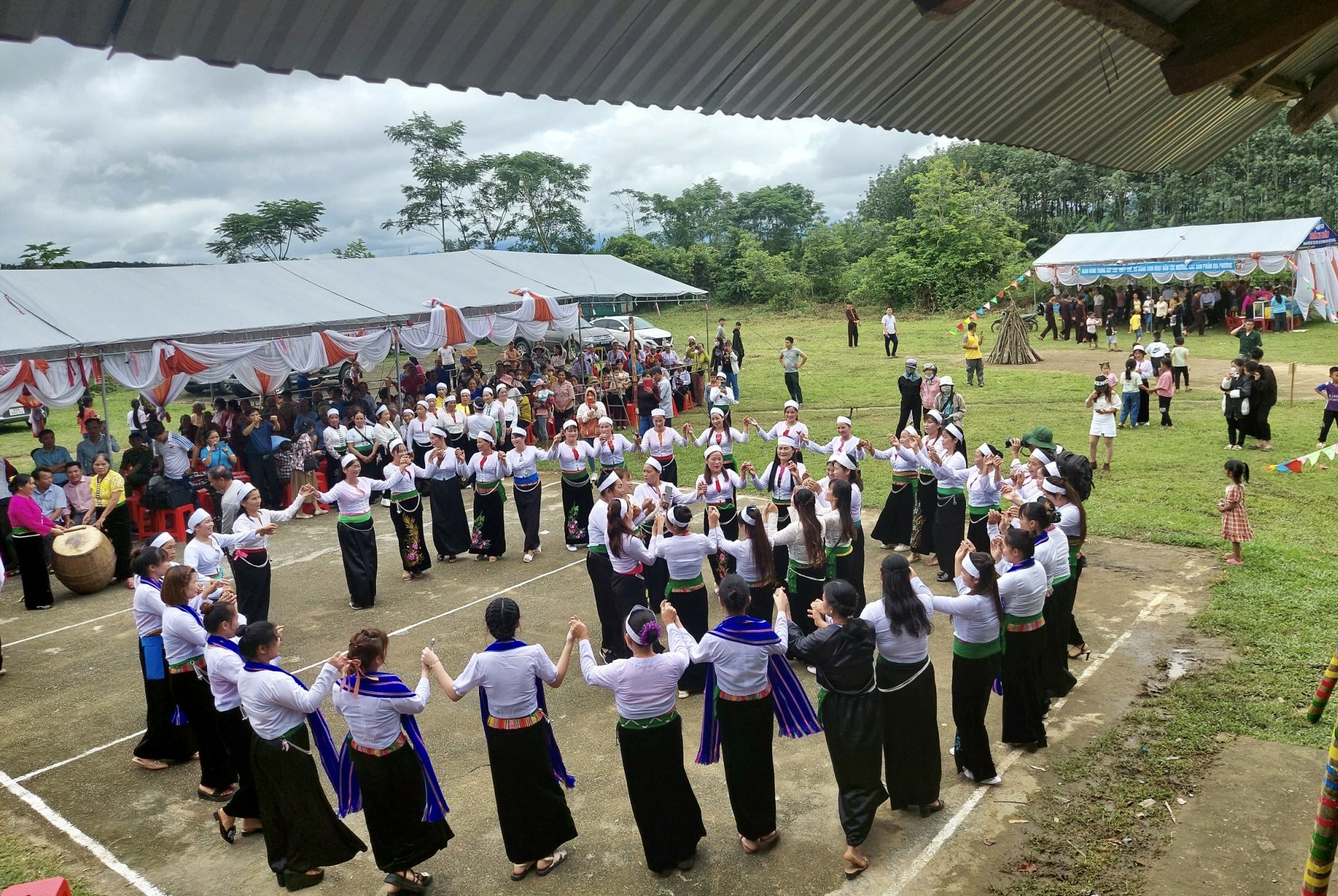
Young women in traditional dresses perform folk songs and dances.
For several days now, the villagers have been putting away their hoes and plows, taking a break from farming. Every household is busy cleaning their homes and tidying up their altars, displaying portraits of President Ho Chi Minh. When the household chores are finished, without being told, everyone rushes to clean the communal house and village roads, planting red flags with yellow stars everywhere to celebrate National Day. Once the cleaning is complete, the villagers discuss cutting bamboo to make water wheels, swings, and platforms in preparation for the upcoming grand festival.
On the first morning of Independence Day, the atmosphere in the village was noticeably more bustling and lively. Waking up at 5 a.m., Mr. Quach Cong Than (49 years old, Hao Ly village) and several neighbors went to the communal house to slaughter pigs and chickens for the ceremony. Mr. Than recounted that the Muong people began celebrating Independence Day on September 2, 1945. For nearly 80 years, no Muong person has forgotten this National Day. Siblings and children, whether studying or working far away, return home to reunite and share the joys and sorrows of life.
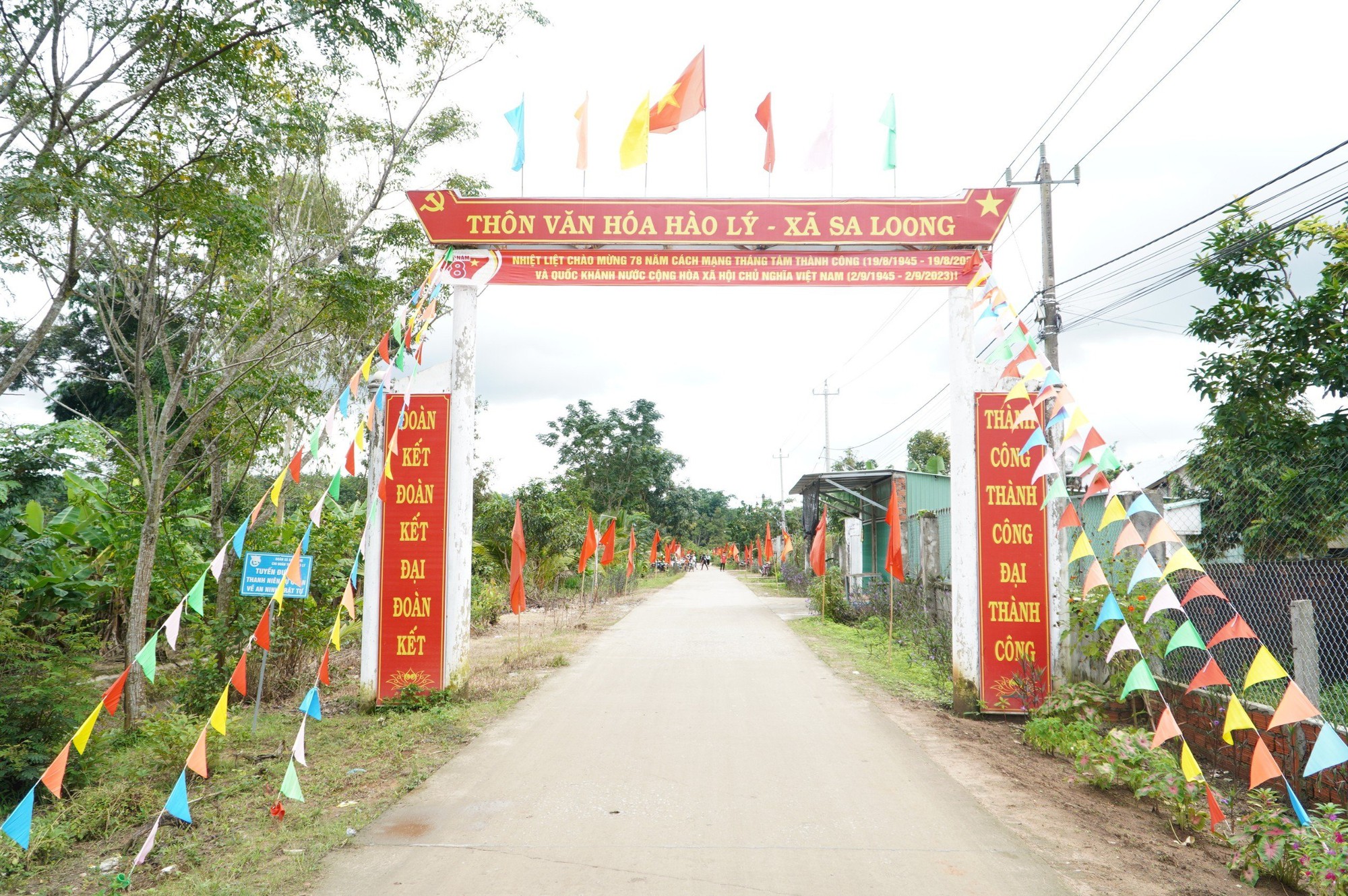
Hao Ly village is adorned with flags and flowers to celebrate Independence Day.
In the early 1990s, the first Muong people migrated from Hoa Binh to the border commune of Sa Loong. They named their new village after their old village, Hao Ly, as a tribute and a tribute to their homeland. Despite being thousands of kilometers away, the tradition of celebrating Independence Day is still preserved by the Muong people residing in Kon Tum.
As the oldest person in Hao Ly village, Mr. Bui Thanh Xuan (75 years old) said that National Day is a major festival for the Muong people. Every year on this day, every household prepares a full offering to commemorate their ancestors and President Ho Chi Minh. Once the houses are ready, the whole village gathers under the communal house to reminisce about the traditions of National Day on September 2nd. Because it's a day of reunion, children and grandchildren who study or work far away also come together.
"On Independence Day, from the elderly to the young, everyone is excited and joyful to welcome the occasion. During this time of gathering together, people will reminisce about the glorious traditions of the nation. Villagers will share stories and experiences after a busy year working in the fields and participate in traditional folk games. Not only does this enhance the spiritual life of the people, but it is also an opportunity to strengthen the solidarity between ethnic groups," Mr. Xuan said.
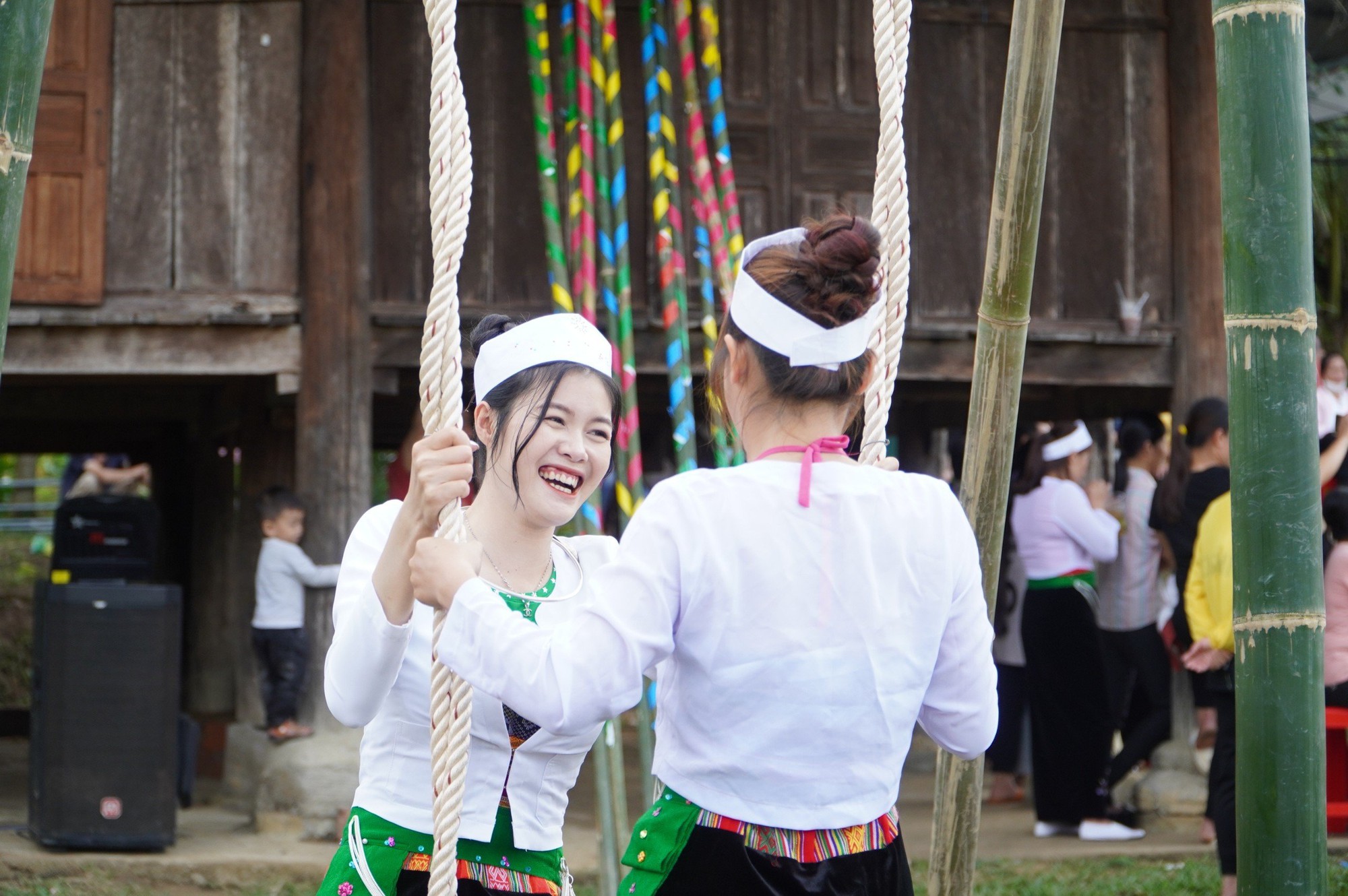
Young girls play on swings amidst joyful laughter.
PRESERVING CULTURAL IDENTITY
Beside the communal house are stalls displaying and introducing local products. Along with that, characteristic dishes such as chicken cooked with taro leaves, braised fish, grilled pork, and five-colored sticky rice are served to entertain honored guests.
Outside, the swings were decorated in vibrant colors. Girls in traditional dresses were swinging up and down, their laughter echoing. Not far away, boys were competing to see who could throw the most balls accurately. At the far end of the yard, a group of children were cheering on their friends playing blindfolded duck catching. Every now and then, bursts of laughter erupted as a child fell over after missing their target.
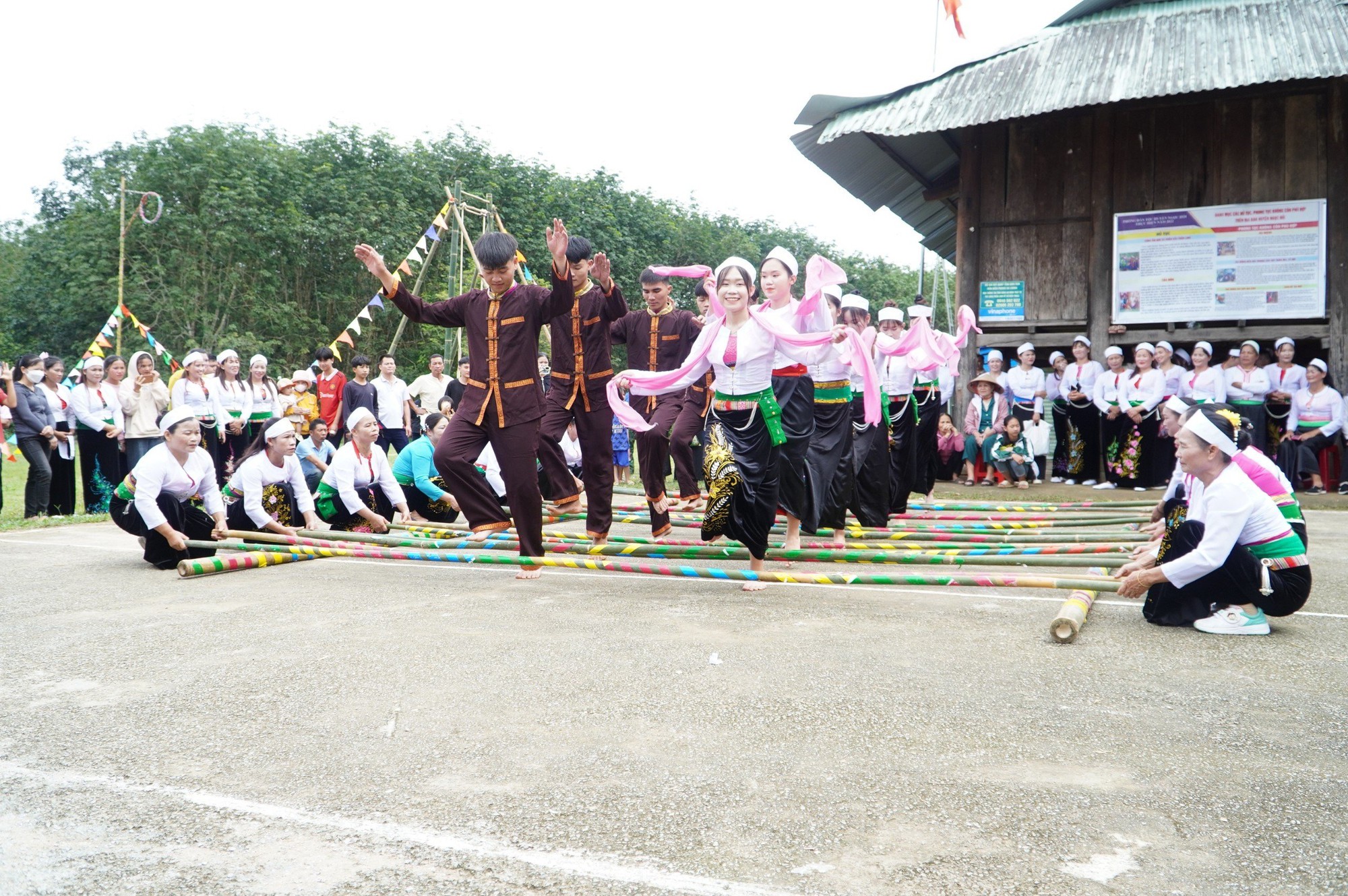
Young men and women dance the bamboo pole dance together on Independence Day.
Adding to the joyful and vibrant atmosphere were performances of folk songs and dances celebrating the country, praising the homeland, and spreading national identity. All were recreated to create an exciting, warm atmosphere, deeply rooted in the traditions of various ethnic groups.
Mr. Nguyen Huu Bang, Chairman of the People's Committee of Sa Loong commune, said that Hao Ly village has 143 households/576 inhabitants, all of whom are Muong people. The Muong people in Hao Ly village still preserve unique cultural features such as: gong culture, lullabies, call-and-response singing, and traditional Muong singing... This is a particularly valuable cultural asset, making an important contribution to the multi-ethnic culture of the Central Highlands region.
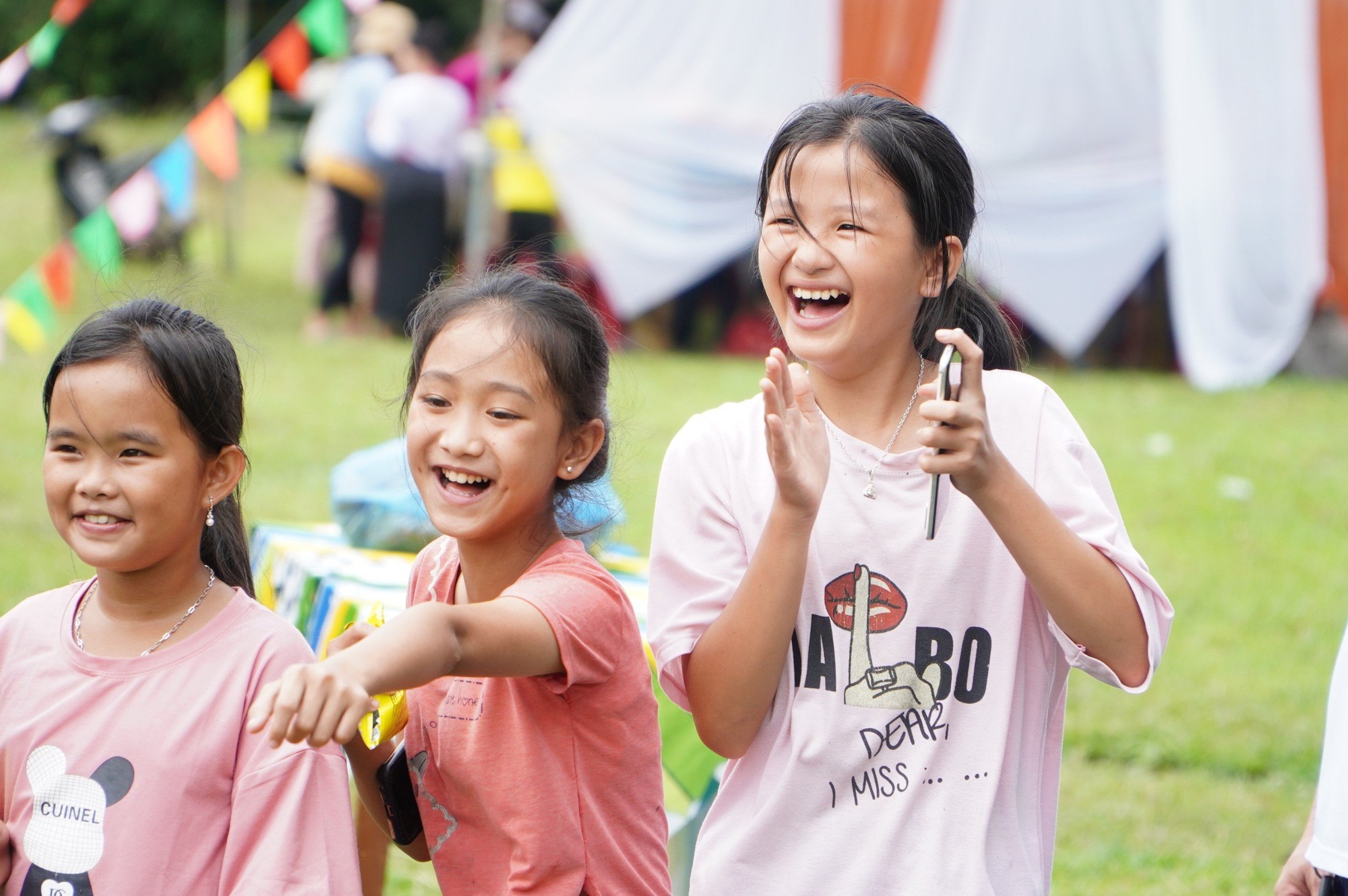
Children cheered and encouraged their friends in a traditional folk game.
According to Mr. Bang, amidst the nationwide celebrations of National Day on September 2nd, ethnic groups in general, and the Muong people in particular, also celebrate Independence Day. Through this, the people reflect on the development of their villages and pay tribute to those who bravely fought and sacrificed to protect national independence.
Mr. Nguyen Chi Tuong, Chairman of the People's Committee of Ngoc Hoi District, said that the district had provided 20 million VND in support and created favorable conditions for the people to organize the Independence Day celebration. The festival has become an activity with profound political and cultural significance, a place for the Muong people and other ethnic groups in the area to meet, interact, exchange experiences, and raise awareness and a sense of responsibility for preserving traditional cultural identity. In addition, it strengthens the unity of the entire nation.
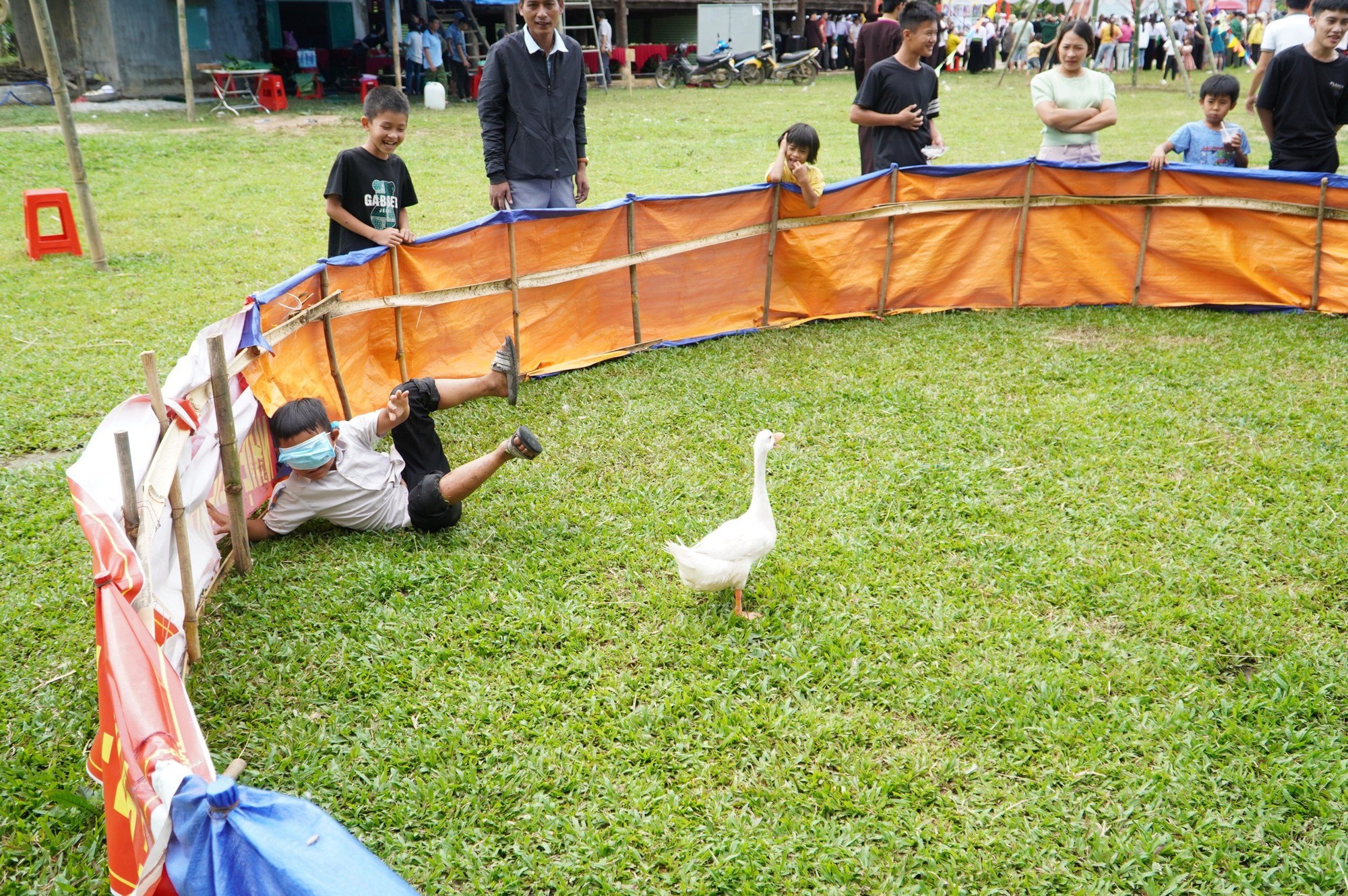
The children participate in the traditional folk game of blindfolded duck catching.
"In the coming time, Ngoc Hoi District has a plan to develop Hao Ly village into a community tourism village to bring traditional culture and local destinations closer to tourists from near and far," Mr. Tuong added.
Source link

![[Photo] General Secretary To Lam visits the exhibition space showcasing books, photo exhibitions, and achievements of digital transformation in journalism.](/_next/image?url=https%3A%2F%2Fvphoto.vietnam.vn%2Fthumb%2F1200x675%2Fvietnam%2Fresource%2FIMAGE%2F2025%2F12%2F19%2F1766110879215_1766110240024-jpg.webp&w=3840&q=75)


![[Photo] Enchanting ancient rose garden on the mountainside in Nghe An](/_next/image?url=https%3A%2F%2Fvphoto.vietnam.vn%2Fthumb%2F1200x675%2Fvietnam%2Fresource%2FIMAGE%2F2025%2F12%2F19%2F1766109900916_vuon-hong-chin-do-thu-hut-du-khach-toi-check-in-o-ha-noi-3-20162778-1671624890024-1671624890104198100259.jpeg&w=3840&q=75)
















































Comment (0)