

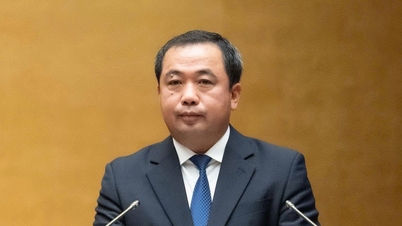
Representative Tran Van Khai (from Ha Nam province) argued that the basis for determining land prices close to market prices as in the draft law remains vague and does not yet reflect real-world land prices.
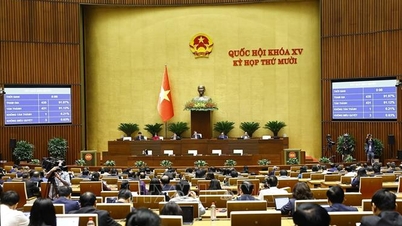
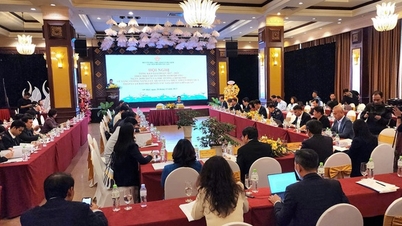
On the morning of June 21, the National Assembly held a plenary session in the assembly hall to discuss the draft Law on Land (amended); and the results of public consultations on the draft Law on Land (amended).
 |
| A view of the National Assembly's discussion session on the draft Law on Land (amended) on the morning of June 21. |
Eliminate injustice arising from differential land rents.
Speaking at the session, delegate Tran Van Khai (from Ha Nam province) suggested that one of the tasks set out in Resolution 18 of the 5th Plenum of the 13th Central Committee of the Communist Party of Vietnam is to perfect the mechanisms and policies on land finance, research and develop policies to regulate land rent differentials, ensuring transparency and openness.
According to delegate Tran Van Khai, land rent differentials are formed from the conversion of land use purposes, from low-value land to high-value land. Agricultural land is bought up and compensated at low prices, then converted to non-agricultural land, residential land, commercial land, and service land at prices ten times higher.
However, according to the delegate, the issue of addressing land rent disparities among citizens is creating many injustices in society. "Land belongs to the entire people. People have sacrificed and contributed, handing over their land use rights and assets to the State and investors for the construction and development of infrastructure and urban areas, contributing to overall development. Therefore, they should benefit from urban development and projects. The Party's policy is to resolutely prevent citizens from being marginalized from development and to ensure no one is left behind," the delegate stated.
Therefore, according to the delegates, this revised Land Law must eliminate injustice arising from land rent differentials, prevent the loss of land resources, develop land finance policies, methods for determining land prices, and ensure a harmonious balance of interests in exploiting land rent differentials between the state, investors, and the people.
Emphasizing that land is the nation's greatest asset, and therefore, in order to unleash its potential, maximize the value of land resources, and resolutely overcome corruption, negative practices, complaints in land management, speculation, and wasteful land use, delegate Tran Van Khai believes that two issues related to land rent differentials and land prices need to be effectively addressed.
The basis for determining land prices that are close to market value remains unclear.
Spending considerable time commenting on the principles of land valuation, delegates from Ha Nam province argued that the regulations in the draft law are insufficient to accurately determine land prices in real life. The basis for determining land prices that closely approximate market value remains unclear.
"Land prices in 2023 will be different from those in 2024, and determining how to avoid losses is very difficult. On the other hand, how can we determine land prices that harmonize the interests of the state, investors, and the people? If we stick to the safe option, the compensation, support, and resettlement costs will be too high, making it difficult to attract investors," the representative wondered.
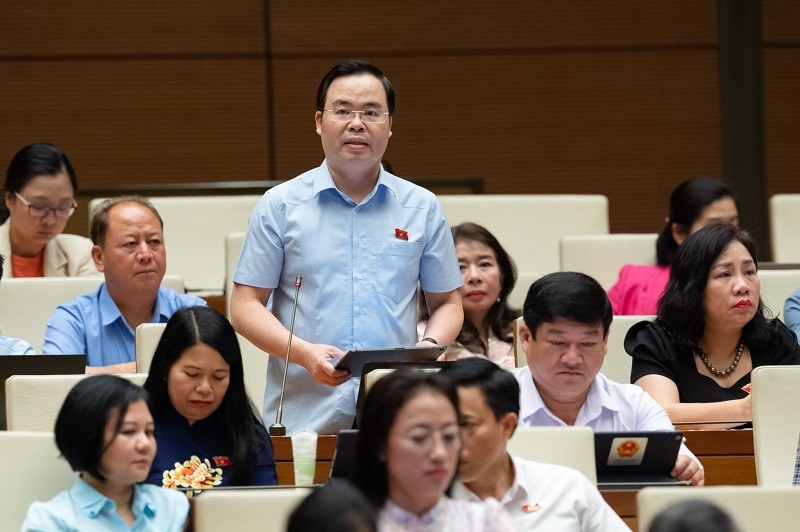 |
Representative Tran Van Khai (from Ha Nam province) argued that reliable market data is necessary to determine land prices that are close to market value. |
To implement projects and contribute to socio-economic development, delegates suggested that the drafting agency continue to research and refine the draft law on methods for determining land prices according to market principles, ensuring clarity, full and comprehensive institutionalization as required by Resolution 18.
At the same time, delegates suggested that the drafting agency continue to study regulations related to input information for determining land prices, and add regulations to digitize input land information to collect data on market fluctuations.
"I believe that, in order to determine land prices that are close to market prices, reliable market data is needed. The system for collecting market land price information must be synchronized based on specific legal regulations. When there is a legally sound database, the correct price can be determined, leading to correct compensation for damages and correct collection of land use fees – meaning harmonizing the interests of the state, investors, and the people, ensuring transparency, preventing the loss of land resources, and avoiding risks for implementing officials," the representative analyzed and suggested that the drafting agency continue to research and clearly define the regulations related to input information for land prices.
Furthermore, the draft law proposes four methods for determining land prices. Representative Tran Van Khai argued that the more methods for determining land prices stipulated in the draft law, the more difficult it will be to apply.
"If these four methods are applied to the same plot of land, four different results will be obtained," the representative said, and suggested that the drafting agency continue to add more specific regulations on land valuation methods and principles for land valuation so that the National Assembly can discuss and provide feedback, ensuring greater clarity on this issue.
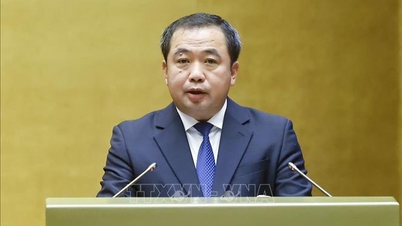
Delegate Tran Dinh Gia (from Ha Tinh province) offered suggestions on supporting training, career chuyển đổi, and job search for households and individuals when the State reclaims agricultural land. Accordingly, delegate Tran Dinh Gia proposed adding a regulation on policies to support those who have reached retirement age (but are still directly engaged in agricultural production) and do not have land to compensate. This is because, in reality, such individuals find it difficult to find new jobs or change professions when their agricultural land is reclaimed. |
GRASSLAND
Source





















































































Comment (0)