


Implementation of the usage roadmap biofuels (E10) is not an imposed decision or intended to restrict people's choices, but stems from the requirements of sustainable development, ensuring energy security, protecting the environment, and fulfilling Vietnam's international commitments on reducing greenhouse gas emissions.
Dr. Dao Duy Anh - Deputy Director of the Innovation Department, Green transition and the Ministry of Industry and Trade 's Industrial Promotion Agency confirmed this during an interview with... PV This addresses the concerns and anxieties of the public regarding the roadmap for completely replacing fossil fuels with biofuels from June 1, 2026.
Mr. Duy Anh said: The infrastructure for blending E5 and E10 gasoline, as well as the quality of E5 and E10 gasoline, must strictly comply with current national technical standards. The Ministry of Industry and Trade, along with other ministries, sectors, and localities, will regularly inspect and monitor this compliance.
The negative impact of E10 gasoline is minimal.
* Many people are wondering why we don't continue to offer different types of gasoline alongside each other to provide more choices, sir?

- Previously, we used to apply both fossil fuels and biofuels simultaneously to give people time to get used to them, the market to adapt, and businesses to gradually improve their distribution infrastructure, technology, and supply sources.
However, practice in many countries shows that maintaining too many types of fuel simultaneously for a long period of time can lead to many drawbacks such as increased logistics, storage, and distribution costs; creating difficulties for retail businesses and reducing the effectiveness of green energy transition policies.
In particular, E10 gasoline has been researched, tested, and evaluated to be suitable for most vehicles currently in circulation.
The use of E10 gasoline not only helps reduce environmental emissions but also contributes to reducing dependence on imported fossil fuels, promoting the consumption of domestic biofuels, creating outlets for agricultural production, and enhancing national energy self-sufficiency.
We also want to emphasize that the transition roadmap is built on a step-by-step approach, with thorough impact assessments, and will not be implemented abruptly. During implementation, the Ministry of Industry and Trade will continue to coordinate with ministries, sectors, and businesses to ensure stable supply, fuel quality, consumer rights, and transparent communication to reassure people about using the fuel.
It can be said that this is not simply a change in fuel type, but a necessary step in the process of transitioning to green energy, towards a low-emission economy and sustainable development for the country.
* Although many companies have implemented E10 gasoline, there are still concerns about its quality and the impact of using E10 gasoline on vehicle engines, sir?
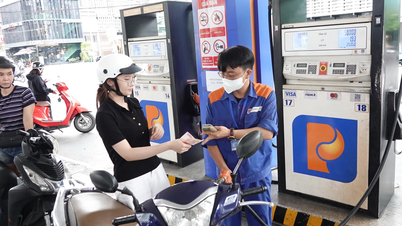
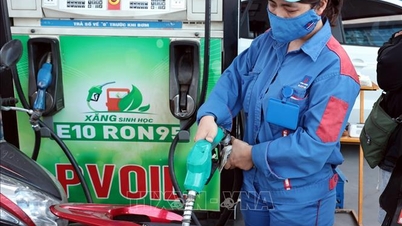
- PVOil has been testing the distribution of E10 gasoline in Hanoi and Hai Phong since the beginning of August 2025 and will officially distribute E10 gasoline throughout its system of nearly 1,000 gas stations nationwide from May 15, 2026.
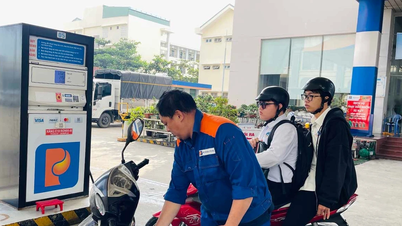
Petrolimex Trial sales of E10 gasoline are underway at some gas stations in Ho Chi Minh City and Vung Tau, with official distribution across the entire system starting May 20th. It can be said that major businesses have joined the initiative, and other companies are also preparing plans to participate in the roadmap.
In fact, with the nationwide distribution of E5 gasoline since January 2018 and the trial distribution of E10 gasoline from August 2025 in some localities, as well as nationwide application from mid-May 2026 with E10 gasoline from the two largest market share holders, PVOil and Petrolimex, the Ministry of Industry and Trade and these enterprises have not yet received any official complaints from users regarding the quality of E5 and E10 gasoline or any negative impacts on engine performance and lifespan.
Test reports conducted both domestically and internationally show that the negative impact of E10 gasoline, such as increased fuel consumption and increased engine corrosion (if any), is minimal.

The development of biofuels must go hand in hand with ensuring technical safety.
* There is an opinion that ethanol, when blended with mineral gasoline, can cause water separation (separation of layers) if the infrastructure is not adequate, especially in the hot and humid climate of Vietnam?
- This is a technical issue that has been studied and clearly identified worldwide. However, it is entirely controllable if the correct technical standards and storage conditions are ensured. Essentially, ethanol has the property of absorbing water vapor.
If water ingress into the fuel tank or system exceeds permissible limits, separation of the gasoline and ethanol-water mixture may occur. This risk often arises when tanks are not airtight, contain residual water, the fuel is stored for too long, or the technical infrastructure does not meet the requirements for this type of fuel.
However, it is necessary to distinguish between E100 ethanol used for industrial blending and E5 and E10 gasoline sold commercially on the market.
After blending, the ethanol content in gasoline is low and has been standardized for safe use in most vehicles today.
In fact, E10 is widely used in many countries, including those with hot and humid climates such as Brazil, Thailand, the Philippines, and India.
For Vietnam, technical risk assessment primarily focuses on potential issues related to outdated storage systems, leaky equipment, vehicles that have been out of use for a long time, or older engines that have not been properly maintained.
To control this problem, we are implementing a series of solutions such as: strictly controlling the quality of E100 and E5, E10 gasoline; upgrading storage facilities, tanks, and fuel pumps to be compatible with ethanol; increasing water level checks in storage tanks; and advising people to regularly maintain their fuel systems, especially for older or infrequently used vehicles.
Our perspective is development. biofuels This must go hand in hand with ensuring technical safety, fuel quality, and consumer rights. This is a technical issue that can be controlled through appropriate standards, technology, and operational management.
* Sir, before completely replacing conventional gasoline, has the Ministry of Industry and Trade conducted trials of biofuels on vehicles? What were the results, and are there any recommendations needed?
- Before implementation, we also analyzed and evaluated reports and survey information, worked with engine and fuel experts from the Polytechnic University, the Global Green Fuel Center, and consulted practical experiences in using biofuels in countries that have been using biofuels for many years, such as the US, Brazil, Europe, Thailand, and the Philippines...
The Ministry also organizes domestic and international scientific workshops with the participation of leading domestic experts on engines and fuels; scientists, managers, and business owners specializing in biofuels and engines from around the world to gather necessary information and documents on bioethanol, and the impact of bioethanol on the performance and lifespan of engine components.
The Ministry has also sent a document requesting an assessment of the level of vehicle compliance with E10 gasoline to the Vietnam Automobile Manufacturers Association (VAMA) and the Vietnam Motorcycle Manufacturers Association (VAMM). Vehicle Inspection Center In Vietnam, major automobile and motorcycle manufacturers and assemblers include Toyota, Honda, Hyundai, etc.
Based on the support of all relevant ministries, departments, localities, businesses, and industry associations, information on the safety of E10 gasoline for vehicle engines, and the experience and practical use of E10 gasoline in other countries, the Ministry of Industry and Trade has developed a roadmap for applying the blending ratio of biofuels with traditional fuels in Vietnam for the new phase (the roadmap).
Consumers should choose E5 or E10 fuel based on the vehicle's specifications, age, and manufacturer's recommendations, while also performing regular maintenance as required by the vehicle.

The transition to E10 gasoline has a solid legal and practical basis. According to Dr. Dao Duy Anh, this transition has a solid legal and practical basis. It is in line with Resolution No. 70 of the Politburo on ensuring national energy security until 2030, with a vision to 2045, which requires the realization of solutions to reduce dependence on fossil fuels, reduce emissions, and protect the environment. Furthermore, the Prime Minister's decisions approving the national strategy on green growth; the national energy development strategy... all set goals for developing renewable energy, green energy, and reducing CO2 emissions... Prime Minister's Decision No. 53/2012 on the issuance of a roadmap for applying the blending ratio of biofuels with traditional fuels also clearly states that after a trial period, from December 1, 2015, gasoline produced, blended, and sold for use in road motor vehicles nationwide will be E5 gasoline. From December 1, 2017, gasoline produced, blended, and sold for use in road motor vehicles nationwide was E10 gasoline. Following Decision 53 and after numerous trials, E5 gasoline was distributed nationwide from January 1, 2018. Therefore, according to Mr. Duy Anh, the official nationwide transition to bioethanol (E5RON92 and E10RON95) from June 1, 2026, is the next step in the biofuel roadmap in line with Decision 53, and is entirely consistent with practical requirements, legal basis, and the Party and Government's policies on energy transition, building a green economy, and reducing carbon emissions. |
Prepare the raw materials and infrastructure for supplying biofuels.  According to the Ministry of Industry and Trade, in order to implement the roadmap for transitioning to using bioethanol to replace fossil fuels, businesses have prepared the infrastructure for storing and blending E10 gasoline and securing raw material supplies. Specifically, for ethanol E100, the country's gasoline consumption is approximately 1 million m³/month, so the required amount of ethanol E100 is about 100,000 m³/month, from domestic production sources of about 25,000 m³/month and imports of about 75,000 m³/month. Essentially, businesses have proactively secured enough to meet the blending needs. As of April 23rd, 13 out of 26 major petroleum trading companies nationwide have invested in or are in the process of investing in biofuel blending stations. Of these, 3 companies have been licensed to blend with a total capacity of approximately 890,000 m³/month, and 10 companies are awaiting licenses to blend E10 gasoline with a capacity of approximately 297,600 m³/month. Thus, if all 13 businesses are operational, the blending capacity will reach approximately 1,178,600 m3/month, exceeding the blending demand (1 million m3/month) for supplying E5 and E10 gasoline nationwide. In addition, the Binh Son Refinery can also blend E5 and E10 gasoline at a capacity of approximately 20,000 - 40,000 m3/month in May 2026 and 70,000 - 90,000 m3/month from June 2026 onwards when required. The petroleum distribution infrastructure is the final link in the supply chain and plays a decisive role in bringing E10 gasoline to the market. Unlike production and blending, the current distribution system has been comprehensively invested in nationwide, including wholesale depots, central warehouses, retail outlets, and logistics systems. Therefore, the transition from RON95 mineral gasoline to E10RON95 is primarily an upgrade and adjustment of operations, not requiring large-scale investment in new infrastructure. Pioneering businesses like PVOil and Petrolimex have, by the end of May 2026, deployed the sale of E10 gasoline at their entire network of thousands of stores nationwide. Regarding supporting people and businesses during the initial phase of the transition, the Ministry of Industry and Trade identifies this as a very important task. The Ministry is studying the establishment of a mechanism for receiving information, feedback, and technical support through contact points of management agencies, petroleum distribution enterprises, and the nationwide distribution system. |
Source: https://baoquangninh.vn/xang-sinh-hoc-da-danh-gia-tac-dong-ky-luong-3409200.html



![[Photo] Standing Committee member of the Party Central Committee Tran Cam Tu working with the Central Inspection Committee](https://vphoto.vietnam.vn/thumb/1200x675/vietnam/resource/IMAGE/2026/05/28/1779969579668_ndo_br_bnd-2495-jpg.webp)
























































































Comment (0)