

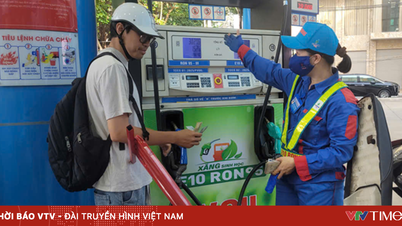
Besides the goal of reducing emissions and promoting a green transition, the nationwide expansion of E10 bioethanol fuel use is fueling speculation about potential engine damage, increased fuel consumption, and reduced vehicle lifespan.
In response to consumer concerns, on May 26th, the Ministry of Industry and Trade announced the responses from the Vietnam Motorcycle Manufacturers Association (VAMM) and the Vietnam Automobile Manufacturers Association (VAMA) regarding the compatibility of vehicles with E10 bioethanol fuel.
Most modern vehicles are compatible with E10 gasoline.
According to information from the Vietnam Motorcycle Manufacturers Association (VAMM), most motorcycle models from member manufacturers such as Honda, Yamaha, Piaggio, SYM, and Suzuki are basically compatible with E10 gasoline without requiring any technical structural changes.
VAMM also stated that expanding the use of E10 gasoline is a trend consistent with the emission reduction target, but it is crucial that the fuel meets the quality standards corresponding to the vehicle's emission standards. This is considered a key condition to ensure operational efficiency and engine durability.
In the automotive sector, the Vietnam Automobile Manufacturers Association (VAMA) also made a similar assessment. According to VAMA, most car models currently in production are designed to be compatible with ethanol-blended fuels such as E10.
Many car manufacturers in Vietnam, such as Toyota, Ford, Hyundai, and Geely, have confirmed that their new gasoline models can use E10 fuel normally, as this type of fuel has been included in the global design standards of these manufacturers for many years.
In fact, E10 gasoline is not a new fuel in the world . Many countries have been widely using this ethanol-blended gasoline for years to reduce CO, HC, and fine particulate emissions from vehicles. According to experts, blending ethanol into gasoline results in cleaner combustion and reduces dependence on traditional fossil fuels.
Some technical studies also show that the difference in power output between E10 and conventional gasoline is not significant. According to expert analysis, fuel consumption may increase by about 1-3%, while engine power fluctuates within a very small range, hardly noticeable under normal operating conditions.
Notably, VAMM representatives stated that even many motorcycle models manufactured 20-25 years ago can still use E10 fuel if properly maintained.
These statements help alleviate some of the concerns that have been emerging in the market, especially given the recent widespread unverified information about "E10 gasoline causing engine damage." Technical experts all agree that the biggest risk does not lie in E10 gasoline itself, but in the misuse of fuel standards or improper vehicle maintenance.
Older cars are still an area that requires "attention".
However, the compatibility story isn't entirely the same for every type of vehicle. Associations and experts alike acknowledge that older vehicle models still need closer monitoring during the transition to E10.
According to VAMA, car models manufactured before E10 became popular may experience some operational problems because their fuel systems were not designed for ethanol.
Technical experts warn that ethanol has hygroscopic properties and strong cleaning capabilities. For older vehicles using rubber gaskets, hoses, or older plastic parts, E10 fuel may increase the risk of material aging after prolonged use.
In particular, vehicles manufactured before the year 2000 or those using carburetors are considered to require more caution. Ethanol can dislodge long-standing deposits in the fuel system, causing fuel filters to clog or affecting fuel injectors.
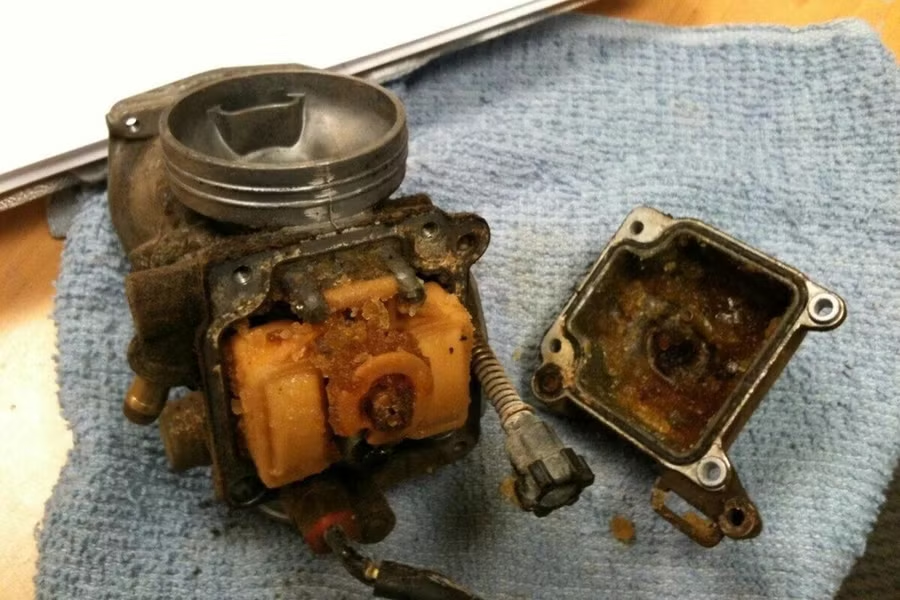
Another problem lies in the "water-attracting" nature of biofuels. If a vehicle is left unused for an extended period, ethanol and water can separate, increasing the risk of fuel tank corrosion or difficulty starting the vehicle. Therefore, car manufacturers recommend that users regularly maintain their fuel systems and avoid leaving vehicles idle for too long.
Experts also advise consumers to check the manufacturer's recommendations before using E10, especially for older vehicles, imported vehicles, or models without complete technical documentation. Information on compatibility levels is usually found in the owner's manual or on the fuel cap.
From a market perspective, the rollout of E10 is therefore not simply a change in fuel type at gas stations. It is also a test of the car manufacturer's fuel quality management capabilities, after-sales service system, and ability to communicate policies to consumers.
Source: https://giaoducthoidai.vn/xang-sinh-hoc-e10-co-thuc-su-ken-xe-nhu-lo-ngai-post779257.html



![[Photo] General Secretary and President To Lam presides over the meeting to approve the draft report on the results of the second inspection by the Politburo of the Standing Committee of the Hanoi City Party Committee.](https://vphoto.vietnam.vn/thumb/1200x675/vietnam/resource/IMAGE/2026/05/26/1779789811432_a2-bnd-4430-9620-jpg.webp)































































































Comment (0)