

This was a very specific request made by General Secretary and President To Lam - Head of the Central Steering Committee on Science and Technology Development, Innovation and Digital Transformation, at a working session of the Standing Committee of the Central Steering Committee to give opinions on the Project "Research, application and development of quantum technology to serve socio -economic development, ensure national defense and security", on May 21.
Long-term investment mechanism
The project of the Vietnam Academy of Science and Technology identifies five priority areas in strategic order: quantum communication and security; quantum simulation, algorithms and software; quantum sensors and precision measurement; quantum photonic materials and components; and training of high-quality human resources.
Currently, the top priority is quantum communication and security, especially post-quantum cryptography and quantum key distribution. This is a field of urgent importance for national security, given that traditional encryption systems may be breached by sufficiently powerful quantum computers in the future.
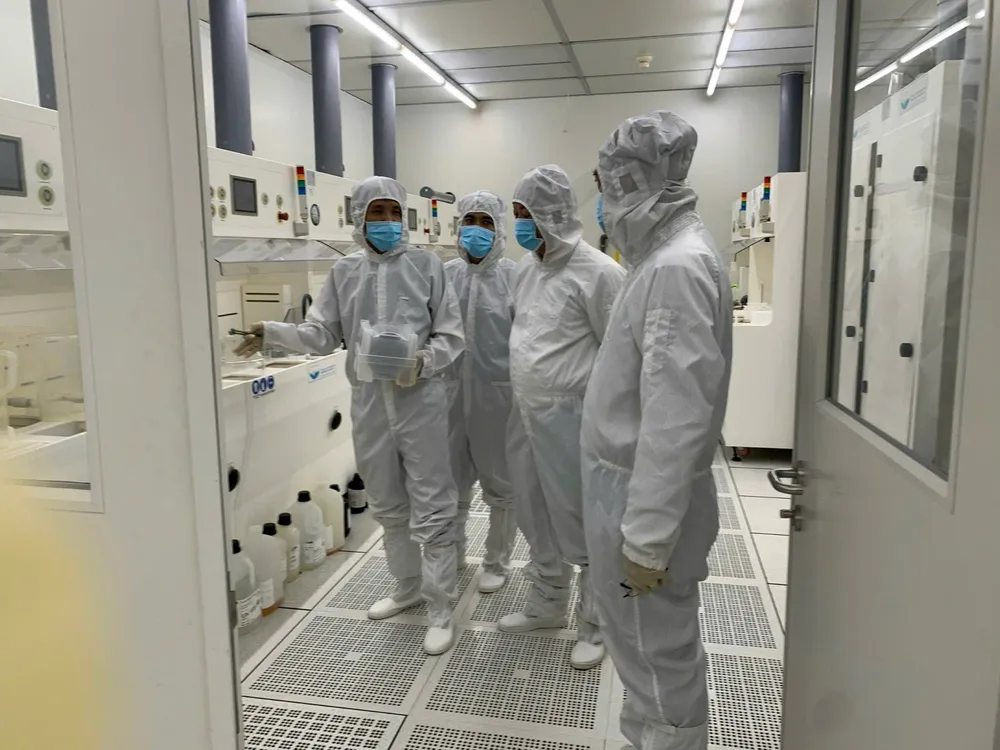
According to Professor Tran Hong Thai, President of the Vietnam Academy of Science and Technology, quantum technology is a difficult field but not beyond Vietnam's reach if approached correctly: avoiding superficial competition, not copying the models of powerful nations, and not setting goals beyond realistic capabilities; instead, it is necessary to choose directions that are suitable to Vietnam's capabilities and needs, build a solid foundation, and persistently pursue them through multiple policy cycles.
Professor Tran Hong Thai affirmed that quantum technology is a deep technology with a long investment cycle and high risks, but it has a very large strategic impact. Therefore, it cannot be managed by traditional scientific management mechanisms that are short-sighted, fragmented in resources, and primarily based on the number of publications.
He argued that there needs to be a mechanism for long-term, stable, and focused investment based on national programs, evaluated according to specific progress milestones and outputs, rather than detailed control over each annual budget stream. This is a prerequisite for ensuring the continuity of long-term research programs.
Businesses participate
According to Professor Tran Hong Thai, the development of quantum technology must also leverage the role of businesses. Businesses should not only be the end users but also participate from the research, testing, and commercialization stages of the technology. Therefore, a public-private partnership mechanism is needed, especially for businesses in the fields of telecommunications, semiconductors, artificial intelligence, cybersecurity, and defense such as Viettel, VNPT,FPT , etc.
This will be a crucial force in shaping Vietnam's future quantum technology ecosystem. Along with that, international cooperation must be closely linked to domestic development goals. Each cooperation program needs to clearly answer what Vietnam will master, how many experts will be trained, what infrastructure will be built, and must be linked to specific domestic applications.
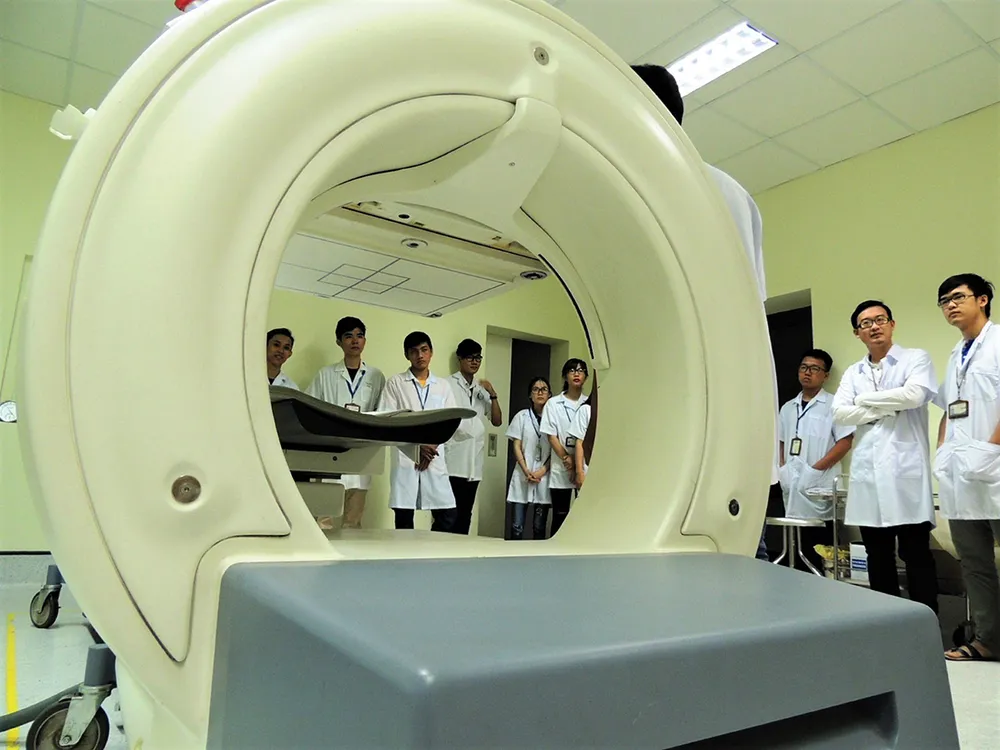
As a pioneering enterprise in this field, in early December 2025, FPT established the Quantum AI & Cyber Security Research Institute (QACI). The company also committed to investing $100 million with the goal of training 100 PhDs, developing and nurturing 2,000 technology experts, and publishing 500 articles, patents, and intellectual property rights by 2035.
Over the past period, QACI has implemented collaborative activities with many universities, aiming to build a long-term network of links between businesses, research institutes, and universities. Through this, all parties participate in human resource training, applied research development, and gradually integrate real-world technological problems from businesses into research and training activities at universities.
Associate Professor Ngo Xuan Bach, Director of QACI, said that the unit aims to build a close cooperation network between research institutes, universities, and businesses to jointly develop high-quality technology human resources, promote applied research, and gradually master Vietnam's strategic technologies, including quantum technology.
* Professor Nguyen Huu Duc, Vietnam National University, Hanoi:
Invest in human resources early.
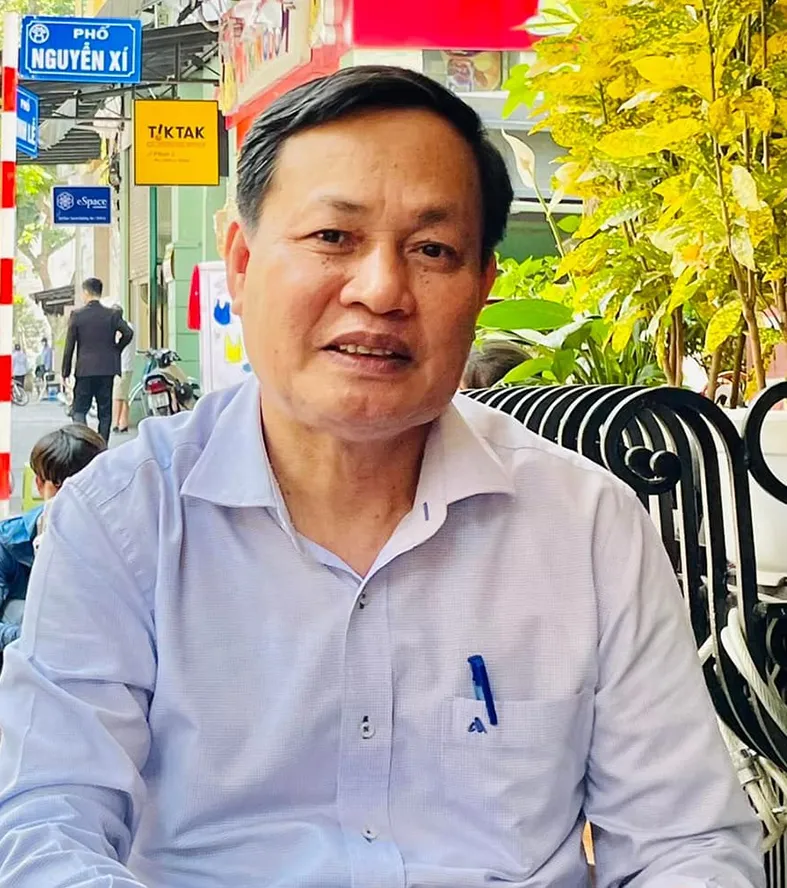
Vietnam needs to recognize quantum technology as a long-term strategic technological field. This is not a field where mass-produced products can be created in just a few years, but without early investment in human resources and foundational capabilities, we will find it very difficult to participate when the technology enters a broader application phase.
Vietnam should start by training quantum personnel, with interdisciplinary programs combining physics, mathematics, computer science, electronic engineering, cryptography, materials, and semiconductors. Training shouldn't be limited to "quantum physics" in the narrow sense, but should focus on quantum science and technology in a way that integrates computing, devices, and industrial applications.
Vietnam should prioritize post-quantum cryptography and information security as a near-term, practical, and urgent direction. This is a field that doesn't immediately require expensive quantum hardware systems, but it has significant implications for digital security.
* Dr. Ho Ba Tham, Director of the Vietnam Institute of Quantum Philosophy and Intelligence:
Focus on research and application of quantum technology and thinking.

Quantum technology is currently reshaping the global technological landscape, creating superior computing capabilities thanks to its core physical principles. For Vietnam, mastering this technology is a crucial task to protect data sovereignty and ensure national security.
The quantum problem is not just about technology, but also about human resources, institutions, and corresponding mindsets; more broadly, it encompasses quantum thinking, information thinking with scientific and philosophical depth, creating a quantum ecosystem in development strategy.
For Ho Chi Minh City, the city needs a vision, research strategy, and talent attraction policies, focusing on human resources and institutionalizing the strategy for long-term, stable development. Greater emphasis should be placed on promoting research and application of both quantum technology and quantum thinking in the development of strategies, policies, and their implementation.
Source: https://www.sggp.org.vn/xay-dung-nen-tang-phat-trien-cong-nghe-luong-tu-post854718.html


![[Photo] Standing Committee member of the Party Central Committee Tran Cam Tu working with the Central Inspection Committee](https://vphoto.vietnam.vn/thumb/1200x675/vietnam/resource/IMAGE/2026/05/28/1779969579668_ndo_br_bnd-2495-jpg.webp)











![[GALLERY] A "billion-dollar" game that hasn't even been released yet is already driving gamers crazy.](https://vphoto.vietnam.vn/thumb/402x226/vietnam/resource/IMAGE/2026/05/28/1779977371733_goi-3-png.webp)






































































Comment (0)