


Shortage of highly skilled personnel.
Resolution No. 57-NQ/TW of the Politburo on breakthroughs in the development of science, technology, innovation, and national digital transformation affirms that ensuring national sovereignty in cyberspace, cybersecurity, data security, and information safety for organizations and individuals is a continuous and inseparable requirement throughout the entire development process. In this context, training and developing a high-quality workforce in cybersecurity is identified as a key task, closely linked to the strategy of ensuring national security, digital sovereignty, and the development of a knowledge-based economy.
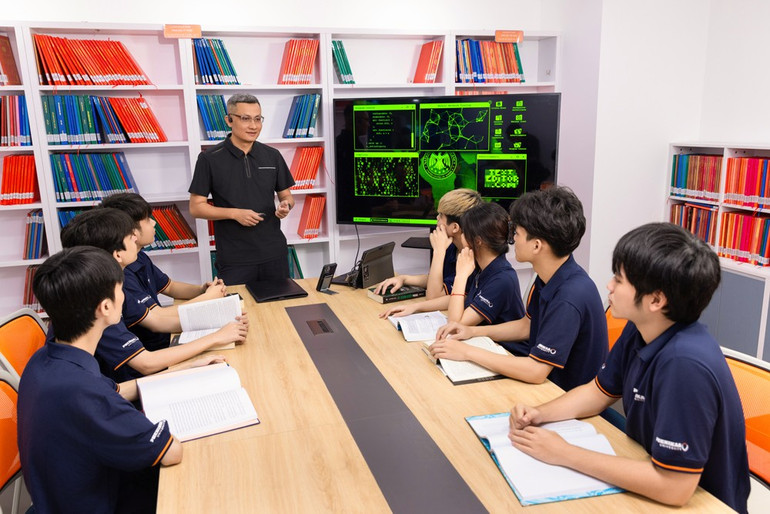
To develop cybersecurity human resources, the Government has issued many national-scale strategies and projects such as the National Cybersecurity Strategy, proactively responding to challenges from cyberspace to 2025, vision to 2030 (Decision No. 964/QD-TTg dated August 10, 2022) and the Project "Training Cybersecurity Human Resources to 2025, vision to 2030" to build a network of key human resources for cyberspace. In addition, the field of cybersecurity has been approved by the Ministry of Education and Training to be included in pilot training programs from June 2024, along with strategic fields in semiconductors and integrated circuits. Simultaneously, the demand for recruitment from banks, financial institutions, telecommunications, and technology companies has increased sharply, opening up great opportunities for young people. However, the reality shows that human resources remain a major "bottleneck," especially the serious shortage of highly skilled personnel in key fields such as cybersecurity, artificial intelligence, cloud computing, and machine learning...
According to statistics, the world is currently facing a shortage of approximately 4.8 million cybersecurity professionals. According to the Vietnam Cybersecurity Association, Vietnam needs around 700,000 personnel in the next few years, and currently only meets about 50% to 60% of this demand… By 2025, Vietnam will have approximately 11 schools offering cybersecurity training as a specialized information security major, but none will provide formal training in cybersecurity.
Notably, the professional skills of cybersecurity personnel in Vietnam are primarily theoretical, lacking practical skills and experience in responding to incidents. Dr. Doan Trung Son, Director of the Information Security Training Program at Phenikaa University, stated: Many agencies and businesses lack dedicated cybersecurity departments or have very few employees, and some even lack expertise in cybersecurity. Some new skills such as cloud security, AI, DevSecOps, and Zero Trust are weak, while foreign language and soft skills, which are crucial factors, are also limited.
Domestic training programs are expanding but have not kept pace with practical demands. Not only is there a shortage in quantity, but the quality of human resources also fails to meet the increasingly high demands of the job market. Practical skills, incident response capabilities, and the ability to master new technologies are limited; while foreign language skills, soft skills, and legal knowledge have not kept up with the demands of a professional and integrated work environment. Furthermore, uneven and uncompetitive compensation packages also contribute to the "brain drain" to overseas markets.
Sharing this view, Dr. Tran Giang Son, Head of the Department of Information Technology and Communications, Hanoi University of Science and Technology (Vietnam Academy of Science and Technology), believes that we still lack lecturers with in-depth expertise and practical experience in cybersecurity – a field that is both broad and rapidly changing. Furthermore, the infrastructure, labs, and practical equipment are limited and do not meet the requirements of learning by doing. Training programs in some institutions have not kept pace with new trends such as secure artificial intelligence, cloud computing, or blockchain, resulting in a modest number of students choosing cybersecurity compared to societal needs, partly because they do not fully understand the career opportunities and importance of this field. Therefore, a coordinated effort is needed between the government, businesses, and training institutions, investing in infrastructure, supporting lecturer training, and promoting awareness to attract students. This will help form a sustainable cybersecurity workforce ecosystem for Vietnam.

Bridging the gap between training and practice.
In reality, the rapid development of technology is leading to increasingly sophisticated and complex forms of cyberattacks. Without a well-structured and effective human resource training strategy, the risk of asset loss, large-scale data leaks, operational disruptions, and reputational damage is ever-present. Notably, the human element remains the most vulnerable link in cybersecurity, potentially leading to serious and even irreparable losses. This necessitates significant investment in training to enhance awareness and specialized skills, while simultaneously establishing robust incident management and response procedures.
To develop high-quality human resources in this field, we need a comprehensive and synchronized strategy. Regarding educational innovation, universities need to update their curricula to international standards, linking theory with practice and real-world business experience. Students need early access to tools, attack and defense simulation scenarios, and participation in real projects during their studies. Furthermore, interdisciplinary training should be promoted, combining cybersecurity, artificial intelligence, big data, and cloud computing, as these technologies are becoming increasingly interconnected.
The government should have scholarship mechanisms, research support, and attractive incentive policies to attract talented students and retain highly qualified lecturers and experts. Businesses should also participate in the training process by funding labs, supporting internships, and recruiting potential students early. Students must learn through real-world problems and scenarios, thereby developing their ability to solve practical problems. Research centers and businesses need to act as a "launching pad" so that ideas, models, and research products from schools can be immediately applied to the security operations of agencies and businesses. "If modern training, good policies, broad cooperation, and practical application are implemented synchronously, we can build a highly qualified cybersecurity expert team, meeting the requirements for protecting national cyberspace in the digital age," shared Dr. Tran Giang Son.
To address this issue, some experts also suggest that training needs to shift strongly from theory to practice, through models such as CTF (Continuing Task Force), attack and defense simulations, and cybersecurity operations centers (SOCs), while closely aligning with the actual needs of businesses. Along with this, a competitive compensation and benefits system, especially in the public sector, should be established to retain and attract talent. Strengthening links with international organizations, universities, and large technology corporations to exchange experts, transfer technology, and standardize skills according to international standards is also a crucial direction.
To bridge the gap between education and practice, universities need to strengthen cooperation with businesses, create opportunities for students to participate in real-world cybersecurity projects, build attack and defense simulation laboratories, and organize CTF competitions and information security drills. This approach helps students not only master foundational knowledge but also develop professional skills, preparing them to meet job requirements immediately after graduation.
Furthermore, units need to create research and development funds, support experts and scientists in implementing practical application projects. Expand international cooperation, exchange experts, and update new technologies. Develop clear career paths to ensure long-term commitment to the organization. In addition, a specific plan for reforming training within the school is needed, shifting from theory-heavy training to a "learning by doing" model through labs, simulations of student organizations (SOCs), and real-world projects. Encourage students to win awards in ASEAN and international competitions, obtain international certifications linked to job positions, and participate in research and application projects.
Regarding the phenomenon of "brain drain," many experts believe it is an unavoidable trend as high-quality human resources seek international environments with better incomes and working conditions. However, if the country can build a sufficiently attractive cybersecurity ecosystem, identifying it as a leading global sector, accompanied by competitive compensation policies, research and development opportunities, and a clear career progression path, many talented individuals will choose to stay or return to contribute.
It is known that, in order to improve the quality of human resource training in the field of cybersecurity, Phenikaa University aims to be the first training institution to begin enrolling students in the cybersecurity major in 2026. The university has been enrolling students in the information security major at the undergraduate level since 2024 and plans to enroll students in the cybersecurity major from 2026. Accordingly, in 2025, modules related to information security and Blockchain technology will be adapted to suit 60 majors and training programs. The university is gradually planning to deploy a modern cybersecurity lab, organize CTF competitions and practical exercises to hone practical skills, and conduct in-depth research on cybersecurity.
“In the coming period, the school's orientation is to recruit and develop a high-quality faculty team, encourage faculty to participate in research and collaborate with foreign experts. In addition, the school will continue to invest in research labs, a simulation SOC center, Cloud and AI infrastructure, creating a modern training environment that is close to practical needs and international standards,” shared Dr. Doan Trung Son.
Source: https://nhandan.vn/xay-dung-nhan-luc-an-ninh-mang-tu-giang-duong-dai-hoc-post934122.html
![[Photo] Ba Lang An Lighthouse - the "eye of the sea" amidst the "rock museum" of Quang Ngai province.](https://vphoto.vietnam.vn/thumb/1200x675/vietnam/resource/IMAGE/2026/05/29/1780038698840_anh-man-hinh-2026-05-29-luc-14-10-42.png)



![[Image] Pleasant weather helps students enter the 10th grade entrance exam with confidence.](https://vphoto.vietnam.vn/thumb/1200x675/vietnam/resource/IMAGE/2026/05/29/1780034401612_ngay-1-thi-lop-10-minh-duy-8-5009-jpg.webp)

![[GALLERY] The million-dollar 007 blockbuster is causing a sensation on Steam, is it worth buying?](https://vphoto.vietnam.vn/thumb/402x226/vietnam/resource/IMAGE/2026/05/29/1780064112088_ta-2-png.webp)



























































































Comment (0)