

Overcoming all challenges
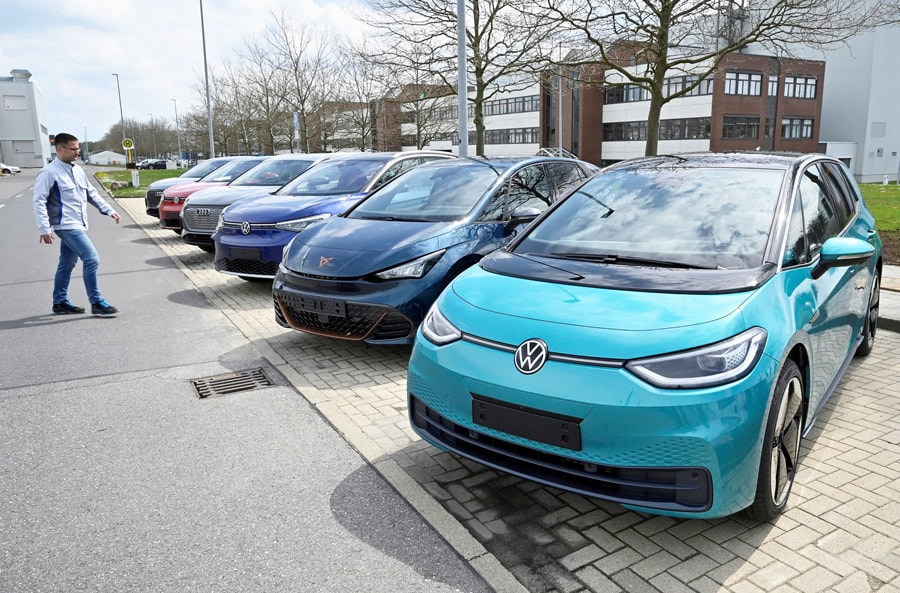
The Global EV Outlook 2026 report, recently published by the International Energy Agency (IEA), has attracted significant attention by forecasting that global electric vehicle sales this year could reach approximately 23 million units, equivalent to nearly 30% of total new vehicle sales. This is considered a rather bold prediction given the world's current economic and geopolitical uncertainties. However, the reality of the first half of 2026 shows that the global electric vehicle market continues to expand strongly. Prior to this, 2025 saw global electric vehicle sales surpass 20 million units, an increase of approximately 20% compared to 2024, marking the fifth consecutive year of strong growth following the Covid-19 pandemic.
According to the IEA, China will remain the central driver of the global electric vehicle market, with approximately 60% of cars sold in the country this year being electric or plug-in hybrid (PHEV) vehicles. This assessment is well-founded, as most Chinese electric vehicle manufacturers have recorded strong sales growth. In April 2026, BYD, Geely, Xpeng, Nio, Xiaomi, and others all achieved high growth in electric vehicle sales. However, the market's growth momentum is no longer concentrated solely in China as it was a few years ago, but has spread to many new regions. The IEA noted that nearly 90 countries saw an increase in electric vehicle sales in March 2026, while around 30 countries set monthly sales records.
Despite its relatively small market size, Southeast Asia is projected to be one of the fastest-growing electric vehicle regions in the world by 2026. According to Counterpoint Research, electric vehicle sales in the region could increase by 30-40% compared to 2025. Southeast Asia is not only importing but is also gradually building its own electric vehicle manufacturing ecosystem, with fierce competition between Thailand and Indonesia.
Meanwhile, Europe is projected to be the fastest-growing market among major economies , with electric vehicle sales potentially increasing by around 20% this year. In the European Union (EU) alone, electric vehicle sales in the first quarter of 2026 increased by more than 25% year-on-year, according to data from the European Automobile Manufacturers Association, despite inflation and slowing economic growth. This trend is also forcing many renowned European sports car manufacturers to accelerate their electrification efforts.
This week, Ferrari officially entered the electric vehicle era with the Luce – the brand's first electric supercar. A few weeks earlier, Porsche also attracted attention with its Cayenne Electric SUV. BMW, Mercedes-Benz, Audi… are all accelerating the launch of new electric vehicle platforms in 2026. The increasing number of traditional automakers considering electrification as a core strategy rather than just a “secondary product line” shows a clear shift in the automotive industry. This is quite evident in the Skoda Epiq – a small, affordable crossover that the Czech automaker hopes will become its “main weapon” to compete with Chinese rivals.
Meanwhile, Cox Automotive forecasts that, despite declining subsidies, electric vehicle sales in the US could still increase by about 10-15% in 2026 thanks to the continued expansion of charging networks and gradually decreasing vehicle prices.
From a consumer perspective, electric vehicles are no longer just "products of the future" but are gradually becoming a mainstream choice. According to the IEA, in Europe, more than 30% of electric vehicle models now have prices that directly compete with traditional gasoline cars. In the UK, the price of new electric vehicles is now lower than gasoline cars for the first time after incentives and discounts from manufacturers. According to AutoTrader, the average price of a new electric vehicle in the UK is now about £785 lower than a comparable gasoline car.
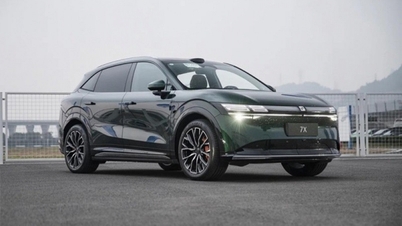
Notably, alongside traditional automakers, the wave of technology companies entering the electric vehicle market is also growing stronger, thereby boosting competition and expanding sales. Xiaomi and Huawei are both seeking to transform cars into "mobile technology devices" in the new era. For them, cars are not just a means of transportation but also a "digital space" with rich development potential, alongside the office or living room.
Many factors driving significant progress.
What's noteworthy about the current electric vehicle market is that its strong growth is occurring at a time when the global economy is facing significant instability. Geopolitical conflicts in the Middle East, trade tensions, and the risk of supply chain disruptions, especially regarding fuel, are causing many countries to pay more attention to energy security. The Financial Times notes that sharply rising fuel prices due to the energy crisis are driving consumers to switch to electric vehicles more quickly. According to the IEA, current energy pressures are leading many governments to view electric vehicles as a strategic solution rather than just an environmental policy. This process is also facilitated by the fact that electric vehicle production and operation have become significantly greener compared to a few years ago. Electric vehicles were once controversial due to their reliance on coal power or energy-intensive battery production chains, but the situation is changing as the global energy structure increasingly shifts towards cleaner options. April 2026 also marks the first time that global wind and solar power output will surpass that of natural gas. BloombergNEF reports that even in markets still heavily reliant on fossil fuels, electric vehicles are becoming cleaner every day as the proportion of renewable energy in the grid continues to increase.
Furthermore, the global battery supply chain is undergoing significant changes. Automakers and battery manufacturers are investing heavily in lithium-ion battery recycling, reducing cobalt use, and increasing the proportion of recycled materials in new battery generations. Reuters reports that many large businesses are moving towards a “closed-loop battery supply chain” model to reduce reliance on mining and cut emissions. In addition, new battery technologies such as LFP and sodium-ion are also contributing to significantly reduced costs, resource consumption, and environmental impact compared to previous battery generations. Goldman Sachs forecasts that electric vehicle battery prices could fall to around $80/kWh by 2026, nearly 50% lower than in 2023.
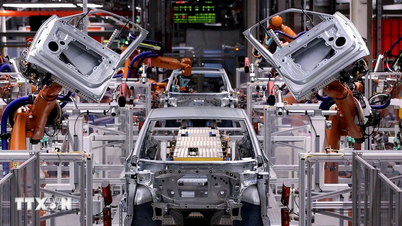
However, the development of electric vehicles still faces many major challenges. One of them is the excessive dependence on China in the supply chain for batteries and rare earth minerals. This is not difficult to explain, as China currently produces nearly 75% of the world's electric vehicles and over 80% of the world's electric vehicle batteries. In addition, increasingly fierce competition is putting significant pressure on the profits of car manufacturers. Reuters reported that Xiaomi, despite a strong increase in electric vehicle sales, still saw a significant decline in Q1 2026 profits due to rising component costs and intense competition even in the domestic Chinese market. Furthermore, some markets, such as the US, are experiencing slower growth due to changes in subsidy policies. Nevertheless, the long-term development trend of the electric vehicle industry remains very clear. According to the IEA, even without further support policies, the number of electric vehicles globally could increase from approximately 80 million currently to over 500 million by 2035.
Amidst fluctuating fuel prices, increasing geopolitical instability, and growing pressure to reduce emissions, electric vehicles are gradually becoming a strategic choice for both governments and consumers worldwide. At the current pace, the electrification of the automotive industry in the coming years is likely to happen significantly faster than predictions made just a few years ago.
Source: https://hanoimoi.vn/xe-dien-tieu-thu-manh-bat-chap-nhieu-bat-on-khang-dinh-vai-tro-giao-thong-xanh-976402.html


![[Video] Sunset at Lap An Lagoon – Where the sun sets over the fishing nets](https://vphoto.vietnam.vn/thumb/1200x675/vietnam/resource/IMAGE/2026/05/31/1780192137701_beach-landscape-sea-water-nature-grass-745871-pxhere-com.jpeg)


![[Image] A brilliant symphony and explosive power in the skies of Da Nang.](https://vphoto.vietnam.vn/thumb/1200x675/vietnam/resource/IMAGE/2026/05/31/1780193150738_anh-bia-copy-jpg.webp)
















![[Video] Sunset at Lap An Lagoon – Where the sun sets over the fishing nets](https://vphoto.vietnam.vn/thumb/800x450/vietnam/resource/IMAGE/2026/05/31/1780192137701_beach-landscape-sea-water-nature-grass-745871-pxhere-com.jpeg)












































![[Video] Sunset at Lap An Lagoon – Where the sun sets over the fishing nets](https://vphoto.vietnam.vn/thumb/402x226/vietnam/resource/IMAGE/2026/05/31/1780192137701_beach-landscape-sea-water-nature-grass-745871-pxhere-com.jpeg)

































Comment (0)