

Three military scenarios targeting Iran have been revealed.
In mid-May, according to a New York Times report, President Donald Trump's security advisors had developed several new military scenarios targeting Iran should the current ceasefire agreement collapse. The report indicated that Iran could face new attacks from the US and Israel as early as the following week.
Although the White House has not yet made a final decision, observers believe that recent signals indicate Washington is increasingly leaning towards increasing military pressure to force Tehran to make concessions in nuclear negotiations as well as on the Strait of Hormuz issue.
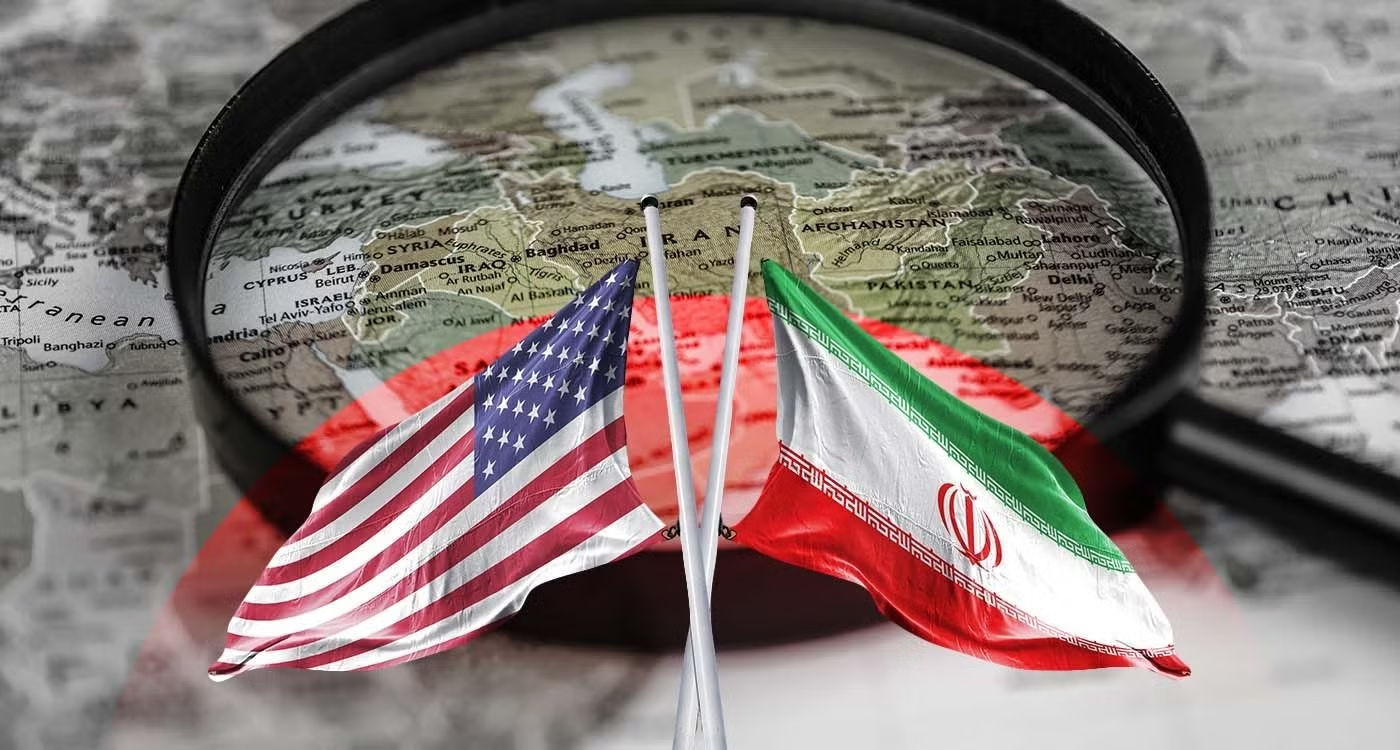
Specifically, three military scenarios have been outlined. Option one is to resume airstrikes with greater intensity targeting Iranian military targets and strategic infrastructure. Some US officials have previously suggested that, if the operation is restarted, its scale could far exceed the attacks in Operation Epic Fury. NBC News, citing the Pentagon, reported that the US is considering naming the new military operation against Iran Operation "Hammer and Stick" if the current ceasefire collapses.
The second option is to deploy a ground task force to locate and seize enriched uranium, believed to be stored at Iran's underground nuclear facilities. According to military analysts, such an operation would be considered very bold, but would require a large number of supporting troops, carry the risk of direct combat with Iranian forces, and could draw Washington into a protracted ground conflict in the Middle East.
Option three involves the US controlling Kharg Island – Iran's largest oil export hub. This would be seen as a direct blow to Tehran's key energy revenue source. However, maintaining control of the island for an extended period would significantly increase military and logistical costs, and further escalate the risk of regional conflict to dangerous levels.
These moves come amid President Trump's continued tough signals toward Tehran. In a social media post on May 14 (local time), Trump declared that the US military campaign against Iran would continue, emphasizing that the ceasefire agreement was in jeopardy.
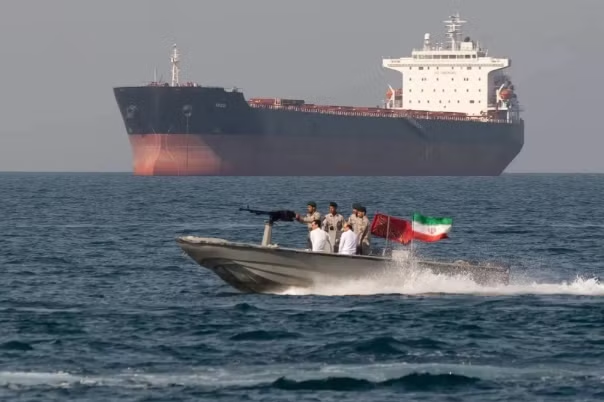
The US leader also expressed impatience with Iran's control of the Strait of Hormuz, particularly Tehran's claim that it has finalized a mechanism for managing maritime traffic through the strait, including the imposition of fees for specialized services for passing ships. Furthermore, Iran has yet to make significant concessions in the negotiations.
According to US intelligence assessments, Iran has significantly restored its missile capabilities following previous attacks. Sources confirm Tehran has regained control of 30 of the 33 missile launch sites along the Strait of Hormuz. This raises concerns that Iran is capable of continuing to threaten US warships and commercial oil tankers transiting the region.
In response to signals from Washington, Iranian officials also issued a strong message. Iranian Foreign Minister Abbas Araghchi warned the US and Israel against launching further military attacks, stating that previous operations had failed to achieve their strategic objectives. Iranian Parliament Speaker Mohammad Bagher Ghalibaf declared that the country's armed forces "are prepared for all scenarios," and affirmed that any misstep by the enemy would be costly.
Is Iran launching opportunistic operations?
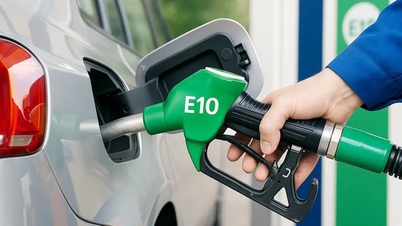
The US-Iran tensions are not limited to the military front; they are now spreading to cyberspace. According to multiple sources cited by CNN, US officials are investigating a series of intrusions targeting automatic fuel level gauges (ATGs) at gas stations across several states. Hackers are suspected of exploiting unprotected internet connections to interfere with fuel data.
Although there is no evidence that the intrusions caused physical damage or casualties, experts warn that the theoretical control of ATG systems could allow fuel leaks to go undetected, posing a significant risk to energy infrastructure security.

US investigators believe that Iran's history of targeting fuel systems and oil and gas infrastructure is one of the factors that makes it a prime suspect. Previously, Washington accused hacker groups linked to Iran's Islamic Revolutionary Guard Corps (IRGC) of carrying out numerous attacks on US water systems and critical infrastructure following the 2023 Hamas-Israel conflict.
According to cybersecurity analysts, Iran's current tactics are likely to focus heavily on soft targets – critical online systems with weak defenses. While Tehran's cyber warfare capabilities are not yet considered on par with many other major powers, Iran remains an unpredictable adversary due to its ability to conduct opportunistic campaigns at low cost but with significant psychological impact.
In fact, since the conflict erupted in late February, hackers linked to Tehran have disrupted numerous US oil, gas, and water facilities, caused shipping delays at the major medical equipment company Stryker, and leaked the personal emails of FBI Director Kash Patel. Israeli organizations and citizens have also been repeatedly targeted by Iranian hackers.
According to Allison Wikoff, Director of PwC's Threat Intelligence Group, who has been monitoring Iranian threats for over 10 years, Iran's cyber operations have recently accelerated with faster adaptation and the use of AI to expand espionage and malware distribution. Meanwhile, Yossi Karadi, head of Israel's National Cyber Defense Agency, told CNN that Tehran's cyber activities now show an increasingly clear coordination between cyber warfare and psychological warfare.
Observers believe that recent developments indicate the US-Iran confrontation is entering a more complex phase, with military, energy, political, and cybersecurity fronts becoming increasingly intertwined, raising the risk of miscalculations or uncontrollable incidents. In this context, a swift resolution to the conflict, arguably a "victory" for the United States, is becoming an urgent requirement for President Donald Trump, leading Washington to continue using military options as a powerful tool to pressure Tehran into making concessions.
However, the White House is also facing a difficult political dilemma ahead of the midterm elections in November, as the conflict in the Middle East is increasingly fueling public fatigue in the US, and the energy costs and financial burden from the conflict continue to directly impact people's lives. Therefore, any decision made now by Washington and Tehran could become a factor in changing the course of the conflict in the coming period.
Source: https://cand.vn/xung-dot-my-iran-truc-cac-bien-so-moi-da-mat-tran-post811126.html
![[Image] Close-up view of the interchange connecting the two expressways and Long Thanh Airport.](https://vphoto.vietnam.vn/thumb/1200x675/vietnam/resource/IMAGE/2026/05/25/1779703378210_ndo_br_z7863716673926-224453a31600126cce10622af6290afd-4549-jpg.webp)















































































Comment (0)